What Is Esperanto and Why Is It Easy to Learn?
TL;DR
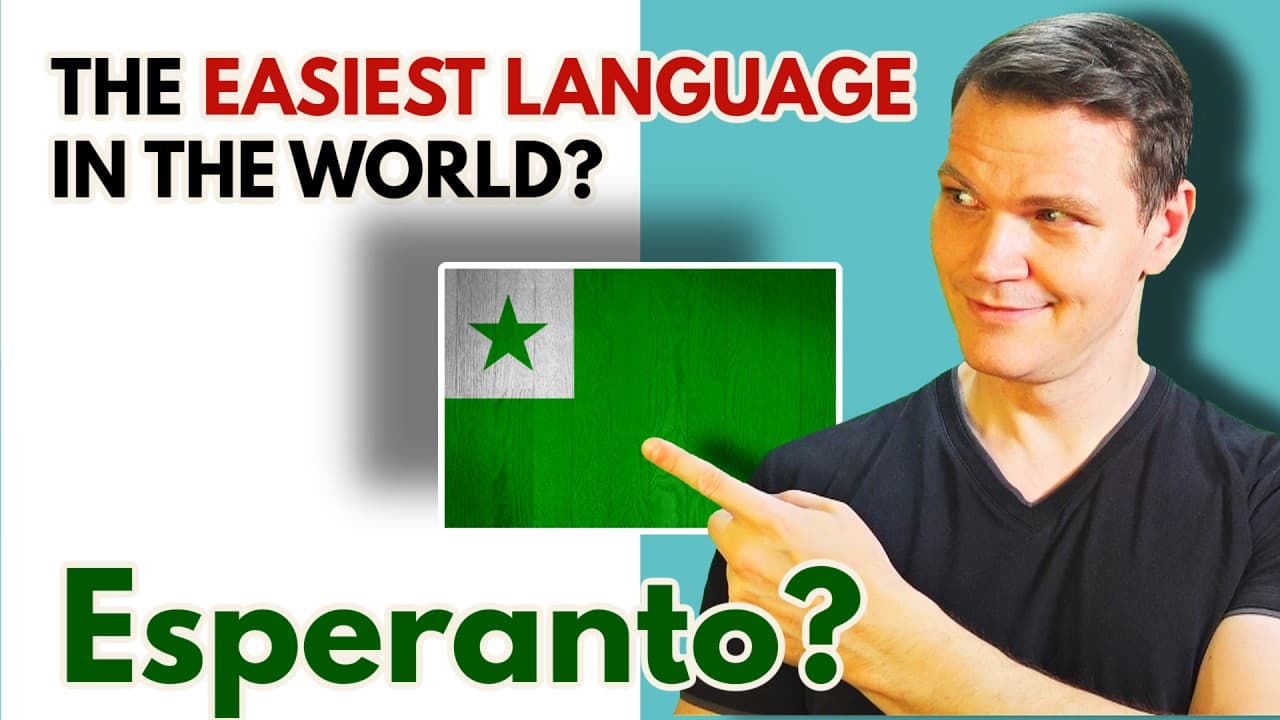
Esperanto is a constructed language designed to be easy to learn, using vocabulary from major European languages. Created by Dr. LL Zamenhof in 1887, it aimed to promote international understanding. Despite its Eurocentric vocabulary, its regular grammar and simple structure make it accessible. While not widely used, it fosters a global community of enthusiasts.
Transcript
around eight years ago I released a video about the espiranto language in espiranto dingo I studied espiranto for a couple of hours a day for about 3 weeks then I wrote a script in it then filmed it in espiranto 2 hours a day for 3 weeks does that mean I'm a language learning genius no it means espiranto simple and I wasn't conversationally fluent ... Read More
Key Insights
- Esperanto is a constructed language created by Dr. LL Zamenhof in 1887 to promote international communication.
- It is designed to be easy to learn, with vocabulary derived from major European languages, especially Romance and Germanic languages.
- Esperanto's grammar is regularized with no exceptions, making it simpler than most natural languages.
- The language uses a straightforward system for nouns, adjectives, and verbs, with predictable suffixes for tense and mood.
- Esperanto was proposed as a diplomatic language by the League of Nations but was vetoed by France.
- Despite not becoming a major international language, Esperanto has a dedicated community, boosted by the internet.
- Critics argue that Esperanto is Eurocentric, but its simplicity makes it accessible to learners worldwide.
- Esperanto does not have a cultural or national identity, aiming to be an auxiliary language for global communication.
Install to Summarize YouTube Videos and Get Transcripts
Explore YouTube Video Summarizer or Get YouTube Transcript Extractor
Questions & Answers
Q: How was Esperanto created?
Esperanto was created by Dr. LL Zamenhof in 1887 as a constructed language to promote international understanding and communication. It was intentionally designed to be easy to learn, using vocabulary from major European languages, and aimed to serve as an international auxiliary language, not replacing anyone's native tongue.
Q: Why is Esperanto considered easy to learn?
Esperanto is considered easy to learn due to its regularized grammar with no exceptions, predictable suffixes for nouns, adjectives, and verbs, and vocabulary derived from major European languages that many learners find familiar. Its straightforward structure allows learners to progress rapidly without the complexities found in natural languages.
Q: What are the criticisms of Esperanto?
Critics of Esperanto often point to its Eurocentric vocabulary, which is primarily based on European languages, making it less familiar to speakers from non-European cultures. Despite this, its simple grammar and regular structure make it accessible to learners worldwide, though it may not provide the cultural depth found in natural languages.
Q: How did geopolitical interests affect Esperanto's adoption?
In 1920, the League of Nations proposed using Esperanto as a diplomatic language, but France vetoed the proposal, viewing it as a threat to French's status in international relations. This geopolitical interest hindered Esperanto's adoption as a major diplomatic language, despite its potential for fostering global communication.
Q: What role does the internet play in Esperanto's community?
The internet has significantly boosted Esperanto's community by providing resources and platforms for learning and communication. Websites and language courses, such as those on Duolingo, have made the language more accessible, allowing enthusiasts to connect globally and maintain a vibrant, albeit small, community of speakers.
Q: What makes Esperanto's grammar unique?
Esperanto's grammar is unique due to its regularity and lack of exceptions. Nouns, adjectives, and verbs follow predictable patterns with specific suffixes indicating tense and mood. This regularized structure contrasts with the irregularities found in most natural languages, making Esperanto easier to learn and use consistently.
Q: How does Esperanto handle vocabulary from different languages?
Esperanto's vocabulary is primarily derived from major European languages, especially Romance and Germanic languages. The language aims to include words that are similar across multiple languages, making them recognizable and memorable to learners. This approach facilitates easier learning, despite the Eurocentric bias in its vocabulary.
Q: What is the cultural impact of learning Esperanto?
Learning Esperanto does not unlock a specific cultural experience, as it is not tied to any culture or country. Instead, it offers a sense of belonging to a global community of enthusiasts. While it may not provide cultural depth, it fosters international connections and a shared interest in language and communication.
Summary & Key Takeaways
-
Esperanto, created by Dr. LL Zamenhof in 1887, is a constructed language designed for easy learning and international communication. Its vocabulary is largely from European languages, and its grammar is regularized, lacking exceptions. Despite being Eurocentric, it remains accessible due to its simplicity.
-
Esperanto was once considered for diplomatic use but faced setbacks due to geopolitical interests. Today, it has a small but passionate community, supported by online resources and language courses. While not widely spoken, it serves as a unique tool for fostering global connections.
-
The language's straightforward structure includes predictable noun, adjective, and verb forms, making it easier to learn than most natural languages. Although it lacks cultural depth, Esperanto offers a rapid learning experience and a sense of belonging to a global community of enthusiasts.
Read in Other Languages (beta)
Share This Summary 📚
Summarize YouTube Videos and Get Video Transcripts with 1-Click
Try YouTube Summary with ChatGPT & Claude or YouTube Transcript Generator
Explore More Summaries from Langfocus 📚

Summarize YouTube Videos and Get Video Transcripts with 1-Click
Try YouTube Summary with ChatGPT & Claude or YouTube Transcript Generator