With All Due Respect (11/17/15)
TL;DR
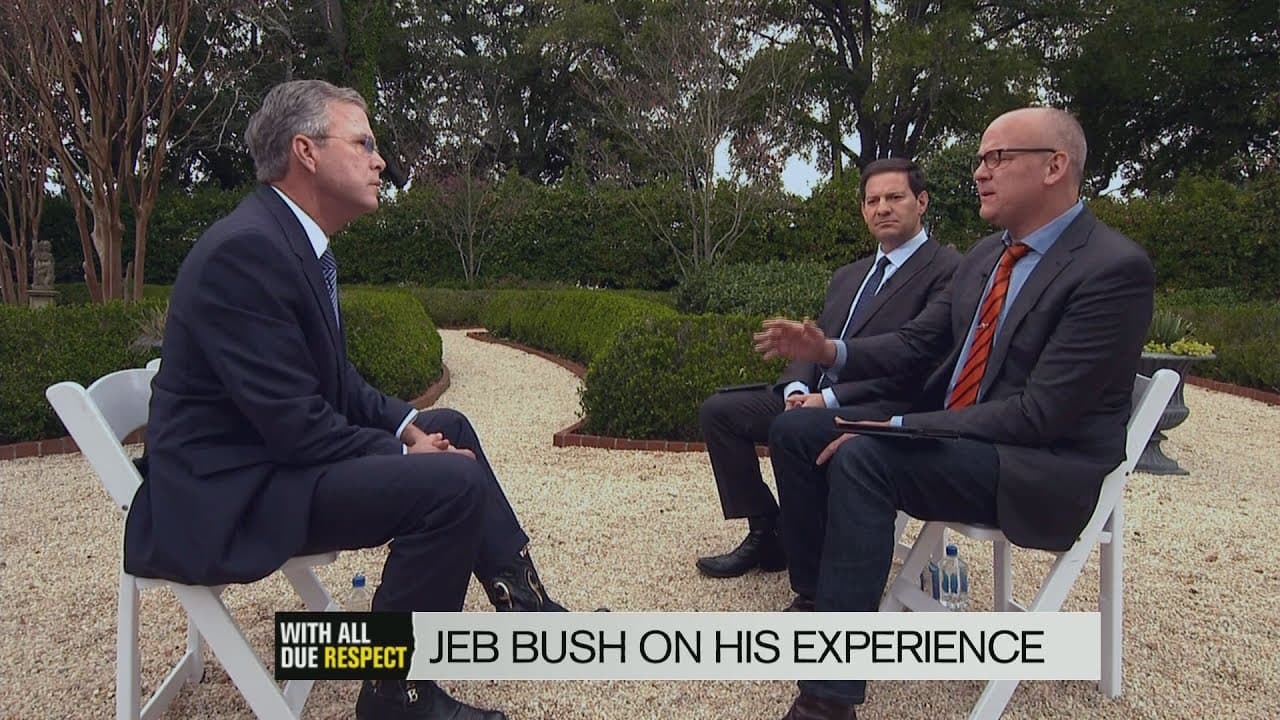
Jeb Bush and Ben Carson discuss Syrian refugees and foreign policy.
Transcript
I'm John hman and I'm Mark Hal and with all du respect to Jeb Bush we're going to break so much news tonight not even you can fix it on the show tonight John Ellis and bush bush our interview with the former Florida Governor later in the show but first the other Governors and a lot more a majority of American Governors are saying no to Syrian refug... Read More
Key Insights
- Jeb Bush expresses a nuanced stance on Syrian refugees, advocating for a strategic approach to resolve the crisis in Syria rather than banning refugees outright.
- The fallout from the Paris terrorist attacks has intensified discussions in American politics, particularly around the issues of Syrian refugees and the fight against ISIS.
- Ben Carson's foreign policy knowledge is under scrutiny, with a New York Times story questioning his understanding of Middle Eastern affairs.
- Jeb Bush criticizes President Obama's handling of foreign policy, emphasizing the need for a clear strategy and decisive action against ISIS.
- The Republican presidential candidates are divided on foreign policy, with differing views on how to address the threat of ISIS and the Syrian refugee crisis.
- Jeb Bush highlights the importance of American leadership in international coalitions to combat ISIS, advocating for a comprehensive military strategy.
- The Republican primary race is marked by intense rivalries, with candidates like Marco Rubio and Ted Cruz engaging in heated debates over national security issues.
- Jeb Bush defends his foreign policy credentials, emphasizing his experience and leadership skills as a former governor and his understanding of international affairs.
Install to Summarize YouTube Videos and Get Transcripts
Explore YouTube Video Summarizer or Get YouTube Transcript Extractor
Questions & Answers
Q: What is Jeb Bush's stance on Syrian refugees?
Jeb Bush advocates for a nuanced approach to the Syrian refugee crisis. He believes that banning refugees outright is not the solution. Instead, he emphasizes the need for a strategic approach to resolve the crisis in Syria. Bush argues for American leadership in international coalitions to address the root causes of the refugee crisis and combat ISIS effectively.
Q: What criticisms does Jeb Bush have of President Obama's foreign policy?
Jeb Bush criticizes President Obama's foreign policy for lacking a clear strategy and decisive action, particularly in the fight against ISIS. He highlights the administration's incremental approach and the absence of a comprehensive plan to address the threat posed by ISIS. Bush emphasizes the need for American leadership and a robust military strategy to ensure national security and stability in the Middle East.
Q: How does Ben Carson's foreign policy knowledge come into question?
Ben Carson's foreign policy knowledge is scrutinized following a New York Times story that questions his understanding of Middle Eastern affairs. The story cites concerns about Carson's ability to grasp complex foreign policy issues, particularly in relation to the presence of Chinese forces in Syria. Carson's adviser, Armstrong Williams, defends him by stating that Carson is continuously learning and consulting with various foreign policy experts.
Q: What are the key divisions among Republican candidates on foreign policy?
Republican candidates are divided on foreign policy, particularly regarding the Syrian refugee crisis and the fight against ISIS. While some candidates, like Ted Cruz, advocate for banning Syrian refugees, others, like Jeb Bush, emphasize a strategic approach to addressing the crisis. The candidates also differ in their views on military intervention and the role of American leadership in international coalitions, leading to intense debates and rivalries within the party.
Q: How does Jeb Bush defend his foreign policy credentials?
Jeb Bush defends his foreign policy credentials by emphasizing his experience as a former governor and his understanding of international affairs. He highlights his leadership skills, decision-making abilities, and experience in dealing with national security issues. Bush argues that his background and approach make him well-suited to be commander-in-chief, capable of addressing complex foreign policy challenges and ensuring American leadership on the global stage.
Q: What is the impact of the Paris terrorist attacks on American politics?
The Paris terrorist attacks have significantly impacted American politics by intensifying discussions around national security, Syrian refugees, and the fight against ISIS. The attacks have brought foreign policy issues to the forefront of the presidential race, leading to heightened scrutiny of candidates' positions and expertise. The fallout has also exposed divisions within the Republican Party, with candidates presenting varied approaches to addressing the threat of terrorism and the refugee crisis.
Q: What role does American leadership play in Jeb Bush's foreign policy vision?
In Jeb Bush's foreign policy vision, American leadership plays a crucial role in addressing global challenges, particularly in the fight against ISIS. Bush advocates for the United States to lead international coalitions and employ a comprehensive military strategy to combat terrorism. He emphasizes the importance of decisive action and collaboration with allies to ensure national security and stability in the Middle East, arguing that American leadership is essential for resolving complex international issues.
Q: How do Marco Rubio and Ted Cruz approach national security issues?
Marco Rubio and Ted Cruz approach national security issues with a focus on intelligence gathering and military intervention. Rubio emphasizes the need for robust intelligence capabilities to protect America, criticizing opponents for weakening these programs. Cruz, known for his sharp legal mind, strategically chooses his moments to engage in debates. Both candidates are involved in intense rivalries, with Rubio often targeting Cruz's positions, highlighting the divisions within the Republican Party on foreign policy matters.
Summary & Key Takeaways
-
Jeb Bush discusses his views on Syrian refugees, emphasizing the need for a strategic approach to resolve the crisis in Syria. He criticizes the Obama administration's handling of foreign policy and stresses the importance of American leadership in international coalitions to combat ISIS.
-
Ben Carson's foreign policy knowledge is questioned following a New York Times story that highlights his lack of understanding of Middle Eastern affairs. Carson's adviser, Armstrong Williams, defends him, stating that Carson is continuously learning and engaging with foreign policy experts.
-
The Republican primary race sees intense rivalries and debates over national security issues. Candidates like Marco Rubio and Ted Cruz engage in heated discussions, while Jeb Bush defends his foreign policy credentials and emphasizes his experience and leadership skills as a former governor.
Read in Other Languages (beta)
Share This Summary 📚
Summarize YouTube Videos and Get Video Transcripts with 1-Click
Try YouTube Summary with ChatGPT & Claude or YouTube Transcript Generator
Explore More Summaries from Bloomberg Originals 📚






Summarize YouTube Videos and Get Video Transcripts with 1-Click
Try YouTube Summary with ChatGPT & Claude or YouTube Transcript Generator