How The Death Star Triggered a Galactic Recession
TL;DR
Destruction of Death Stars led to a galactic economic crisis.
Transcript
I'm Zachary Feinstein I'm professor at Washington University in st. Louis in the department of electrical and systems engineering I am Peter coy economics editor of Bloomberg Businessweek I've watched all the Star Wars movies dozens of times doing them in a single day I did see the first Star Trek movie and I've seen little bits of some of the othe... Read More
Key Insights
- Professor Zachary Feinstein argues that the destruction of the Death Stars in Star Wars triggered a massive economic crisis due to the enormous debt incurred in their construction.
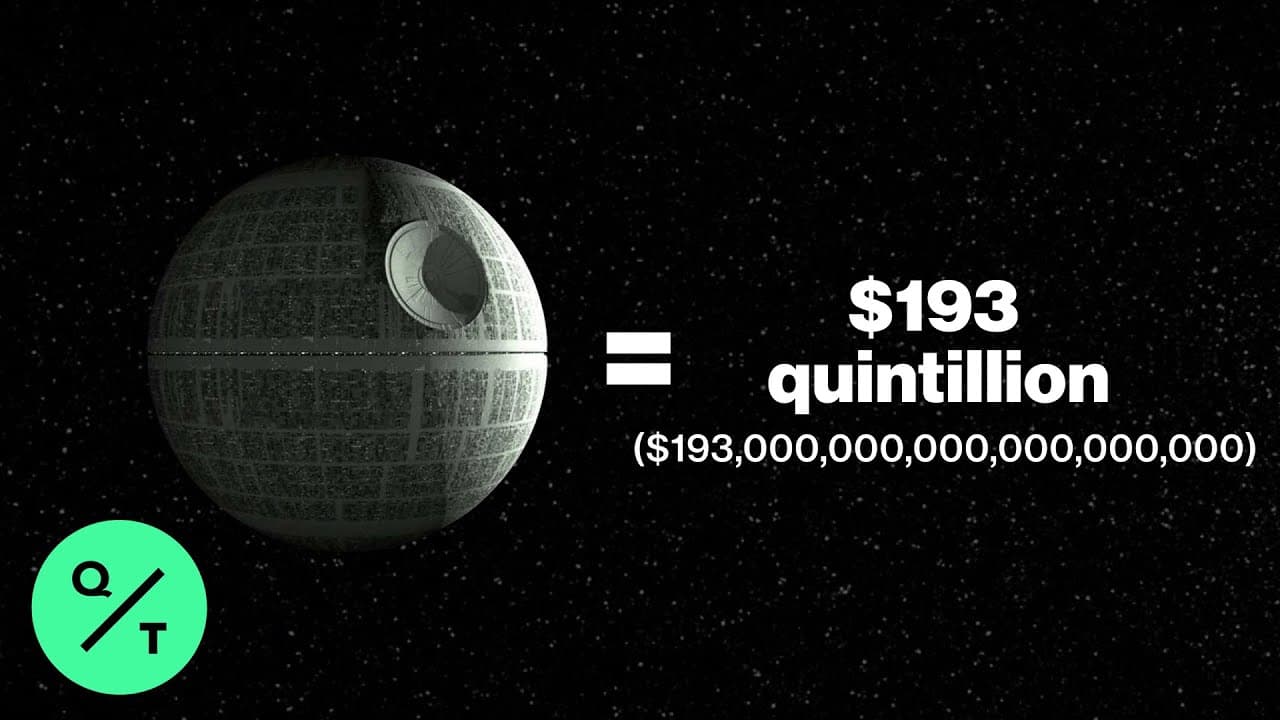
- The first Death Star was estimated to cost 193 quintillion dollars, while the second, larger Death Star cost approximately 419 quintillion dollars.
- The Rebel Alliance lacked a financial strategy post-Empire, leading to potential chaos as banks would write off trillions in debt.
- Feinstein suggests that Emperor Palpatine intentionally set a financial trap, ensuring that his defeat would destabilize the galaxy economically.
- The absence of a central bank or deposit insurance in the Star Wars universe exacerbated the financial crisis following the Death Stars' destruction.
- Despite the destruction of the Death Stars, the galaxy's productive capacity remained unchanged, but the lack of governance impeded economic recovery.
- The analysis draws from Star Wars canon, avoiding non-canon sources to maintain a consistent narrative framework.
- Feinstein's deep dive into Star Wars economics highlights how personal obsessions can lead to unique academic perspectives.
Install to Summarize YouTube Videos and Get Transcripts
Explore YouTube Video Summarizer or Get YouTube Transcript Extractor
Questions & Answers
Q: What was the estimated cost of the Death Stars?
The first Death Star was estimated to cost 193 quintillion dollars, while the second Death Star, which was larger at 900 kilometers in diameter, was estimated to cost 419 quintillion dollars. These astronomical costs highlight the significant financial burden placed on the galactic economy by the Empire's construction projects.
Q: How did the Rebel Alliance's lack of financial strategy impact the galaxy?
The Rebel Alliance's lack of a financial strategy post-Empire led to potential chaos as banks would have to write off trillions in debt. Without a central authority to manage economic affairs, the sudden shift in power disrupted the financial stability of the galaxy, leading to a severe economic downturn.
Q: What role did Emperor Palpatine play in the potential economic crisis?
Emperor Palpatine is suggested to have intentionally set a financial trap, ensuring that his defeat would destabilize the galaxy economically. By incurring massive debts through the construction of the Death Stars, he created a scenario where his removal from power would lead to financial chaos, making it difficult for the Rebel Alliance to govern effectively.
Q: Why was the absence of a central bank significant?
The absence of a central bank in the Star Wars universe meant there was no lender of last resort to stabilize the banking system during a financial crisis. This lack of financial infrastructure made it difficult to manage the economic fallout from the destruction of the Death Stars, exacerbating the recessionary pressures on the galaxy.
Q: Did the destruction of the Death Stars affect the galaxy's productive capacity?
Despite the destruction of the Death Stars, the galaxy's productive capacity remained unchanged, as the Death Stars themselves were not sources of production. However, the lack of a stable government to manage economic affairs hindered the galaxy's ability to recover financially and utilize its full economic potential.
Q: How does Feinstein's analysis relate to real-world economics?
Feinstein's analysis uses the fictional narrative of Star Wars to illustrate real-world economic principles, such as the impact of debt and the importance of financial infrastructure. By examining the economic consequences of the Death Stars' destruction, he highlights the potential for fictional scenarios to provide insights into complex economic issues.
Q: What sources did Feinstein use for his analysis?
Feinstein relied on Star Wars canon, including movies, books, and TV shows, to maintain a consistent narrative framework for his analysis. He avoided non-canon sources to ensure that his conclusions were grounded in the established lore of the Star Wars universe.
Q: How does Feinstein's personal interest influence his research?
Feinstein's personal interest in Star Wars and economics led him to explore the unique intersection of these fields. His work demonstrates how personal obsessions can inform academic research, providing unique perspectives and insights that might not be apparent through traditional approaches.
Summary & Key Takeaways
-
Professor Zachary Feinstein explores the economic repercussions of the Death Stars' destruction in Star Wars, suggesting it led to a galactic recession. He estimates the cost of the Death Stars and argues that the Rebel Alliance's lack of financial strategy caused significant economic instability.
-
Feinstein posits that Emperor Palpatine intentionally created a financial trap, ensuring that his defeat would result in economic chaos. The absence of a central bank and deposit insurance in the Star Wars universe further exacerbated the financial crisis.
-
The analysis relies on Star Wars canon to maintain consistency, demonstrating how personal interests can inform academic research. Feinstein's work illustrates the potential for fictional narratives to offer insights into real-world economic principles.
Read in Other Languages (beta)
Share This Summary 📚
Summarize YouTube Videos and Get Video Transcripts with 1-Click
Try YouTube Summary with ChatGPT & Claude or YouTube Transcript Generator
Explore More Summaries from Bloomberg Originals 📚






Summarize YouTube Videos and Get Video Transcripts with 1-Click
Try YouTube Summary with ChatGPT & Claude or YouTube Transcript Generator