Why Is The World Rushing Back To The Moon?
TL;DR
Nations and private companies are refocusing on lunar exploration.
Transcript
Before we get started, we wanted to let you know there’s some new limited edition Merch for sale at the Merch store. North America was recently graced with a total solar eclipse.Those of us lucky or obsessed enough to be on the narrow path of totality and … also lucky enough to not be under a giant blanket of clouds … witnessed this most wondro... Read More
Key Insights
- The Moon has been pivotal in understanding the universe, serving as both a metaphorical and literal stepping stone for humanity's space exploration.
- Recent focus has shifted back to the Moon due to discoveries of water at its south pole, which could support future lunar bases and space travel.
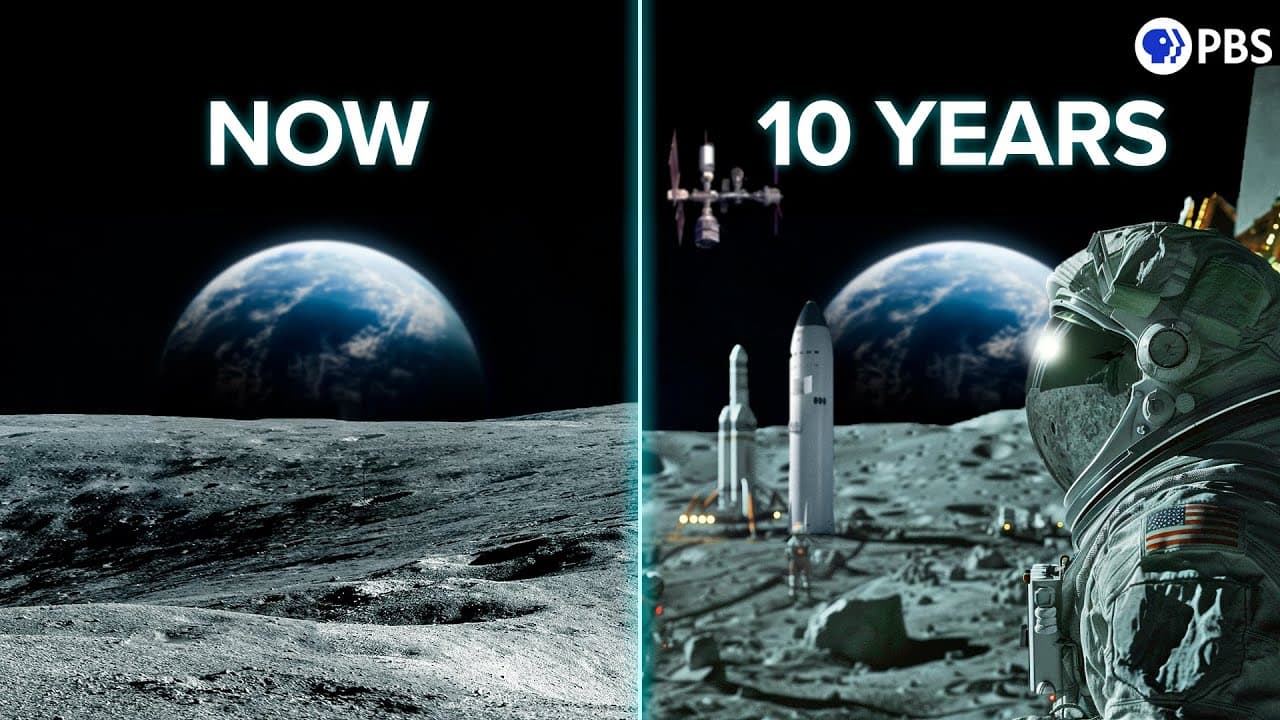
- Private companies and nations like the United States, China, and India are actively participating in lunar missions, aiming for both research and potential colonization.
- The presence of water on the Moon could significantly reduce the cost of space travel, providing a source for rocket fuel through electrolysis.
- China plans to establish a crewed lunar base by 2035, collaborating with Russia and potentially other international partners.
- The Artemis program by NASA aims to return humans to the Moon by 2026, with plans to construct the Lunar Gateway space station in lunar orbit.
- The concept of a lunar refueling depot is being explored, which would facilitate longer and more efficient space missions beyond the Moon.
- While international collaboration is a focus, there are signs of a new space race, primarily between the US and China, with implications for global space leadership.
Install to Summarize YouTube Videos and Get Transcripts
Explore YouTube Video Summarizer or Get YouTube Transcript Extractor
Questions & Answers
Q: Why is there a renewed interest in exploring the Moon?
The renewed interest in exploring the Moon is largely due to the discovery of water at its south pole. This discovery has significant implications for future lunar bases, as water is essential for sustaining human life and can be used to produce rocket fuel. The Moon's proximity also makes it an ideal stepping stone for deeper space exploration, allowing for testing and development of technologies necessary for missions to Mars and beyond.
Q: What role does the Moon play in space exploration?
The Moon serves as both a metaphorical and literal stepping stone in space exploration. It has been pivotal in developing our understanding of the universe, offering insights into celestial mechanics and gravitational forces. The Moon's proximity to Earth makes it an ideal location for testing new technologies and strategies for human space travel, providing a platform for launching missions to Mars and other distant destinations.
Q: What are the goals of the Artemis program?
The Artemis program, led by NASA, aims to return humans to the Moon by 2026. Its goals include establishing a sustainable human presence on the Moon, constructing the Lunar Gateway space station in lunar orbit, and using the Moon as a base for further exploration of Mars. The program seeks to demonstrate new technologies and strategies for space exploration while fostering international collaboration and engaging the private sector.
Q: How could lunar water impact future space missions?
Lunar water has the potential to drastically impact future space missions by providing a local source for producing rocket fuel through electrolysis. This capability would allow spacecraft to refuel on the Moon, reducing the need to carry large amounts of fuel from Earth. As a result, missions could be longer and more ambitious, with the Moon serving as a refueling station for journeys to Mars, the asteroid belt, and beyond.
Q: What are China's plans for lunar exploration?
China has been actively pursuing lunar exploration through its Chang'e program, with plans to establish a crewed lunar base by 2035. This involves a series of missions, including the upcoming Chang'e-6 and Chang'e-7, which aim to explore and utilize the Moon's resources. China envisions a permanent base in collaboration with Russia and other international partners, focusing on scientific research and technological development.
Q: Why is the lunar south pole a focus for exploration?
The lunar south pole is a focus for exploration due to the presence of water ice in the region. This water is critical for supporting human life and can be used to produce rocket fuel, making it a valuable resource for future lunar bases and space missions. The south pole's unique environment, with permanently shadowed regions, offers opportunities for scientific research and resource utilization that are not available elsewhere on the Moon.
Q: What is the significance of a lunar refueling depot?
A lunar refueling depot would be significant because it would allow spacecraft to refuel on the Moon, reducing the need to carry large amounts of fuel from Earth. This would lower the cost and increase the feasibility of long-duration space missions, enabling exploration beyond the Moon to destinations like Mars and the asteroid belt. The depot would utilize lunar water to produce hydrogen and oxygen, essential components of rocket fuel.
Q: How does international collaboration play a role in lunar exploration?
International collaboration is crucial for the success of lunar exploration, as it allows for the sharing of resources, expertise, and technology. Collaborative efforts can reduce costs and risks associated with space missions, while fostering peaceful relations among nations. Programs like NASA's Artemis and China's Chang'e missions involve partnerships with multiple countries, aiming to establish a sustainable human presence on the Moon and advance scientific research.
Summary & Key Takeaways
-
The Moon has played a crucial role in humanity's understanding of the universe, acting as a stepping stone for space exploration. Recent discoveries of water at the lunar south pole have reignited interest in lunar missions, with both nations and private companies actively participating.
-
China and the United States are leading efforts to return to the Moon, with plans for crewed missions and the establishment of bases. The presence of lunar water could transform the Moon into a refueling station, reducing the costs of space travel and enabling deeper space exploration.
-
International collaboration is key to future lunar missions, though competition is also evident, particularly between China and the US. The Artemis program and China's Chang'e missions are central to these efforts, aiming to establish a sustainable human presence on the Moon.
Read in Other Languages (beta)
Share This Summary 📚
Summarize YouTube Videos and Get Video Transcripts with 1-Click
Try YouTube Summary with ChatGPT & Claude or YouTube Transcript Generator
Explore More Summaries from PBS Space Time 📚





Summarize YouTube Videos and Get Video Transcripts with 1-Click
Try YouTube Summary with ChatGPT & Claude or YouTube Transcript Generator