How Astrophysics Can (LITERALLY) Save the World
TL;DR
Understanding asteroid impact risks and deflection strategies.
Transcript
Thank you to DeleteMe for Supporting PBS. Giant space rocks are definitely going to hit the Earth again. We actually do know how to deflect them, but only if we find them and correctly assess their risk first. But the solar system is a chaotic place. How is it even possible to tell if a space rock will one day collide with the Earth? Hey everyon... Read More
Key Insights
- Asteroids pose a real threat to Earth, but we can deflect them if detected early and accurately assessed for risk.
- Asteroid detection involves tracking their movement and calculating their orbits using historical methods improved with modern technology.
- The OSIRIS-REX mission successfully returned samples from Bennu, an Earth-crossing asteroid, enhancing our understanding of such objects.
- Gravitational interactions, solar radiation, and the Yarkovsky effect are significant factors affecting asteroid trajectories.
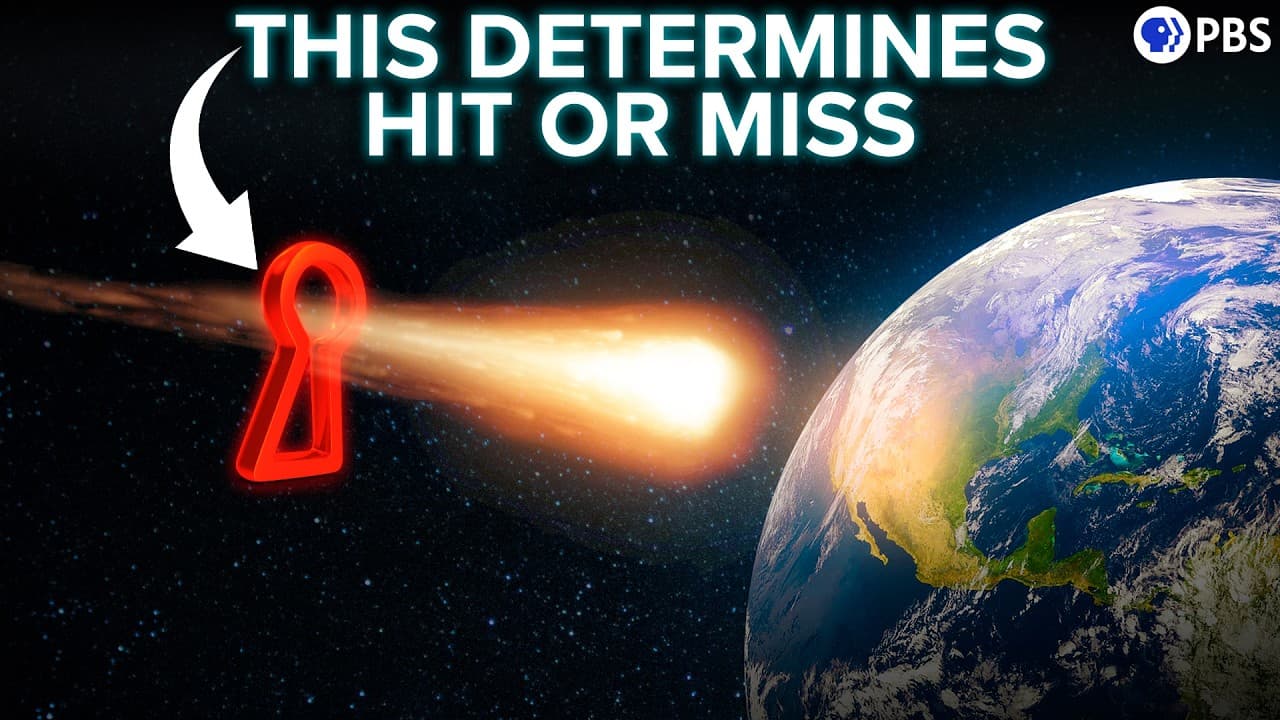
- Monte Carlo simulations help predict potential asteroid impact paths, focusing on gravitational keyholes that could lead to collisions.
- NASA's DART mission demonstrated our ability to alter an asteroid's trajectory by impacting it with a spacecraft.
- The asteroid Apophis, once thought to be a threat, is now considered safe for the next century, serving as a test case for planetary defense strategies.
- Ongoing and future surveys aim to detect more near-Earth objects, reducing the risk of unexpected asteroid impacts.
Install to Summarize YouTube Videos and Get Transcripts
Explore YouTube Video Summarizer or Get YouTube Transcript Extractor
Questions & Answers
Q: How do we determine if an asteroid will collide with Earth?
To determine if an asteroid will collide with Earth, astronomers track its movement and calculate its orbit using observations. They apply historical methods, like those of Kepler, Laplace, and Gauss, enhanced with modern technology, to predict its path. This involves assessing the asteroid's position, velocity, and potential gravitational interactions with other celestial bodies.
Q: What is the significance of the OSIRIS-REX mission?
The OSIRIS-REX mission was significant because it successfully intercepted the asteroid Bennu, an Earth-crossing asteroid, and returned samples to Earth. This mission provided valuable data on Bennu's composition and trajectory, enhancing our understanding of similar objects and contributing to the development of strategies for asteroid deflection and impact risk assessment.
Q: How do gravitational interactions affect asteroid trajectories?
Gravitational interactions, particularly with planets, can significantly alter an asteroid's trajectory. These interactions can deflect an asteroid from its original path, potentially leading it towards or away from Earth. The gravitational pull during close encounters, especially with Earth, can change the asteroid's orbit, making accurate predictions and monitoring essential for impact risk assessment.
Q: What role do Monte Carlo simulations play in asteroid impact prediction?
Monte Carlo simulations play a crucial role in predicting asteroid impacts by modeling numerous potential trajectories based on varying parameters. These simulations help identify gravitational keyholes—small regions in space that, if passed through, increase the likelihood of an impact in future encounters. By understanding these keyholes, we can better assess impact probabilities and devise deflection strategies.
Q: What did NASA's DART mission demonstrate?
NASA's DART mission demonstrated that we can alter an asteroid's trajectory by impacting it with a spacecraft. The mission successfully deflected a large asteroid by a significant amount, proving the feasibility of using kinetic impactors as a planetary defense strategy. This capability is crucial for preventing potential asteroid impacts on Earth, provided they are detected early enough.
Q: Why is the asteroid Apophis no longer considered a threat?
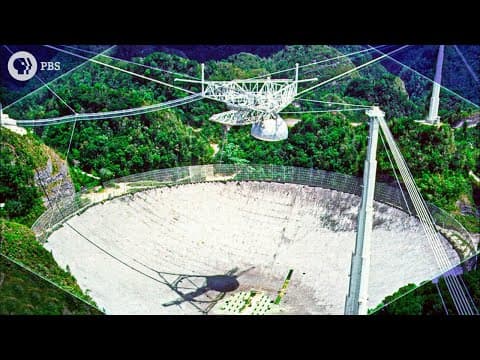
Apophis was initially considered a threat due to early observations suggesting a 2029 impact possibility. However, further observations and simulations, including radar data from Arecibo, have since downgraded the risk. It is now considered safe for at least the next century, with no significant impact threat. This reassessment showcases the importance of continuous monitoring and data collection for accurate impact risk evaluation.
Q: What are gravitational keyholes, and why are they important?
Gravitational keyholes are small regions in space that, if an asteroid passes through them, can lead to a future collision with Earth. These keyholes are critical in impact prediction because they simplify the calculation of impact probabilities. Avoiding a keyhole passage is crucial for deflection strategies, as it requires smaller adjustments than preventing a collision after a keyhole is passed.
Q: What efforts are being made to detect more near-Earth objects?
Efforts to detect more near-Earth objects include ongoing and future surveys like the Rubin observatory's LSST and NASA's Near Earth Object Surveyor. These initiatives aim to identify and track asteroids, especially those larger than 140 meters, to improve our ability to predict potential impacts. The goal is to enhance our planetary defense capabilities by detecting asteroids early and accurately assessing their risk.
Summary & Key Takeaways
-
Asteroids are a potential threat to Earth, but we have developed methods to detect and deflect them. By observing their movement and calculating their orbits, we can predict possible impacts. The OSIRIS-REX mission and NASA's DART mission are examples of efforts to study and alter asteroid trajectories.
-
Gravitational interactions with planets, solar radiation pressure, and the Yarkovsky effect influence asteroid paths. Monte Carlo simulations help predict potential impacts by identifying gravitational keyholes that could lead to collisions. Apophis, once a threat, is now safe for the next century, demonstrating successful planetary defense strategies.
-
Efforts to detect near-Earth objects are ongoing, with surveys like the Rubin observatory's LSST and NASA's Near Earth Object Surveyor aiming to find more asteroids. These initiatives aim to improve our ability to predict and mitigate asteroid impacts, ensuring Earth's safety from potential collisions.
Read in Other Languages (beta)
Share This Summary 📚
Summarize YouTube Videos and Get Video Transcripts with 1-Click
Try YouTube Summary with ChatGPT & Claude or YouTube Transcript Generator
Explore More Summaries from PBS Space Time 📚



Summarize YouTube Videos and Get Video Transcripts with 1-Click
Try YouTube Summary with ChatGPT & Claude or YouTube Transcript Generator