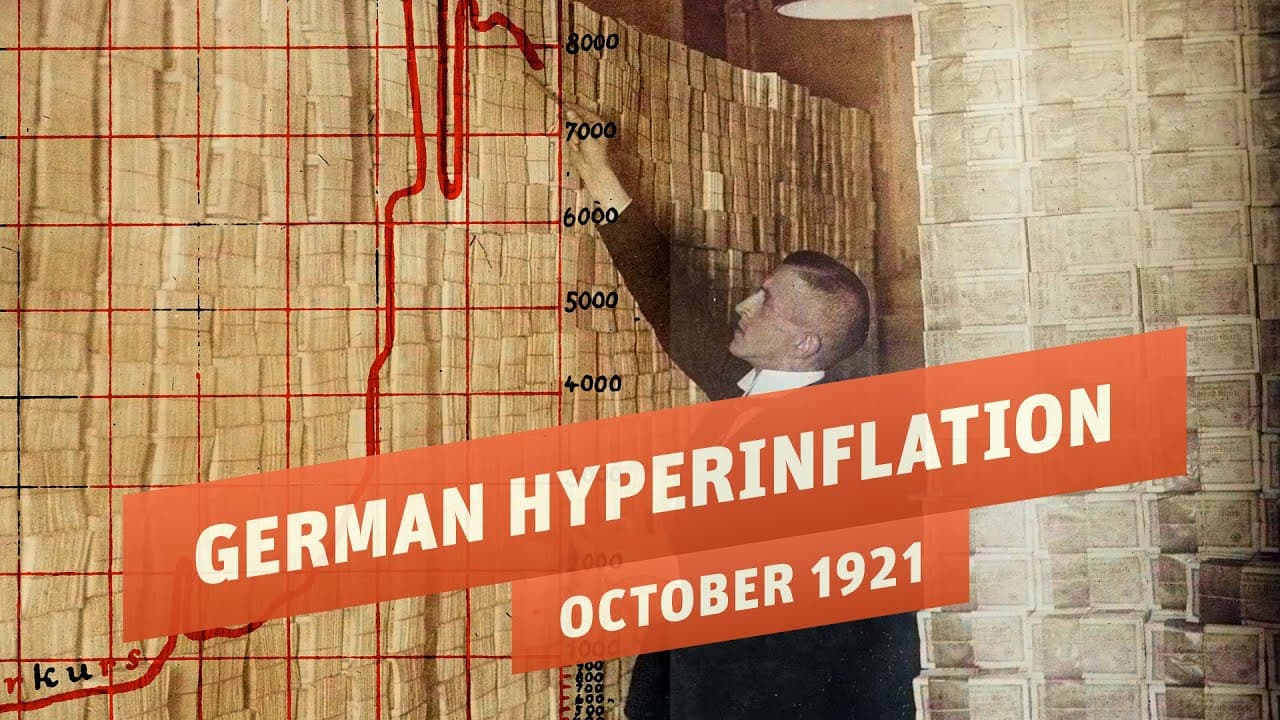
Why Germany Caught Hyperinflation in 1921 (Documentary)
TL;DR
Germany's post-WWI hyperinflation and territorial disputes shaped its economic turmoil.
Transcript
The German republic that emerged from the November 1918 revolution faced crisis after crisis in its first few years. There were uprisings from the left, coup attempts from the right, and political assassinations by fanatical nationalists. The Versailles Peace Treaty also imposed Allied occupation of the Rhineland, disarmament, war reparations payme... Read More
Key Insights
- The Weimar Republic faced multiple crises post-1918, including political instability and economic collapse, exacerbated by the Treaty of Versailles.
- Hyperinflation in Germany began due to unchecked money printing to finance WWI, leading to a severe devaluation of the Mark.
- Germany's economic struggles were worsened by the loss of colonies, Allied occupation, and reparations, causing further devaluation and financial instability.
- The division of Upper Silesia between Germany and Poland in 1921 added to economic tensions, affecting local industry and employment.
- The German taxation system struggled with inflation, as rising wages led to higher taxes, but loopholes allowed the wealthy to evade fair contributions.
- Speculation against the Mark became rampant, with Germans investing in foreign currencies to escape taxation and preserve wealth.
- The social fabric deteriorated as inflation eroded trust in currency, leading to increased political unrest and strikes.
- Efforts to stabilize the economy proved ineffective, with predictions of bankruptcy looming due to unsustainable reparations and deficits.
Install to Summarize YouTube Videos and Get Transcripts
Explore YouTube Video Summarizer or Get YouTube Transcript Extractor
Questions & Answers
Q: What were the main causes of hyperinflation in Germany post-WWI?
Hyperinflation in Germany was primarily caused by the government's decision to print excessive amounts of money to finance World War I, leading to a severe devaluation of the Mark. The post-war economic collapse, reparations demands, and loss of industrial regions further exacerbated the situation, causing prices to skyrocket and the currency to lose value rapidly.
Q: How did the Treaty of Versailles impact Germany's economy?
The Treaty of Versailles imposed heavy reparations on Germany, demanding payments in gold Marks and significant territorial losses. This strained the already weakened economy, leading to a financial crisis. The loss of industrial regions and colonies, combined with Allied occupation, hindered economic recovery and contributed to the hyperinflation crisis of the early 1920s.
Q: What role did the division of Upper Silesia play in Germany's economic troubles?
The division of Upper Silesia between Germany and Poland in 1921 disrupted local industries and employment, as the region was economically significant due to its coal and iron ore resources. The new border caused logistical issues, with workers unable to reach jobs and suppliers disconnected from customers, further destabilizing Germany's already fragile economy.
Q: How did wealthy Germans respond to the hyperinflation crisis?
Wealthy Germans often evaded taxes by exploiting loopholes and investing in foreign currencies to protect their wealth from devaluation. They engaged in speculative activities, moving money abroad to avoid the collapsing Mark. This behavior not only undermined the tax system but also contributed to the financial crisis by fueling further devaluation and capital flight.
Q: What were the social consequences of hyperinflation in Germany?
Hyperinflation eroded trust in the currency, leading to social unrest and political instability. The devaluation of the Mark caused living costs to rise dramatically, reducing purchasing power and creating widespread dissatisfaction. Strikes and demonstrations became common as workers demanded better wages, while the government struggled to maintain order amidst growing discontent.
Q: Why was the German taxation system ineffective during the hyperinflation period?
The German taxation system was ineffective due to high inflation rates, which rendered tax revenues insufficient. As wages increased to match inflation, tax rates rose, but loopholes allowed the wealthy to avoid fair contributions. This imbalance led to a loss of respect for taxes, as many citizens evaded payments, further exacerbating the economic crisis.
Q: How did international speculation affect the German Mark?
International speculation against the German Mark worsened its devaluation, as both wealthy Germans and foreign investors engaged in currency trading to profit from the declining Mark. This speculative activity increased demand for foreign currencies, further weakening the Mark's value and contributing to the overall financial instability in Germany during the hyperinflation crisis.
Q: What predictions were made about Germany's economic future in 1921?
In 1921, financial experts predicted that Germany's economic situation was unsustainable, with the possibility of bankruptcy looming due to the inability to meet reparations and domestic economic demands. The ongoing hyperinflation, capital flight, and rising deficits painted a bleak picture, suggesting that without significant intervention, Germany's financial collapse was imminent.
Summary & Key Takeaways
-
In 1921, Germany faced severe economic and political challenges, including hyperinflation and territorial disputes, following the Treaty of Versailles. The government's reliance on money printing during WWI led to a devaluation of the Mark, causing widespread financial instability and social unrest.
-
The division of Upper Silesia between Germany and Poland further complicated the economic situation, affecting local industries and leading to dissatisfaction on both sides. The Weimar Republic struggled to stabilize the economy amidst rising inflation and political turmoil.
-
Speculation against the Mark and tax evasion by wealthy Germans exacerbated the financial crisis, while the general populace faced increasing living costs and uncertainty. Predictions of bankruptcy loomed as the government failed to manage reparations and deficits effectively.
Read in Other Languages (beta)
Share This Summary 📚
Summarize YouTube Videos and Get Video Transcripts with 1-Click
Try YouTube Summary with ChatGPT & Claude or YouTube Transcript Generator
Explore More Summaries from The Great War 📚

Summarize YouTube Videos and Get Video Transcripts with 1-Click
Try YouTube Summary with ChatGPT & Claude or YouTube Transcript Generator