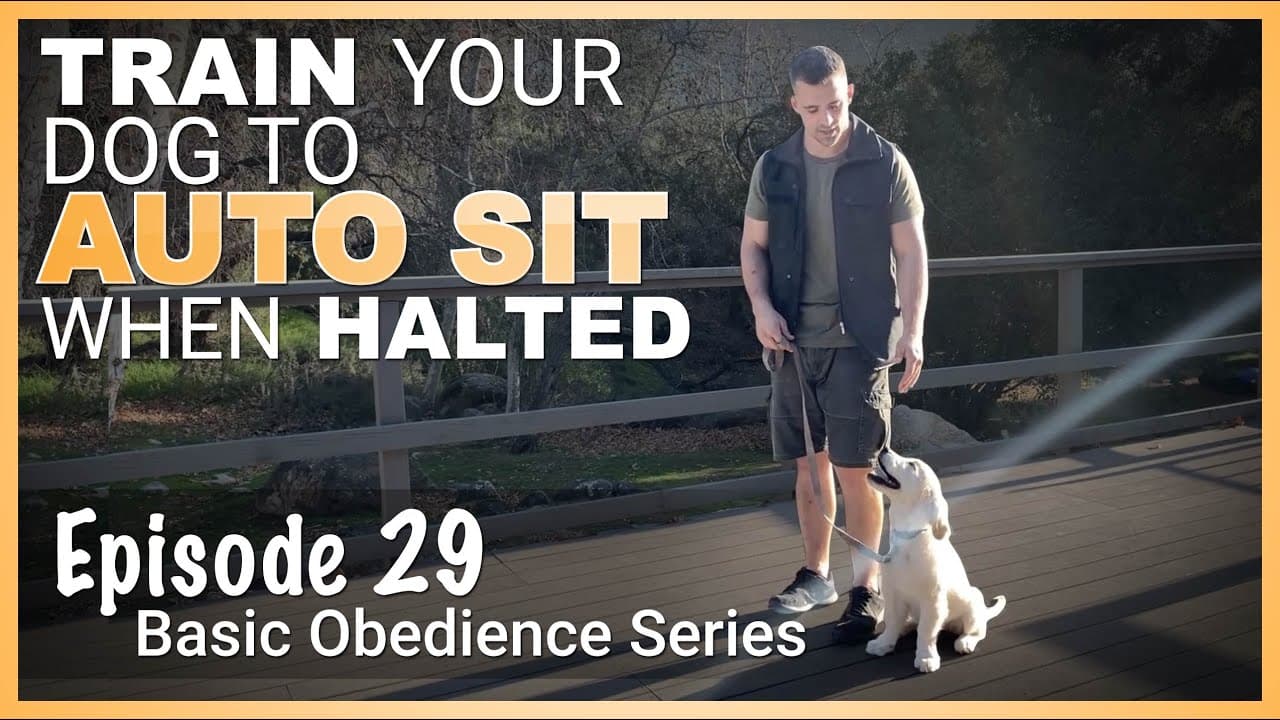
Train Your Dog To Automatically Sit When Halted. Episode 29
TL;DR
Teach dogs to sit automatically using luring, leash pressure, and commands.
Transcript
today we're gonna be teaching our dogs how to automatically sit when we halt during a walk there's going to be three different techniques that we're going to be using in order to teach this behavior one is going to be luring two is going to be leash pressure three is going to be giving the dog the command the verbal command when we come to a stop r... Read More
Key Insights
- Dogs learn through predictability and pattern recognition, making consistent training essential for automatic behaviors.
- Three techniques for teaching dogs to sit automatically include luring, leash pressure, and verbal commands.
- Luring involves using food to guide the dog into a sitting position, rewarding them once they comply.
- Leash pressure is applied to cue the dog into sitting, gradually reducing reliance on this method over time.
- Verbal commands reinforce the sit behavior, especially if the dog is already familiar with the 'sit' command.
- Consistency in training is crucial; dogs will eventually sit automatically without cues if trained consistently.
- Slowing down before stopping signals to the dog that a halt is imminent, preparing them to sit.
- Reward-based training encourages dogs to associate sitting with positive outcomes, reinforcing the behavior.
Install to Summarize YouTube Videos and Get Transcripts
Explore YouTube Video Summarizer or Get YouTube Transcript Extractor
Questions & Answers
Q: How does luring help in teaching a dog to sit?
Luring involves using a piece of food to guide the dog into the desired position, such as sitting. By holding the food above the dog's head and moving it back slightly, the dog naturally sits to follow the treat. This method is effective because it visually guides the dog into the position while associating the action with a reward.
Q: What role does leash pressure play in training?
Leash pressure is a technique where gentle upward pressure is applied to the leash to encourage the dog to sit. This method helps communicate the desired action through physical cues. Over time, as the dog learns to associate the pressure with sitting, the reliance on leash pressure can be reduced, leading to automatic behavior.
Q: Why is consistency important in dog training?
Consistency is crucial because dogs learn through patterns and repetition. By consistently applying the same cues and techniques, dogs can predict and understand what is expected of them. This predictability helps them learn faster and perform behaviors, like sitting automatically, without needing constant reinforcement or guidance.
Q: How does slowing down before stopping aid in training?
Slowing down before stopping serves as a signal to the dog that a halt is coming. This gives the dog time to prepare for the stop and perform the sit action. It's a form of non-verbal communication that helps the dog anticipate what's next, reinforcing the automatic sit behavior through pattern recognition.
Q: What is the benefit of using verbal commands in training?
Verbal commands, like 'sit,' reinforce the desired behavior by providing an auditory cue that the dog can learn to associate with the action. If the dog already knows the command, it strengthens the connection between the word and the behavior, making it easier for the dog to understand and perform the action automatically.
Q: How does reward-based training influence dog behavior?
Reward-based training positively reinforces desired behaviors by providing a reward, such as treats or praise, when the dog performs the correct action. This positive association encourages the dog to repeat the behavior in the future, as they learn that sitting when halted leads to a favorable outcome.
Q: What challenges might arise during this training?
Challenges include dogs not responding immediately to cues, getting distracted, or not understanding the connection between the cue and the action. Patience and consistency are essential, as is adjusting the training approach based on the dog's responsiveness. Over time, with persistence, these challenges can be overcome.
Q: Why is it important for a dog to learn to sit automatically?
Teaching a dog to sit automatically when halted enhances control and safety during walks. It prevents the dog from wandering or pulling, ensuring they remain attentive and responsive to the owner's movements. This behavior is particularly useful in busy or potentially dangerous environments, contributing to a well-behaved and obedient pet.
Summary & Key Takeaways
-
In this video, the trainer demonstrates how to teach dogs to automatically sit when halted during walks. Three techniques are used: luring, leash pressure, and verbal commands. Consistent application of these methods helps dogs learn to sit without cues over time.
-
The trainer emphasizes the importance of pattern recognition in dogs. By consistently using the same cues and techniques, dogs learn to predict and perform the desired behavior, such as sitting automatically when their owner stops walking.
-
Reward-based training is key to reinforcing the automatic sit behavior. By rewarding dogs each time they sit when halted, they begin to associate this action with positive reinforcement, making them more likely to repeat the behavior automatically.
Read in Other Languages (beta)
Share This Summary 📚
Summarize YouTube Videos and Get Video Transcripts with 1-Click
Try YouTube Summary with ChatGPT & Claude or YouTube Transcript Generator
Explore More Summaries from Nate Schoemer 📚


Summarize YouTube Videos and Get Video Transcripts with 1-Click
Try YouTube Summary with ChatGPT & Claude or YouTube Transcript Generator