Economist Paul Krugman Doesn't See Return to 3% Growth
TL;DR
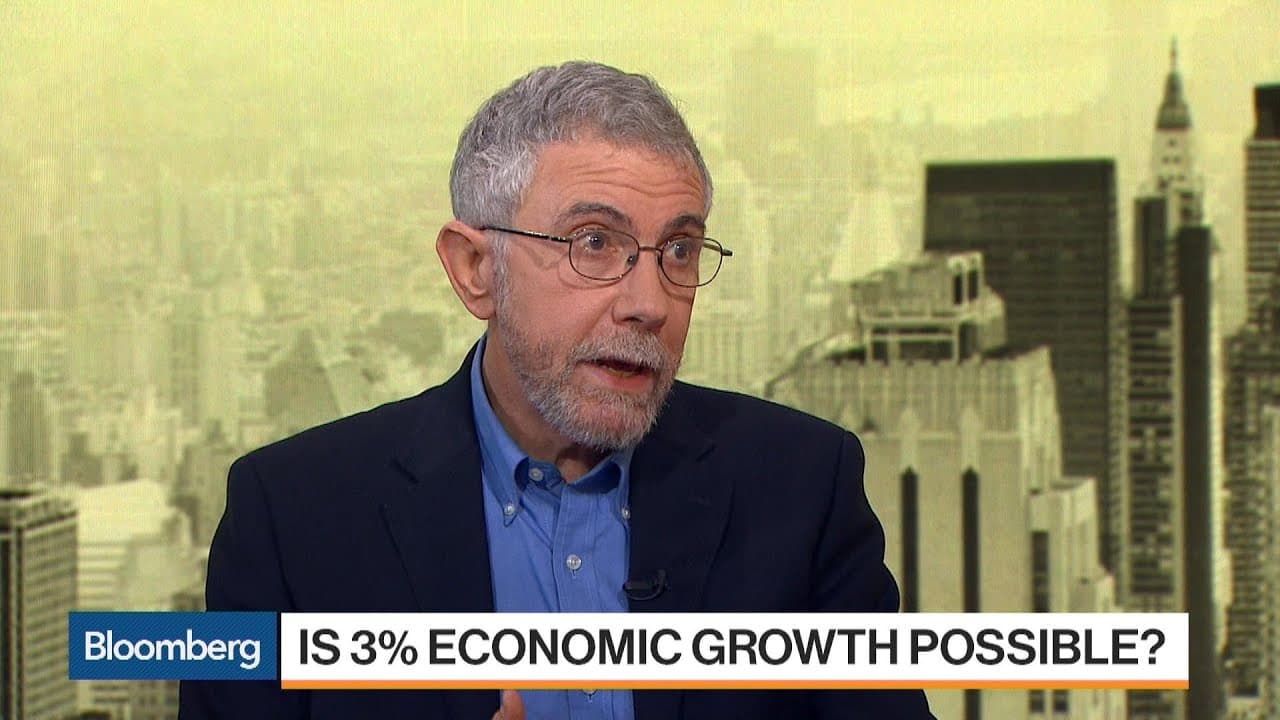
Paul Krugman doubts a return to 3% U.S. economic growth.
Transcript
3% growth is this a sustainable pace could we get back there with the right policy mix uh no we could get there if we get very very lucky if some wonderful technology comes along or you know something productivity surges for reasons that we don't understand but no there it's there's nothing in policy that would raise the growth rate um nobody you k... Read More
Key Insights
- Paul Krugman believes that achieving 3% economic growth in the U.S. is unlikely without extraordinary circumstances, such as a significant technological breakthrough.
- Current U.S. economic indicators like quit rates and wage rates suggest the economy is near full capacity, limiting growth potential.
- Demographic changes, including an aging population and stagnant labor force participation, are major factors limiting U.S. economic growth.
- The U.S. economy's potential growth rate is estimated below 2%, influenced by factors like slower workforce growth compared to past decades.
- Krugman emphasizes the need for infrastructure investment, citing low interest rates as an opportunity to fund productive public projects.
- Despite nearing full employment, Krugman argues that some economic stimulus through infrastructure spending could still be beneficial.
- Krugman notes a lack of significant infrastructure spending, as government investment in non-defense sectors remains low.
- He expresses skepticism about bipartisan cooperation on infrastructure spending, noting differences in proposed spending plans.
Install to Summarize YouTube Videos and Get Transcripts
Explore YouTube Video Summarizer or Get YouTube Transcript Extractor
Questions & Answers
Q: Why does Paul Krugman believe 3% growth is unlikely?
Paul Krugman believes that 3% economic growth is unlikely due to several factors. He cites demographic changes such as an aging population and stagnant labor force participation, which limit growth potential. Additionally, current economic indicators suggest the U.S. economy is near full capacity, making significant growth challenging without extraordinary technological advancements.
Q: What role do demographics play in U.S. economic growth according to Krugman?
Demographics play a crucial role in U.S. economic growth according to Paul Krugman. He highlights that an aging population and stagnant labor force participation are significant constraints. These demographic factors contribute to a lower potential growth rate, estimated below 2%, as compared to past decades when the workforce was expanding more rapidly.
Q: How does Krugman view the potential for infrastructure investment?
Paul Krugman views infrastructure investment as a critical opportunity for the U.S. economy. He argues that despite rising interest rates, they remain low enough to justify borrowing for productive public projects. Infrastructure spending could enhance long-term productivity and provide a cushion of economic stimulus, even as the economy nears full employment.
Q: What are the current economic indicators suggesting about U.S. growth capacity?
Current economic indicators such as quit rates and wage rates suggest that the U.S. economy is near its full capacity. These indicators imply limited room for growth without extraordinary circumstances. As a result, Krugman argues that significant economic expansion is unlikely without major technological breakthroughs or other unforeseen factors.
Q: Why does Krugman emphasize infrastructure spending despite nearing full employment?
Krugman emphasizes infrastructure spending despite nearing full employment because it can provide long-term productivity benefits and serve as economic stimulus. He believes that investing in infrastructure projects is justified by current low interest rates and the need to address the nation's infrastructure deficit, which can support economic growth even in a near-capacity economy.
Q: What skepticism does Krugman express about bipartisan cooperation on infrastructure?
Krugman expresses skepticism about bipartisan cooperation on infrastructure spending, noting differences in proposed plans. He points out that while there is potential for agreement, actual proposals often fall short of substantial investment. For instance, he mentions that rather than committing to a trillion-dollar infrastructure plan, some proposals rely on public-private partnerships, which may not align with his vision for robust government investment.
Q: How does Krugman compare current workforce growth to past decades?
Krugman compares current workforce growth unfavorably to past decades, noting that the U.S. is experiencing slower growth in the working-age population. In the 1980s, the workforce was expanding rapidly due to baby boomers entering the labor market and increased female participation. In contrast, today, the workforce is growing more slowly, contributing to lower potential economic growth.
Q: What conditions does Krugman believe could lead to higher growth rates?
Krugman believes that higher growth rates could occur if extraordinary conditions arise, such as a significant technological breakthrough that boosts productivity. However, he emphasizes that such developments are unpredictable and not guaranteed by any existing policy measures. Without these extraordinary circumstances, he sees no clear path to achieving sustained 3% growth in the current economic environment.
Summary & Key Takeaways
-
Paul Krugman argues that reaching a 3% growth rate for the U.S. economy is unlikely due to demographic factors and current economic capacity. He highlights the need for extraordinary technological advancements to achieve such growth. Current economic indicators suggest the economy is near full capacity, limiting potential growth.
-
Krugman discusses the impact of an aging population and stagnant labor force participation on economic growth, estimating a potential growth rate below 2%. He emphasizes the importance of infrastructure investment, given current low interest rates, to enhance productivity and provide economic stimulus.
-
Despite nearing full employment, Krugman advocates for increased infrastructure spending to support long-term productivity. He notes the current low level of government investment in non-defense sectors and expresses doubt about bipartisan cooperation on substantial infrastructure spending plans.
Read in Other Languages (beta)
Share This Summary 📚
Summarize YouTube Videos and Get Video Transcripts with 1-Click
Try YouTube Summary with ChatGPT & Claude or YouTube Transcript Generator
Explore More Summaries from Bloomberg Originals 📚



Summarize YouTube Videos and Get Video Transcripts with 1-Click
Try YouTube Summary with ChatGPT & Claude or YouTube Transcript Generator