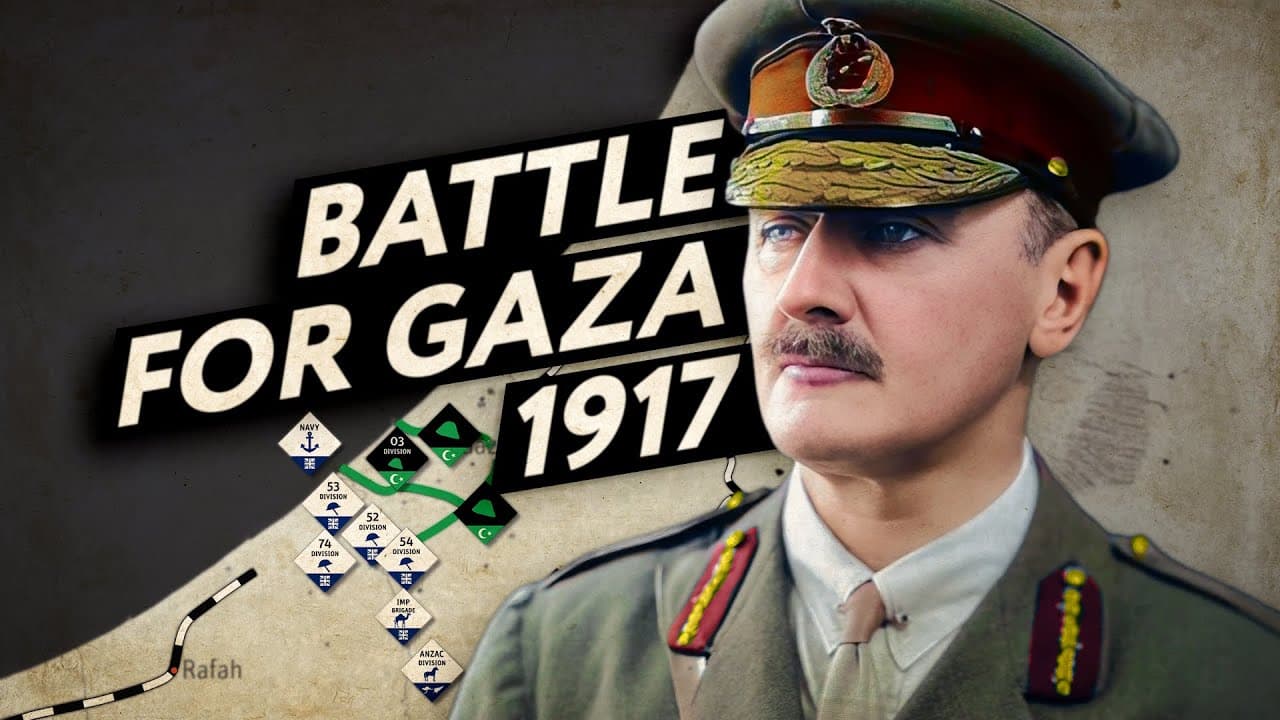
Battle for Gaza 1917: The Palestinian Campaign of WW1 (Documentary)
TL;DR
The 1917 Gaza campaign shaped the modern Middle East conflict.
Transcript
The ongoing Israel-Palestine conflict is one of the most tragic and destructive in the history of the modern Middle East. And although the current round of fighting began in 2023, the roots of the struggle go back to another war more than a century ago. When the First World War began in 1914, the territory of today’s Israel and Palestine was pa... Read More
Key Insights
- The British campaign in Gaza during WW1 was pivotal in shaping modern Middle Eastern geopolitics and laid the groundwork for future conflicts.
- The British Empire's strategic interest in the Middle East was driven by the Suez Canal, oil reserves, and communication lines with India.
- The campaign saw the use of diverse forces, including British, Australian, New Zealand, Indian troops, and the Desert Column cavalry.
- The Ottomans, supported by German military leadership, managed to initially resist British advances in Gaza, despite being outnumbered.
- The British victory in the campaign was a morale booster after setbacks in Europe, and it helped secure British interests in the region.
- The capture of Jerusalem by British forces was a significant event, symbolically resonating with both Christian and Jewish communities worldwide.
- The Balfour Declaration of 1917, supporting a Jewish homeland in Palestine, was a critical development that influenced future Israeli-Palestinian relations.
- The campaign highlighted the complex interplay of alliances, with Britain promising conflicting outcomes to Arabs, Jews, and European powers.
Install to Summarize YouTube Videos and Get Transcripts
Explore YouTube Video Summarizer or Get YouTube Transcript Extractor
Questions & Answers
Q: What was the strategic importance of the British campaign in Gaza during WW1?
The British campaign in Gaza during WW1 was strategically important as it aimed to secure the Suez Canal, a critical route for British communications and trade with India. Additionally, controlling the region allowed Britain to access valuable oil reserves and counter Ottoman-German influence in the Middle East, aligning with broader imperial interests.
Q: How did the British forces manage to overcome the Ottoman defenses in Gaza?
The British forces overcame the Ottoman defenses in Gaza through a combination of military strategy, diverse troop compositions, and reinforcements. Under General Edmund Allenby's leadership, the British reorganized their forces, gained air superiority, and implemented deceptive tactics to mislead the Ottomans about their true objectives, ultimately capturing key positions like Beersheba and Jerusalem.
Q: What was the impact of the Balfour Declaration during the Gaza campaign?
The Balfour Declaration, issued during the Gaza campaign, had a profound impact by expressing British support for a Jewish homeland in Palestine. This declaration was a pivotal moment in Zionist history and significantly influenced future Israeli-Palestinian relations. It created tensions, as it contradicted promises made to Arab leaders and complicated post-war Middle Eastern politics.
Q: Why was the capture of Jerusalem significant for the British during WW1?
The capture of Jerusalem was significant for the British as it provided a morale boost following setbacks in Europe and symbolized a major victory in the Middle East. It resonated with Christian and Jewish communities worldwide, reinforcing the British narrative of protecting civilization. The event also strengthened British strategic control over the region, impacting post-war geopolitics.
Q: What role did T.E. Lawrence play in the Gaza campaign?
T.E. Lawrence, known as Lawrence of Arabia, played a crucial role in the Gaza campaign by fostering alliances with Arab tribes against the Ottomans. He facilitated the Arab Revolt, which complemented British military efforts. His actions, such as the capture of Aqaba, boosted Arab morale and increased British support for the Hashemite cause, aligning with broader British strategic objectives.
Q: How did the Ottoman Empire respond to the British advances in the Gaza campaign?
The Ottoman Empire, supported by German military leadership, initially resisted British advances in the Gaza campaign through strategic defenses and reinforcements. However, internal disagreements and logistical challenges, including a lack of resources and effective coordination, ultimately weakened their position. The Ottomans struggled to maintain control as British forces implemented successful military strategies.
Q: What were the long-term consequences of the British victory in the Gaza campaign?
The long-term consequences of the British victory in the Gaza campaign included the establishment of British control over Palestine, which directly influenced the geopolitical landscape of the Middle East. The victory laid the groundwork for the British Mandate, the implementation of the Balfour Declaration, and the eventual creation of the state of Israel, leading to ongoing regional conflicts.
Q: How did the Gaza campaign affect the relationship between the British and their allies?
The Gaza campaign affected the relationship between the British and their allies by causing tensions due to conflicting promises and strategic interests. The British exclusion of French and Italian forces from key operations in the Holy Land led to diplomatic strains. Additionally, the campaign's outcomes highlighted the complexities of British commitments to both Arab and Zionist aspirations, complicating alliances.
Summary & Key Takeaways
-
The 1917 Gaza campaign during WW1 was a crucial British military operation that significantly impacted the future of the Middle East. The campaign involved intense battles between British-led forces and Ottoman troops, with strategic interests centered around the Suez Canal and regional resources.
-
Despite initial setbacks, the British eventually secured victories in Gaza and Jerusalem, boosting morale and strengthening their geopolitical position. The campaign involved diverse military units and showcased the strategic importance of the region, which was not just a sideshow but a core theater of war.
-
The Balfour Declaration, issued during the campaign, promised support for a Jewish homeland in Palestine, setting the stage for future conflicts. The campaign's outcomes highlighted the complex and often conflicting promises made by Britain to various stakeholders, including Arabs, Jews, and European allies.
Read in Other Languages (beta)
Share This Summary 📚
Summarize YouTube Videos and Get Video Transcripts with 1-Click
Try YouTube Summary with ChatGPT & Claude or YouTube Transcript Generator
Explore More Summaries from The Great War 📚

Summarize YouTube Videos and Get Video Transcripts with 1-Click
Try YouTube Summary with ChatGPT & Claude or YouTube Transcript Generator