‘Blowing From A Gun’ Disturbing punishment of the British Empire
TL;DR
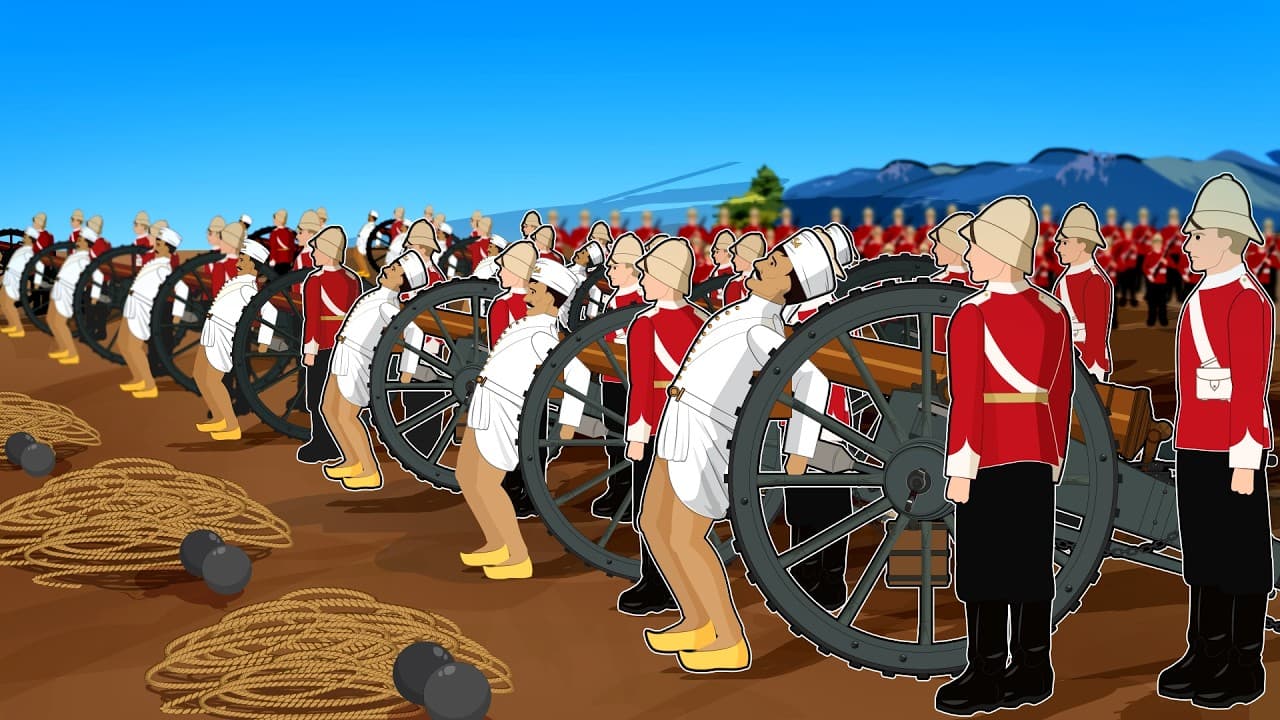
The gruesome practice of execution by cannon has a long, terrifying history across cultures.
Transcript
The rebellion has failed. The ring leaders, once full of revolutionary fire, now shuffle forward with their wristbound. All bravado evaporated. They've gambled everything on victory, and we're now contemplating their inevitable fate. As they reach the execution grounds, they scan for the familiar instruments of death, the gallows perhaps, or the fi... Read More
Key Insights
- ✊ Execution by cannon served as a stark statement about state power, designed to obliterate not just the body but also the memory of the condemned.
- 💄 Its psychological impact was critical, making it a favored method among regimes seeking to assert dominance and discourage dissent.
- 🇨🇫 The practice featured a combination of spectacle and severity, enhancing its function as a deterrent through public display and gruesome execution.
- 📜 The implementation of cannon executions was documented in various cultures, showcasing the absence of a universal approach to capital punishment across history.
- ✊ The legacy of this method serves as a reminder of the historically ingrained brutality of state power mechanisms and the lengths to which authorities would go to maintain control.
- 😬 Nature played a grim role in these executions, with scavengers quickly consuming remnants of bodies, highlighting the dehumanization of victims.
- 🇰🇵 While largely phased out in many parts of the world, the more recent reports from North Korea suggest that the shadow of such methods lingers, challenging the notion of progress in humane treatment.
Install to Summarize YouTube Videos and Get Transcripts
Explore YouTube Video Summarizer or Get YouTube Transcript Extractor
Questions & Answers
Q: What was the primary purpose behind executing prisoners by cannon?
The primary objective of cannon executions was deterrence, utilizing the gruesomeness of the act as a psychological tool to warn others against defying authority. The method was designed for maximum impact, ensuring that witnesses understood the severe consequences of rebellion or crime, thus reinforcing control and compliance among the populace.
Q: How did the execution method differ between cultures and eras?
While the fundamental concept of executing via cannon remained similar, variations existed. In the Mughal Empire, the condemned were directly attached to cannons, while in the Kingdom of Mysore, victims were tied to rockets. The specifics of the cannon used could also vary greatly, and sometimes the execution itself went awry, leading to unintended consequences.
Q: Why did blowing from a gun gradually decline in popularity?
Blowing from a gun saw a decline in British territories as the late 1800s approached, following a shift towards more "civilized" forms of execution. Changing societal values and the push for humane treatment of prisoners eventually led to the abandonment of such brutal public spectacles in favor of methods deemed more morally acceptable.
Q: What do contemporary reports from North Korea indicate about the revival of such practices?
In recent years, there have been alarming reports that North Korea has revived a form of execution similar to blowing from a gun, using anti-aircraft guns instead. Although independent verification of these claims is difficult due to the country’s isolation, such reports point to a disturbing continuation of extreme punitive measures by state authorities.
Summary & Key Takeaways
-
Execution by cannon originated in the early 16th century, with the Portuguese utilizing it as a means to control colonies. The method involved binding prisoners to cannons and firing them, producing a shocking spectacle intended to instill fear.
-
The practice became infamous in the Mughal Empire and was used broadly by Afghan rulers, targeting not just rebels but also common criminals, amplifying its role as an instrument of state power and psychological deterrence.
-
Reports of modern executions using similar methods have emerged from North Korea, raising concerns over the persistence of such brutal practices in contemporary settings, despite historical shifts toward more humane executions.
Read in Other Languages (beta)
Share This Summary 📚
Summarize YouTube Videos and Get Video Transcripts with 1-Click
Try YouTube Summary with ChatGPT & Claude or YouTube Transcript Generator
Explore More Summaries from Simple History 📚
![[Censored Version] Iban Headhunters (Malay Crisis, 1948-60) thumbnail](/_next/image?url=https%3A%2F%2Fi.ytimg.com%2Fvi%2FIP4Oag-f13k%2Fhqdefault.jpg&w=750&q=75)


Summarize YouTube Videos and Get Video Transcripts with 1-Click
Try YouTube Summary with ChatGPT & Claude or YouTube Transcript Generator