What Was the Role of the PIAT in WWII?
TL;DR
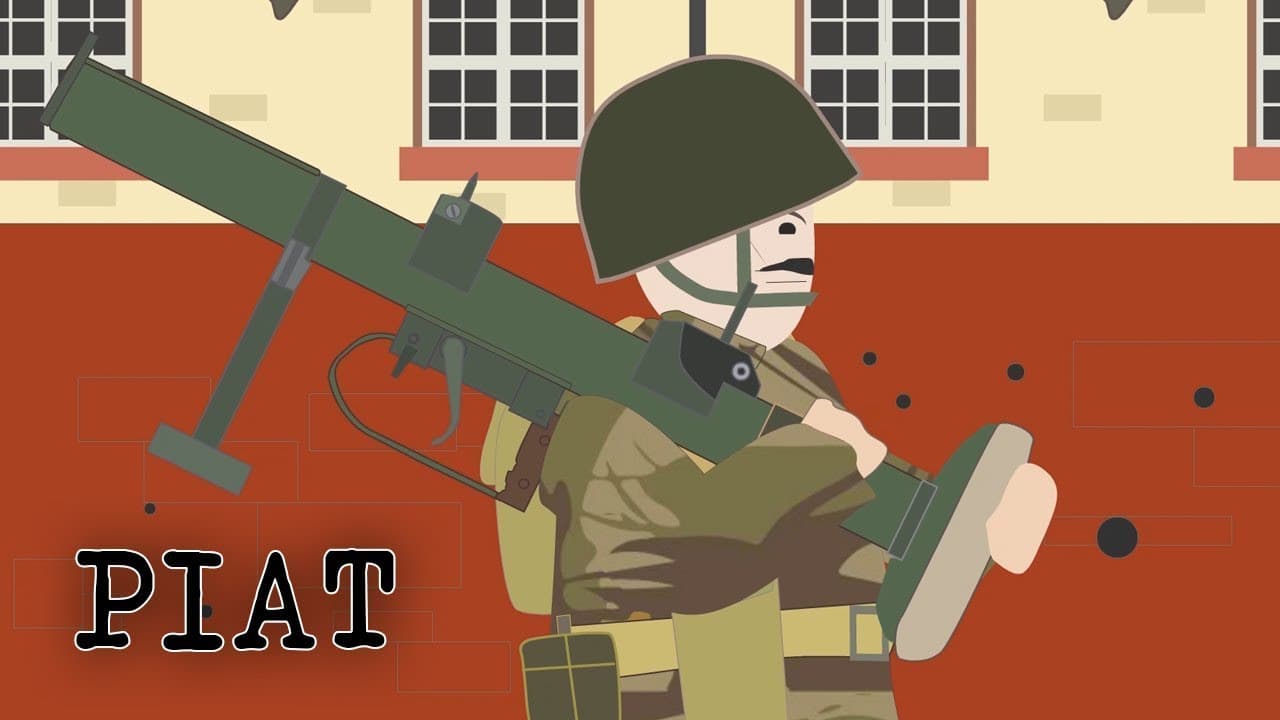
The PIAT, or Projector, Infantry, Anti-Tank, served as the primary British portable anti-tank weapon during WWII, designed to overcome the Boys Anti-tank Rifle's limitations. While it was cost-effective and easy to produce, its large size and complicated operation made it unpopular among soldiers. Despite its drawbacks, the PIAT saw wide usage before being phased out in the 1950s.
Transcript
PIAT stood for "Projector, Infantry, Anti-Tank" and was the main British anti-tank weapon of World War II. British soldiers were equipped with the Boys Anti-tank Rifle (Rifle, Anti-Tank, .55in, Boys). Even during the early stages of the war... the Boys Rifle as well as other anti-tank rifles were considered Obsolete it had insufficient power to pen... Read More
Key Insights
- 🇦🇬 The PIAT was developed as a response to the ineffectiveness of the Boys Anti-tank Rifle in penetrating tank armor.
- 👻 The spigot mortar system of the PIAT allowed for easy manufacture and low costs compared to rocket launchers.
- 🦚 Despite its advantages, the PIAT had various drawbacks, including being large, unwieldy, and difficult to cock.
- 🧑🚒 The PIAT was widely used by British and Allied troops in WWII, as well as resistance fighters in occupied Europe.
- 🥺 After the war, the need for the PIAT decreased, leading to its phased withdrawal from service in the 1950s.
- 🦸 The PIAT's replacement in the British Army was the American M20 super bazooka.
- 👾 The PIAT's usage in the war influenced the development of military online games like War Thunder.
Install to Summarize YouTube Videos and Get Transcripts
Explore YouTube Video Summarizer or Get YouTube Transcript Extractor
Questions & Answers
Q: How did the PIAT compare to other anti-tank weapons of its time?
Unlike rocket launchers like the bazooka and Panzerfaust, the PIAT did not require a complex rocket mechanism, making it easy to manufacture and cost-effective.
Q: What were some drawbacks of the PIAT?
The PIAT was large and unwieldy, making it challenging to carry around. Additionally, the initial cocking process was complicated and difficult, especially for shorter soldiers.
Q: How was the PIAT used in battle?
The PIAT was widely used by the British Army from mid-1943 onwards, as well as by Canadian troops, Royal Marine Commandos, and resistance fighters in occupied Europe.
Q: When was the PIAT phased out of service?
The PIAT was gradually withdrawn from service in the early 1950s and replaced by the American M20 super bazooka in the British Army.
Summary & Key Takeaways
-
The Boys Anti-tank Rifle used by British soldiers during the early stages of WWII was insufficient in power to penetrate tank armor, resulting in the development of the PIAT.
-
Lieutenant Colonel Stuart Blacker modified a spigot mortar called the Blacker Bombard to create the first portable anti-tank weapon.
-
Major Jeffries improved Blacker's design, leading to the production of 115,000 PIAT weapons, which were used by British troops, Royal Marine Commandos, and resistance fighters in various Allied armies.
Read in Other Languages (beta)
Share This Summary 📚
Summarize YouTube Videos and Get Video Transcripts with 1-Click
Try YouTube Summary with ChatGPT & Claude or YouTube Transcript Generator
Explore More Summaries from Simple History 📚


Summarize YouTube Videos and Get Video Transcripts with 1-Click
Try YouTube Summary with ChatGPT & Claude or YouTube Transcript Generator