Are Ghost Ships Real? Exploring the Science Behind Them
TL;DR
Ghost ships are real phenomena explained by principles of buoyancy and fluid dynamics rather than supernatural forces. Ships like the 'Mary Celeste' float due to specific circumstances, while ocean currents can carry abandoned vessels over great distances, leading to sightings years apart.
Transcript
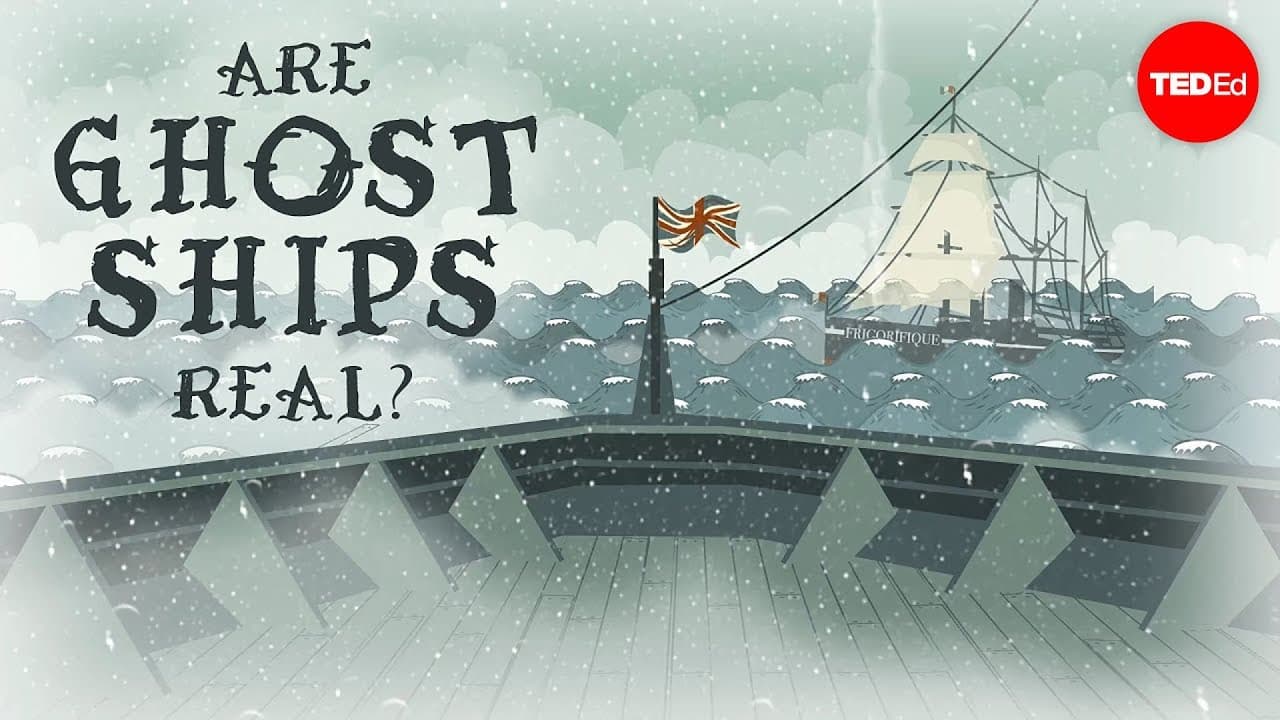
One foggy morning in 1884, the British steamer "Rumney" crashed into the French ship "Frigorifique." Seeing their ship filling with water, the French crew climbed aboard the "Rumney." But as they sailed towards the nearest port, a silent form suddenly emerged from the fog: the abandoned "Frigorifique." It was too late to turn, and the impact was ... Read More
Key Insights
- 👻 Ghost ships' mysterious behavior can be explained by scientific principles like buoyancy and fluid dynamics.
- 🖐️ Ocean currents play a crucial role in the movement of abandoned ships over vast distances.
Install to Summarize YouTube Videos and Get Transcripts
Explore YouTube Video Summarizer or Get YouTube Transcript Extractor
Questions & Answers
Q: How do buoyancy and fluid dynamics explain why ghost ships float?
Buoyancy, based on Archimedes's Principle, states that objects less dense than water float; combined with fluid dynamics where water reaches equilibrium, abandoned ships can remain afloat.
Q: What was the significance of ocean currents in the context of ghost ships?
Ocean currents, influenced by various factors, explain how abandoned ships can be sighted in multiple locations years apart, showing a complex network of water movements.
Q: Why did the crew of the "Mary Celeste" abandon the ship, fearing it would sink?
The crew feared the water filling the hull would increase its weight, but fluid dynamics intervened, reaching equilibrium without sinking the ship.
Q: How did scientists utilize abandoned ships to study ocean currents?
By tracking derelict ships, scientists were able to gather data on ocean currents, leading to the discovery and understanding of complex water movements.
Summary & Key Takeaways
-
In 1884, the "Frigorifique" ship, seemingly abandoned, collided with the "Rumney" due to a circle-sailing effect, leading to tales of ghost ships.
-
The infamous "Mary Celeste" found in 1872 sparked rumors, but buoyancy and fluid dynamics explain how ships float even when abandoned.
-
Ocean currents, temperature, salinity, wind, and gravity play a role in the movement of ghost ships across vast distances.
Read in Other Languages (beta)
Share This Summary 📚
Summarize YouTube Videos and Get Video Transcripts with 1-Click
Try YouTube Summary with ChatGPT & Claude or YouTube Transcript Generator
Explore More Summaries from TED-Ed 📚





Summarize YouTube Videos and Get Video Transcripts with 1-Click
Try YouTube Summary with ChatGPT & Claude or YouTube Transcript Generator