A Resounding Victory - German Morale Plummets I THE GREAT WAR Week 212
TL;DR
Allied strategies demoralize Germans; internal Russian conflict intensifies.
Transcript
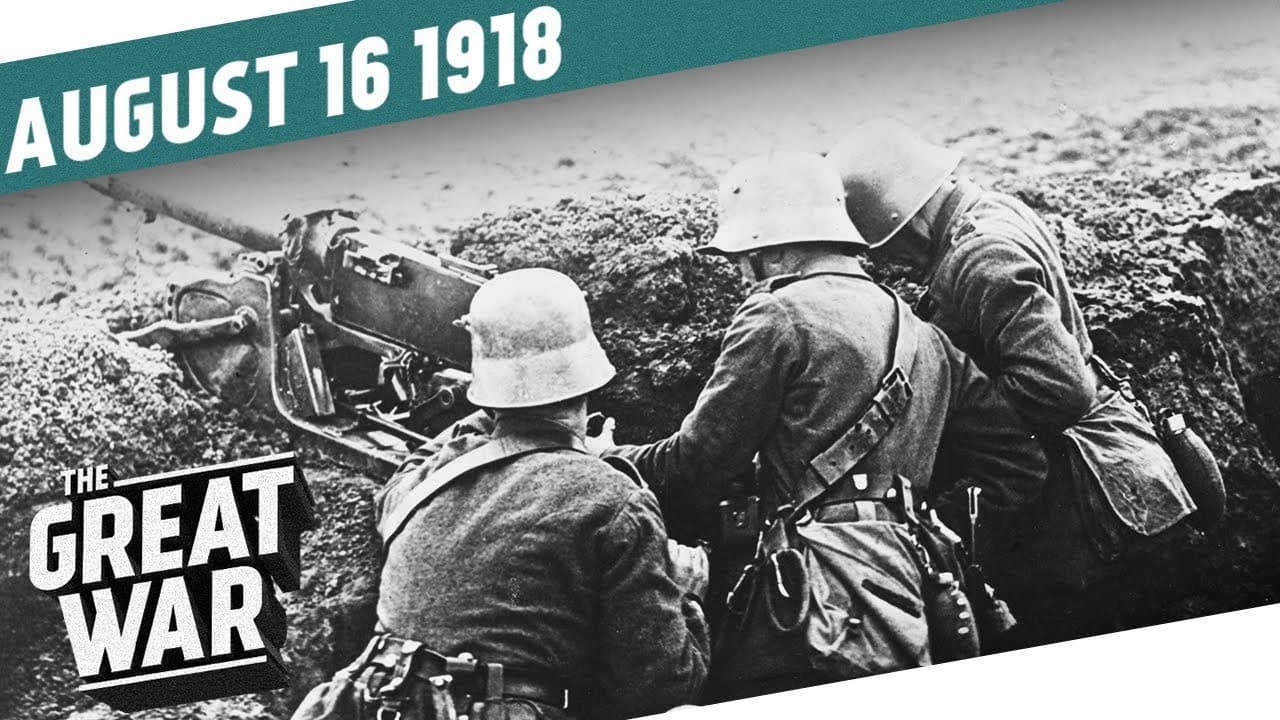
for four years when the allies have mounted attacks on the Western Front they've been huge offensives tried to batter their way through big chunks of the German defenses but not anymore now the Allies have adopted a new strategy i'm indy neidell welcome to the great war last week saw the black day of the German army August 8th when the Battle of Om... Read More
Key Insights
- The Allies have shifted their strategy from large offensives to multiple small-scale attacks, causing significant German losses and morale decline.
- German High Command is struggling to adapt, with Ludendorff refusing to retreat to stronger defensive positions, repeating past mistakes.
- Allied air superiority allows for surprise attacks without preliminary artillery, further demoralizing German forces.
- Tensions between British and American commanders are highlighted, but direct communication between Haig and Pershing maintains a strong alliance.
- In Russia, Bolshevik reprisals against Social Revolutionaries escalate, with Stalin implementing a severe Red Terror campaign.
- The British expeditionary force in Baku is much smaller than anticipated, disappointing local expectations for defense against Ottoman forces.
- Diplomatic relations between the US and Russian Bolsheviks are severed, indicating worsening international relations.
- Despite internal challenges, the Allies continue to make strategic advances, with new troops arriving in Vladivostok and British recognition of Czechoslovakia as an ally.
Install to Summarize YouTube Videos and Get Transcripts
Explore YouTube Video Summarizer or Get YouTube Transcript Extractor
Questions & Answers
Q: What new strategy have the Allies adopted on the Western Front?
The Allies have shifted from large-scale offensives to executing multiple small-scale attacks in quick succession across the front. This new approach allows them to maintain pressure on the German forces, exploiting weaknesses and causing significant morale issues without the need for prolonged artillery barrages.
Q: How has Ludendorff responded to the changing battlefield dynamics?
Ludendorff has resisted pulling back to the Hindenburg Line, despite advice to do so, which would have strengthened German defenses. This decision reflects a repeated strategic error, reminiscent of previous German leadership, and has contributed to declining German morale and increased losses.
Q: What impact has Allied air superiority had on the conflict?
Allied air superiority has allowed them to conceal attack preparations and execute surprise offensives without preliminary artillery barrages. This capability has demoralized German forces and contributed to their inability to effectively respond to the rapid succession of Allied attacks.
Q: What is the current state of relations between British and American commanders?
Despite diplomatic tensions caused by back-channel dealings, British and American commanders, particularly Haig and Pershing, maintain strong relations through direct and open communication. This ensures effective cooperation and coordination on the battlefield, with both sides respecting each other's contributions and needs.
Q: What developments have occurred in Russia during this period?
In Russia, the Bolshevik regime has intensified its crackdown on Social Revolutionaries, with Stalin leading a severe Red Terror campaign. This internal conflict has reached a violent climax, further destabilizing the region and impacting diplomatic relations, as seen with the severance of US relations with the Bolshevik government.
Q: What was the reaction in Baku to the arrival of British forces?
The arrival of British forces in Baku was met with disappointment, as the contingent was much smaller than anticipated. The locals had expected a substantial British army to defend against the Ottoman advance, but only a part of a single brigade arrived, highlighting the dire situation and impacting local morale.
Q: How have the Allies continued to make strategic gains?
The Allies have continued to make strategic gains through the arrival of new troops in Vladivostok and the recognition of Czechoslovakia as an allied nation. These developments, combined with their effective new offensive strategy, have bolstered their position and weakened German defenses across multiple fronts.
Q: What role did Ferdinand Foch play in the Allied strategy?
Ferdinand Foch played a crucial role in the Allied strategy by overseeing the coordination of multiple small offensives across the front. His leadership helped maintain the momentum of Allied advances, despite some disagreements with British commanders like Haig, who ultimately respected Foch's strategic vision and command authority.
Summary & Key Takeaways
-
The Allies' new strategy of multiple small offensives has significantly weakened German morale, as they struggle to adapt to the changing battlefield dynamics. Ludendorff's refusal to retreat to a stronger defensive line repeats past strategic errors.
-
In Russia, the Bolshevik regime intensifies its crackdown on Social Revolutionaries, with Stalin leading a brutal Red Terror campaign. Meanwhile, the British force arriving in Baku is much smaller than expected, disappointing local defenders.
-
Despite diplomatic tensions, British and American military leaders maintain strong relations, ensuring continued cooperation. The Allies make strategic gains across various fronts, with new troops arriving in Vladivostok and British recognition of Czechoslovakia as an allied nation.
Read in Other Languages (beta)
Share This Summary 📚
Summarize YouTube Videos and Get Video Transcripts with 1-Click
Try YouTube Summary with ChatGPT & Claude or YouTube Transcript Generator
Explore More Summaries from The Great War 📚

Summarize YouTube Videos and Get Video Transcripts with 1-Click
Try YouTube Summary with ChatGPT & Claude or YouTube Transcript Generator