Sabotage In The Desert - Battle of Broodseinde I THE GREAT WAR Week 167
TL;DR
Sabotage and battles shape WWI strategies and outcomes.
Transcript
Millions of men are at war. You’re trying to win, but you’re the leader of just a few hundred disorganized tribesmen. What can you do for the war effort? Well, you can try sabotage. I’m Indy Neidell; welcome to the Great War. Last week the British had yet another success at the Battle of Passchendaele, as well a success on the Euphrates. The other ... Read More
Key Insights
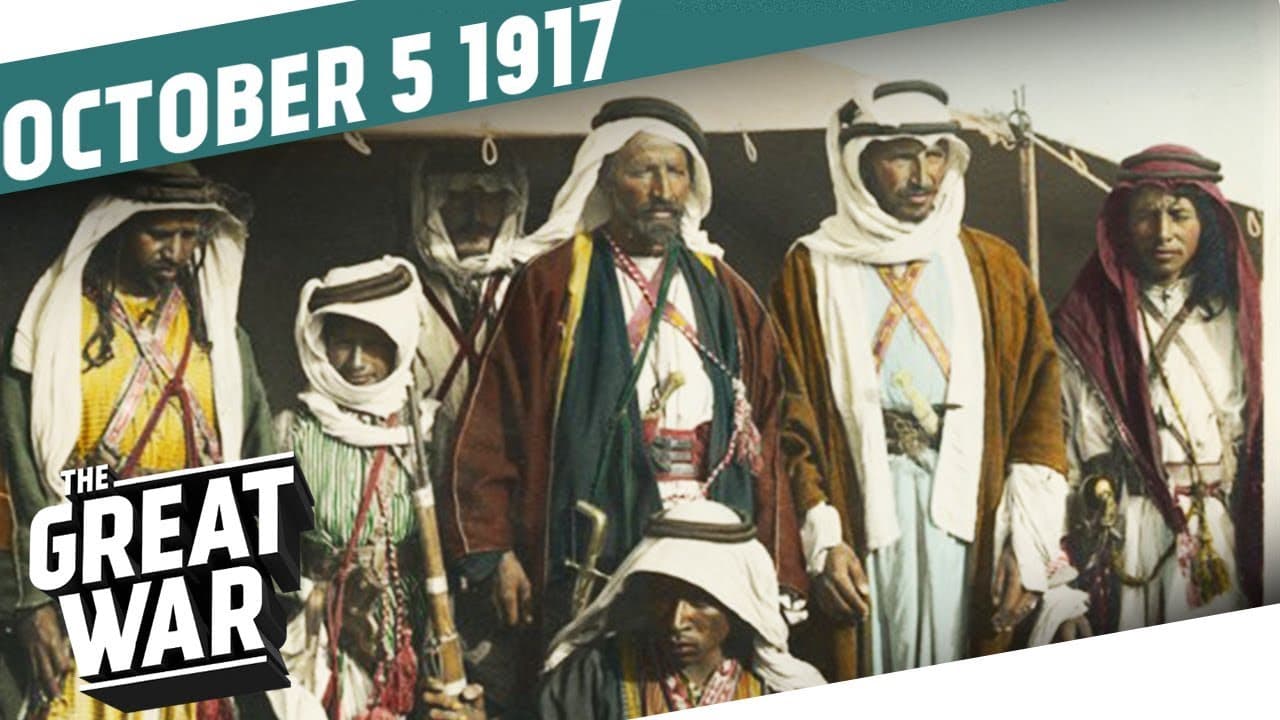
- Lawrence of Arabia and Bedouin tribesmen successfully sabotaged the Hejaz Railway, disrupting Ottoman supply lines and causing locomotive strikes.
- The Battle of Broodseinde was a costly British victory, with significant casualties on both sides, yet it marked a strategic advance for the Allies.
- British Commander Sir Douglas Haig was optimistic about breakthroughs at Passchendaele, despite skepticism from his generals and heavy casualties.
- German tactics reverted to flexible defense due to unsustainable losses, highlighting the effectiveness of British artillery barrages.
- The British government considered establishing a Zionist state in Palestine as Turkish rule appeared increasingly vulnerable.
- Operation Albion aimed to outflank the Russian army by capturing islands in the Estonian Archipelago, showcasing German strategic maneuvers.
- Italian forces made gains against Austrians, while political unrest in Russia and China signaled broader revolutionary currents.
- The British faced challenges from early winter weather and flooded terrain, complicating further advances in Belgium.
Install to Summarize YouTube Videos and Get Transcripts
Explore YouTube Video Summarizer or Get YouTube Transcript Extractor
Questions & Answers
Q: What was the significance of the sabotage of the Hejaz Railway?
The sabotage of the Hejaz Railway by Lawrence of Arabia and Bedouin tribesmen significantly disrupted Ottoman supply lines, causing logistical challenges for the Ottoman forces. This act of sabotage not only hindered troop movements but also led to locomotive driver strikes, demonstrating the effectiveness of guerilla tactics in weakening enemy infrastructure during WWI.
Q: How did the Battle of Broodseinde impact British and German forces?
The Battle of Broodseinde was a strategic victory for the British, advancing their position despite heavy casualties. For the Germans, it was a significant defeat, leading to substantial losses and a shift back to flexible defense tactics. The battle illustrated the effectiveness of British artillery and the challenges faced by German forces in maintaining their defensive positions.
Q: What were the differing views on British military strategy at Passchendaele?
British Commander Sir Douglas Haig was optimistic about achieving a breakthrough at Passchendaele, believing victory was imminent. However, his generals, Herbert Plumer and Hugh Gough, were skeptical, emphasizing the need for securing high ground before advancing. This strategic disagreement highlighted the tension between ambitious offensives and practical military tactics in the face of heavy casualties.
Q: What geopolitical considerations were influencing British strategy in Palestine?
The British government considered establishing a Zionist state in Palestine as Turkish control weakened, reflecting broader geopolitical strategies. This consideration was influenced by the potential for gaining strategic advantage in the region and the opportunity to undermine Ottoman influence, as well as competing offers from Germany to European Jews for a national home in Palestine.
Q: How did German tactics change in response to British artillery effectiveness?
Facing unsustainable casualties and morale issues, German tactics reverted to flexible defense, a strategy designed to keep troops out of range of British artillery. This shift was a direct response to the devastating impact of British bombardments, which had annihilated forward positions and challenged German defensive capabilities during battles like Broodseinde.
Q: What was the objective of Operation Albion, and how did it relate to the broader war effort?
Operation Albion aimed to capture strategic islands in the Estonian Archipelago, allowing Germany to outflank Russian forces and potentially threaten Petrograd. This operation was part of a broader strategy to exploit Russian political instability and gain a tactical advantage on the Eastern Front, illustrating Germany's adaptability in pursuing opportunistic offensives amidst shifting war dynamics.
Q: What challenges did British forces face with the onset of winter in Belgium?
British forces faced significant challenges from early winter weather and flooded terrain in Belgium, complicating further advances. The low-lying ground in front of their positions was prone to flooding, which hindered troop movements and logistics. These conditions were reminiscent of previous difficulties faced during the Battle of the Somme, emphasizing the impact of weather on military operations.
Q: How did broader revolutionary currents manifest during this period of WWI?
Revolutionary currents were evident in multiple regions during this period of WWI. In Russia, a mutiny in the Baltic and demands for independence signaled growing unrest. Simultaneously, Sun Yat Sen's arrest in China for organizing revolution highlighted the global nature of revolutionary movements, which were influenced by the war's destabilizing effects and the broader quest for political change.
Summary & Key Takeaways
-
Lawrence of Arabia's sabotage of the Hejaz Railway disrupted Ottoman troop movements, demonstrating the impact of guerilla tactics in WWI. Concurrently, British forces achieved a costly victory at the Battle of Broodseinde, advancing their position despite heavy casualties and strategic disagreements among commanders.
-
The British government's consideration of a Zionist state in Palestine reflected shifting geopolitical strategies amidst the war. Meanwhile, German defenses struggled against British artillery, leading to tactical adjustments as they faced unsustainable losses and morale issues.
-
Operation Albion highlighted German efforts to exploit Russian political instability by capturing strategic islands, aiming to outflank Russian forces. Simultaneously, Italian and British forces made incremental gains, but faced challenges from adverse weather and difficult terrain.
Read in Other Languages (beta)
Share This Summary 📚
Summarize YouTube Videos and Get Video Transcripts with 1-Click
Try YouTube Summary with ChatGPT & Claude or YouTube Transcript Generator
Explore More Summaries from The Great War 📚

Summarize YouTube Videos and Get Video Transcripts with 1-Click
Try YouTube Summary with ChatGPT & Claude or YouTube Transcript Generator