Why IPOs Were Down Significantly This Year
TL;DR
Tech IPOs declined due to market volatility and investor focus shifts.
Transcript
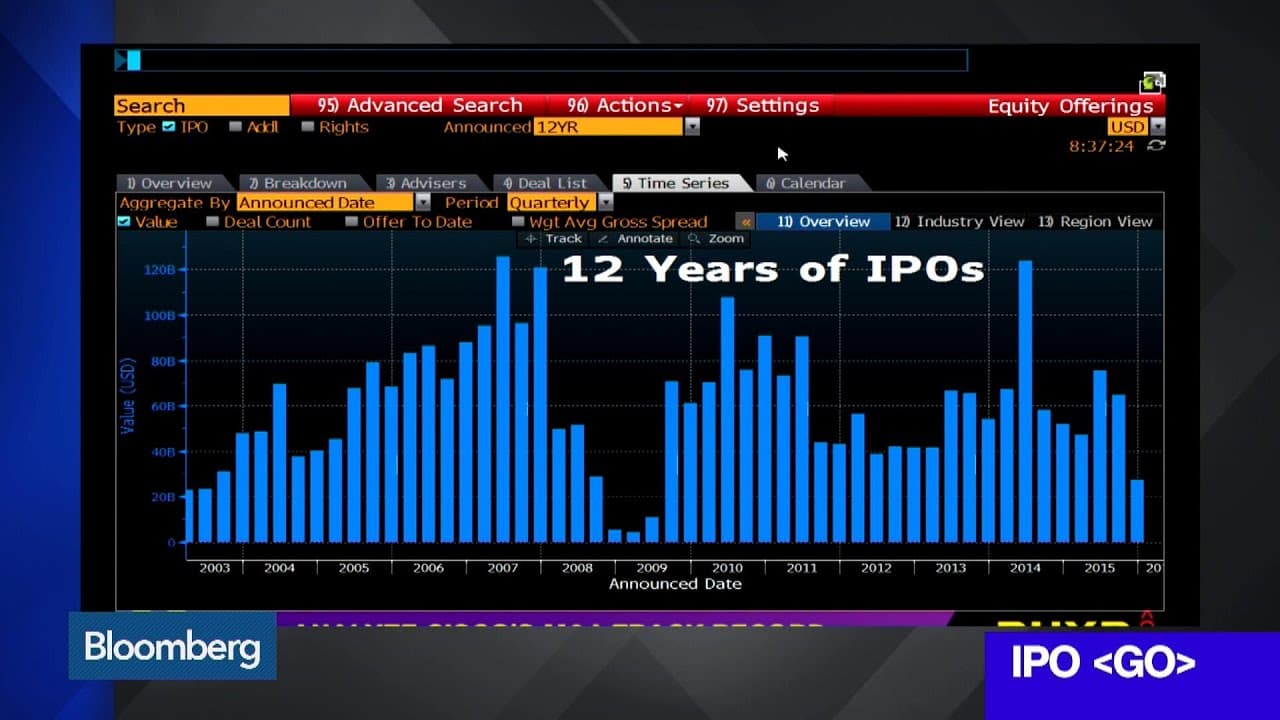
you were talking about the year you just had in 2015 so most spins ever greatest amount of deal volume in terms of m&a ever IPOs were down significantly in fact if you look at the number of IPOs overall not just Tech which is what your original question was about it was the fewest number of IPOs in a decade accepting the the height of the financial... Read More
Key Insights
- The number of IPOs in 2015 was the lowest in a decade, excluding the financial crisis, with tech IPOs following the overall market trend.
- Tech companies like Square, Fitbit, GoDaddy, and Shopify performed well post-IPO, trading significantly up in the aftermarket.
- Investors were more focused on improving existing portfolios rather than adding new deals, affecting IPO activity.
- Some successful companies, such as Airbnb, are opting to stay private due to sufficient funding from venture capitalists.
- The IPO process may be perceived as flawed due to inconsistent performance of companies post-IPO, affecting CEO decisions.
- Private market valuations were often higher than public market valuations, impacting investor expectations and IPO decisions.
- Market volatility, particularly since late August 2015, has a strong inverse correlation with the number of IPOs.
- Private market financing, especially in the tech sector, has significantly decreased, potentially affecting future IPO activity.
Install to Summarize YouTube Videos and Get Transcripts
Explore YouTube Video Summarizer or Get YouTube Transcript Extractor
Questions & Answers
Q: Why were IPOs down significantly in 2015?
IPOs were down significantly in 2015 due to a combination of factors, including market volatility and a shift in investor focus towards improving existing portfolios rather than seeking new investments. Additionally, some companies opted to stay private due to sufficient funding from venture capitalists, further reducing IPO activity.
Q: How did tech companies perform post-IPO in 2015?
Tech companies like Square, Fitbit, GoDaddy, and Shopify performed well post-IPO, with their stocks trading significantly up in the aftermarket by 35% or more. This indicates that while IPO numbers were down, quality tech companies still found success in the public market, defying the overall trend.
Q: What reasons do some companies have for staying private?
Some companies, such as Airbnb, choose to stay private due to ample funding from venture capitalists and other sources. This allows them to delay going public and avoid the perceived flaws in the IPO process, such as inconsistent post-IPO performance and the pressures of being a public company.
Q: Is the IPO process perceived as flawed?
The IPO process is perceived by some as flawed due to the inconsistent performance of companies post-IPO. For instance, while companies like Fitbit have succeeded, others like GoPro have seen their stock prices fluctuate dramatically. This inconsistency may deter CEOs from pursuing IPOs, fearing negative outcomes.
Q: How does market volatility affect IPO activity?
Market volatility has a strong inverse correlation with IPO activity. When volatility is high, as it was in late 2015, IPO numbers tend to decrease. This is because uncertain market conditions make it riskier for companies to go public, leading them to delay IPO plans until the market stabilizes.
Q: Why might companies turn to public markets for capital?
Companies might turn to public markets for capital if private market financing becomes less accessible. As noted, private financing, particularly in tech, has dried up significantly, which may force companies to seek capital through IPOs if public markets become the only viable source of funding.
Q: What role do private market valuations play in IPO decisions?
Private market valuations often exceed public market valuations, impacting investor expectations and IPO decisions. When private valuations are high, companies may delay going public to capitalize on these valuations. However, if private financing dries up, companies may have to accept lower public valuations to access capital.
Q: What is the future outlook for IPOs given current market conditions?
The future outlook for IPOs depends on market stability and investor confidence. If market volatility decreases and there is more certainty regarding economic factors, IPO activity may increase. However, if volatility remains high, IPO numbers could stay low as companies continue to rely on private funding or delay going public.
Summary & Key Takeaways
-
In 2015, IPOs reached a decade-low, with tech IPOs mirroring the overall market's decline. Despite this, companies like Square and Fitbit performed well post-IPO, suggesting that quality companies can still succeed in the public market. Investor focus shifted towards enhancing existing portfolios, impacting IPO numbers.
-
Successful companies like Airbnb are choosing to remain private due to ample funding from venture capitalists, highlighting a trend where companies delay going public. The IPO process itself may deter some companies, as inconsistent post-IPO performances raise concerns about its effectiveness.
-
Market volatility, which increased significantly in late 2015, has a strong inverse relationship with IPO activity. As private market financing dries up, particularly in tech, companies may have to turn to public markets for capital. The future of IPOs depends on market stability and investor confidence.
Read in Other Languages (beta)
Share This Summary 📚
Summarize YouTube Videos and Get Video Transcripts with 1-Click
Try YouTube Summary with ChatGPT & Claude or YouTube Transcript Generator
Explore More Summaries from Bloomberg Originals 📚





Summarize YouTube Videos and Get Video Transcripts with 1-Click
Try YouTube Summary with ChatGPT & Claude or YouTube Transcript Generator