Who Was Baron von Ungern-Sternberg?
TL;DR
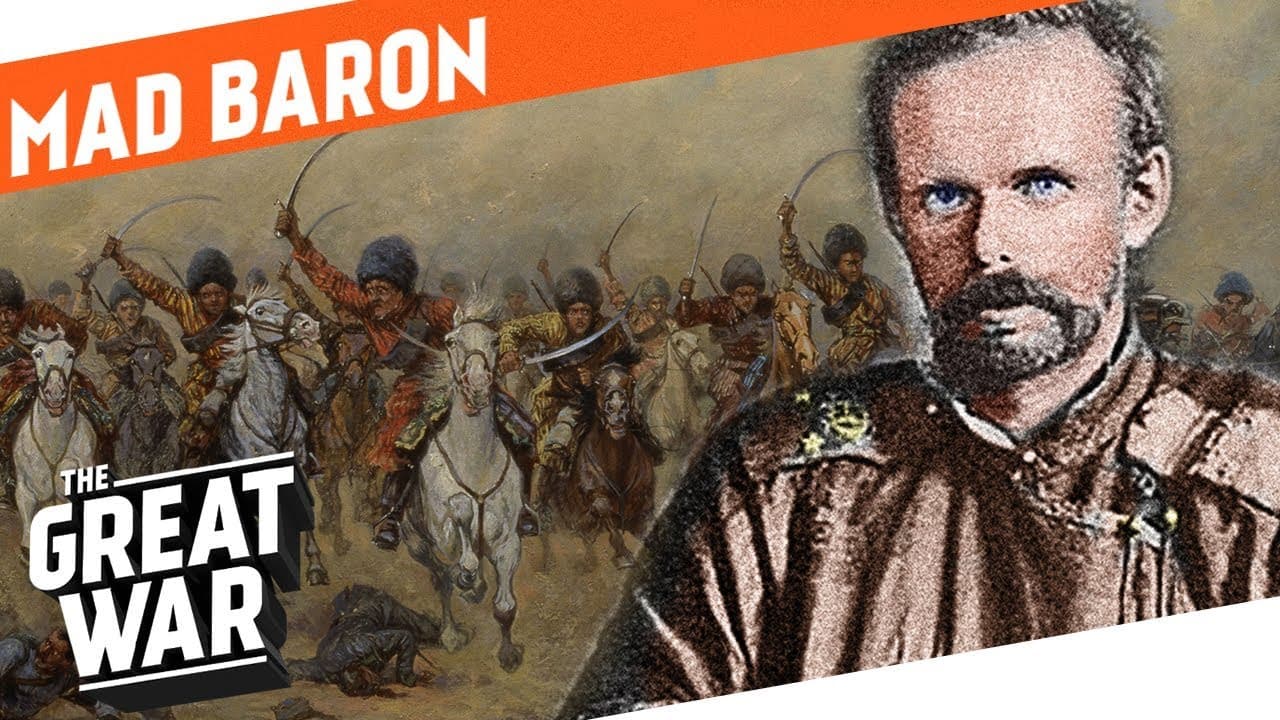
Baron von Ungern-Sternberg was a complex figure known for his loyalty to the Tsar, military prowess, and brutal rule. A fervent monarchist, he led a violent campaign against Bolsheviks, establishing a feudal regime marked by cultural tolerance but extreme violence. His life ended in 1921 after a failed attempt to reach Tibet.
Transcript
He was cruel, ruthless, and violent, but he was also magnetic and was a soldier brave to the point of foolhardiness. He was also to many a Divine figure and his legend bears repeating - Baron von Ungern-Sternberg. I’m Indy Neidell; welcome to a Great War bio Special about Baron von Ungern-Sternberg and the First World War. Nikolai Roman Maximilian ... Read More
Key Insights
- Roman von Ungern-Sternberg was born in 1886 in the Austro-Hungarian Empire.
- He had a troubled youth, marked by violent behavior and poor academic performance.
- Ungern-Sternberg was a fervent monarchist, believing the Tsar was appointed by God.
- He served in the Russo-Japanese War and was impressed by Japanese military skill.
- During WWI, he volunteered for dangerous missions, displaying notable bravery.
- Post-WWI, he led a violent campaign against Bolsheviks, establishing a feudal regime.
- His rule was culturally tolerant but extremely violent, with brutal punishments for enemies.
- Ungern-Sternberg was executed in 1921 after a failed attempt to reach Tibet.
Install to Summarize YouTube Videos and Get Transcripts
Explore YouTube Video Summarizer or Get YouTube Transcript Extractor
Questions & Answers
Q: Who was Roman von Ungern-Sternberg?
Roman von Ungern-Sternberg was a Baltic German nobleman and military leader known for his loyalty to the Tsar during and after WWI. He was a fervent monarchist who led a violent campaign against Bolsheviks, establishing a feudal regime marked by cultural tolerance but extreme violence. His life ended in 1921 after a failed attempt to reach Tibet.
Q: What were Ungern-Sternberg's beliefs?
Ungern-Sternberg was a rabid monarchist, believing that the Tsar was appointed by God. He had no patience for capitalism or liberalism and was deeply influenced by tales of his ancestors and Eastern philosophies, including Buddhism. His beliefs drove his violent campaign against Bolsheviks and his establishment of a feudal regime.
Q: What role did Ungern-Sternberg play in WWI?
During WWI, Ungern-Sternberg served in the Russian army, volunteering for dangerous missions and displaying notable bravery. He took part in key battles, including the invasion of East Prussia and the Battle of Galicia, and was awarded the Cross of St. George 4th Class for his service. His experiences in the war further fueled his violent tendencies.
Q: Why was Ungern-Sternberg known as the 'Bloody Baron'?
Ungern-Sternberg earned the nickname 'Bloody Baron' due to his extreme violence and brutal punishments for enemies, particularly Bolsheviks and Jews. His regime was marked by cultural tolerance but enforced through fear and brutality, with rumors of torture and executions accompanying his rule. His actions were seen as punishment and a means to maintain discipline.
Q: How did Ungern-Sternberg's life end?
Ungern-Sternberg's life ended in 1921 after a failed attempt to cross the Gobi Desert and reach Tibet. His most diehard supporters turned to mutiny due to the lack of supplies, leading to his capture and execution by a firing squad. His life ended at the age of 35, marking the end of a tumultuous and colorful existence.
Q: What was Ungern-Sternberg's relationship with the White Army?
Ungern-Sternberg was initially aligned with the White Army during the Russian Civil War, but his autocratic rule and extreme violence led to conflicts with other White Army leaders. Despite these tensions, he continued to fight against the Bolsheviks, believing in the restoration of the Tsar and the salvation of Russia through the people of the borders.
Q: What was 'military Buddhism'?
Military Buddhism, as practiced by Ungern-Sternberg, was a blend of Eastern philosophies and military discipline. It promoted celibacy but allowed the consumption of alcohol, opium, and hashish. This belief system influenced Ungern-Sternberg's actions and leadership style, contributing to his reputation as a complex and colorful figure during and after WWI.
Q: What impact did the Russian Revolution have on Ungern-Sternberg?
The Russian Revolution had a significant impact on Ungern-Sternberg, fueling his violent opposition to Bolshevik rule. He viewed the February and October revolutions as threats to the divine order of the Tsar and sought to restore monarchist rule through his violent campaign. The revolution's aftermath provided the backdrop for his actions and eventual downfall.
Summary & Key Takeaways
-
Baron von Ungern-Sternberg, born in 1886, was a notable figure during and after WWI, known for his loyalty to the Tsar and extreme violence. Despite his troubled youth, he became a fervent monarchist, serving bravely in the Russo-Japanese War and WWI. Post-war, he led a brutal campaign against the Bolsheviks, establishing a feudal regime.
-
Ungern-Sternberg's regime was marked by cultural tolerance but extreme violence, with brutal punishments for enemies, particularly Bolsheviks and Jews. His belief in the Tsar's divine appointment drove his actions, and he was revered by his Mongolian bodyguards as a god. His life ended in 1921 after a failed attempt to reach Tibet.
-
Despite his violent rule, Ungern-Sternberg was a complex figure, blending military prowess with a belief in 'military Buddhism.' His life and actions were shaped by his background, experiences in the military, and fervent monarchist beliefs. His execution in 1921 marked the end of a tumultuous and colorful life.
Read in Other Languages (beta)
Share This Summary 📚
Summarize YouTube Videos and Get Video Transcripts with 1-Click
Try YouTube Summary with ChatGPT & Claude or YouTube Transcript Generator
Explore More Summaries from The Great War 📚
Summarize YouTube Videos and Get Video Transcripts with 1-Click
Try YouTube Summary with ChatGPT & Claude or YouTube Transcript Generator