Dark Forest: Should We NOT Contact Aliens?
TL;DR
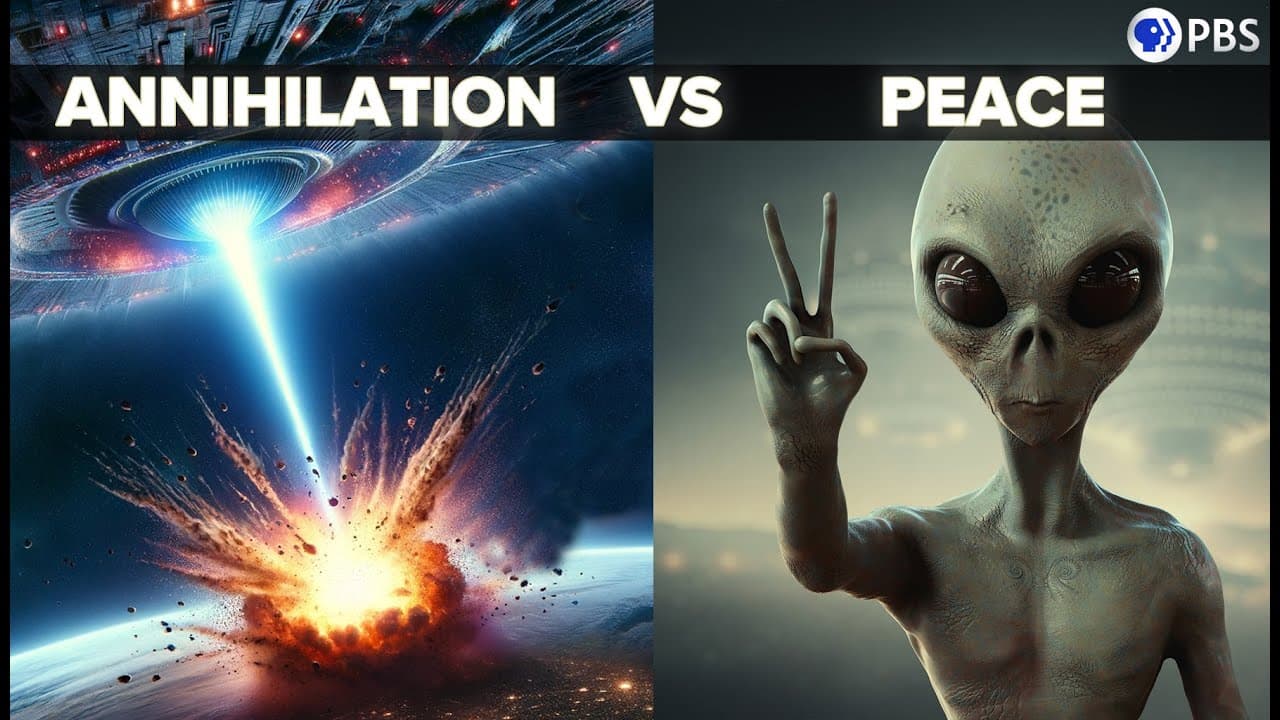
The dark forest hypothesis suggests civilizations stay silent to avoid destruction.
Transcript
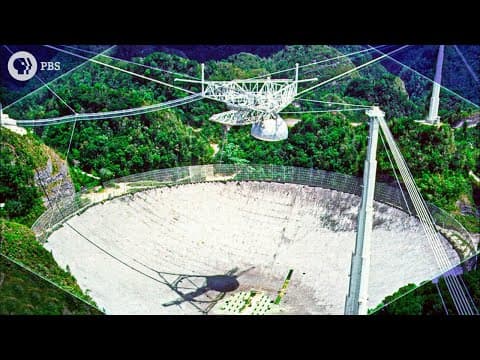
Before we get started, I just wanted to let you know we have some limited time only Solar Eclipse merch for sale at the merch store. I’ll tell you more at the end of the episode. In 1974 we sent the Arecibo radio beamed a message towards the few hundred thousand stars of Messier 13, a globular cluster near the edge of the Milky Way,. It’ll take... Read More
Key Insights
- The Arecibo message sent in 1974 was a symbolic attempt to contact extraterrestrial civilizations, targeting Messier 13, a globular cluster near the Milky Way's edge.
- The Great Silence, as termed by David Brin, refers to the lack of detected alien communications despite numerous exoplanet discoveries, highlighting the Fermi Paradox.
- The dark forest hypothesis suggests civilizations remain silent to avoid detection and potential destruction by others, as theorized in Liu Cixin's book.
- Game theory models the interactions between civilizations as a sequential game where the safest strategy might be to destroy or remain silent.
- The hypothesis assumes civilizations can easily destroy each other using advanced technology, such as relativistic kill vehicles, making communication risky.
- The vast distances between stars prevent real-time interaction, leading to uncertainty about other civilizations' intentions and technological advancements.
- The psychological assumptions of the hypothesis suggest civilizations value survival over curiosity, but this may not hold true for all species.
- Human curiosity has driven technological advancements and exploration, indicating that some civilizations might prioritize discovery over fear of destruction.
Install to Summarize YouTube Videos and Get Transcripts
Explore YouTube Video Summarizer or Get YouTube Transcript Extractor
Questions & Answers
Q: Why did we send the Arecibo message in 1974?
The Arecibo message, sent in 1974, was primarily a symbolic gesture aimed at contacting potential extraterrestrial civilizations. It targeted Messier 13, a globular cluster near the edge of the Milky Way, composed of hundreds of thousands of stars. The message was not expected to receive a reply due to the vast distances involved and the time it would take to reach its destination.
Q: What is the Great Silence?
The Great Silence, a term coined by author David Brin, refers to the perplexing lack of detected communications from extraterrestrial civilizations despite the discovery of thousands of exoplanets. This silence highlights the Fermi Paradox, which questions why we have not observed signs of other technological civilizations given the vast number of potential life-supporting planets in the universe.
Q: What is the dark forest hypothesis?
The dark forest hypothesis suggests that advanced civilizations choose to remain silent to avoid detection and potential destruction by others. This idea, explored in Liu Cixin's book, proposes that the universe is like a dark forest where civilizations act like hunters, staying quiet to avoid being targeted by others who might perceive them as threats.
Q: How does game theory apply to the dark forest hypothesis?
Game theory models the interactions between civilizations as a sequential game, similar to chess, where each civilization chooses actions in response to others. The hypothesis suggests that the safest strategy might be to destroy or remain silent, as replying to detected signals could lead to an infinite negative payoff if the other civilization chooses hostility.
Q: What technological assumptions does the dark forest hypothesis make?
The hypothesis assumes that advanced civilizations possess the capability to destroy each other relatively easily using technologies like relativistic kill vehicles. These could harness a fraction of a star's energy to accelerate masses to near-light speeds, making planetary destruction feasible and communication risky.
Q: Why are vast distances between stars significant in the hypothesis?
Vast distances between stars prevent real-time interaction between civilizations, leading to uncertainty about intentions and technological advancements. This distance ensures that both sides potentially have access to instant kill options and can only choose their actions without knowing how the other side might respond, increasing the risk of communication.
Q: What psychological assumptions does the hypothesis make?
The hypothesis assumes that civilizations value survival over curiosity, placing an overwhelmingly large cost on the extinction outcome. It suggests that species may have competitive and self-preserving tendencies, but this might not hold true for all, as advanced civilizations could have different value systems that prioritize discovery.
Q: How does human curiosity challenge the hypothesis?
Human curiosity has driven technological advancements and exploration, indicating that some civilizations might prioritize discovery over fear of destruction. This curiosity has been a significant survival advantage, suggesting that the interplay between safety and exploration could lead some species to reach out and contact others despite potential risks.
Summary & Key Takeaways
-
The dark forest hypothesis posits that advanced civilizations remain silent to avoid detection and potential destruction by others. This idea, explored in Liu Cixin's book, suggests a chilling view of the universe where silence is a survival strategy.
-
Game theory models interactions between civilizations as a sequential game with options to ignore, destroy, or reply to detected signals. The safest strategy might be to destroy or remain silent to avoid infinite negative payoffs.
-
The hypothesis assumes civilizations can easily destroy each other using advanced technology, such as relativistic kill vehicles. However, human curiosity and the desire to explore might lead some civilizations to prioritize discovery over fear.
Read in Other Languages (beta)
Share This Summary 📚
Summarize YouTube Videos and Get Video Transcripts with 1-Click
Try YouTube Summary with ChatGPT & Claude or YouTube Transcript Generator
Explore More Summaries from PBS Space Time 📚
Summarize YouTube Videos and Get Video Transcripts with 1-Click
Try YouTube Summary with ChatGPT & Claude or YouTube Transcript Generator