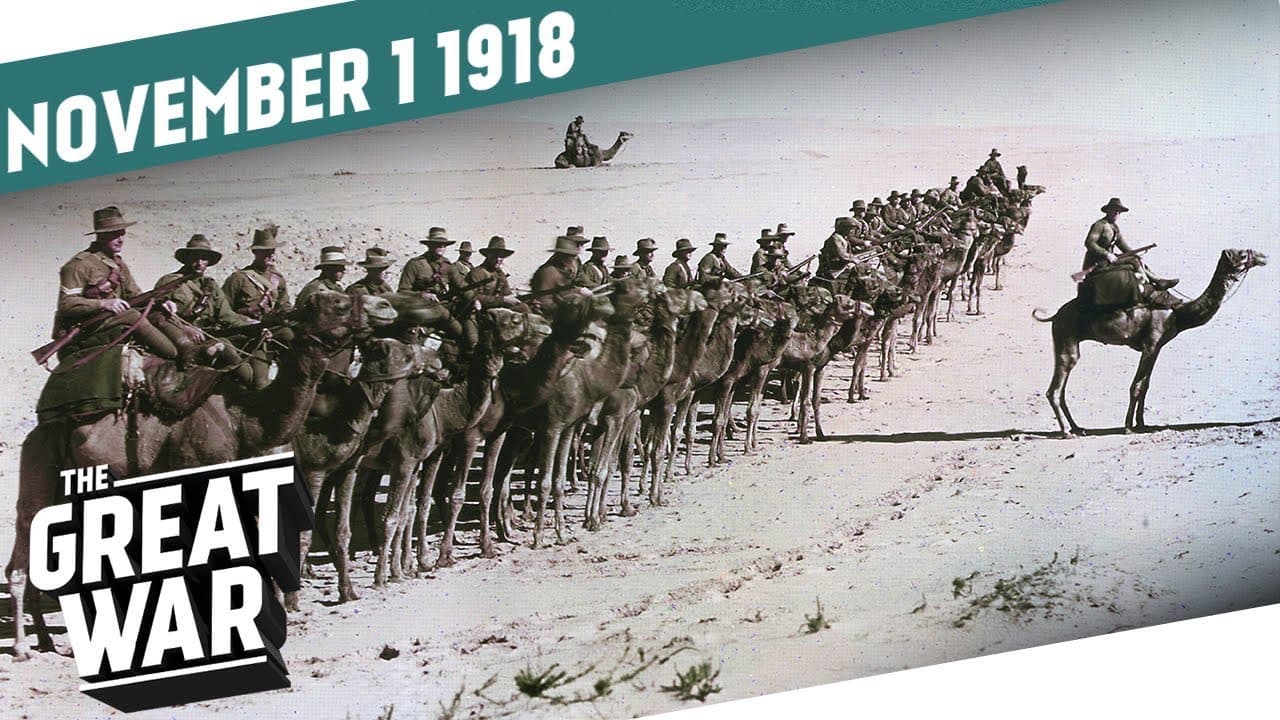
Austria-Hungary Disintegrates - The Ottoman Empire Leaves the War I THE GREAT WAR Week 223
TL;DR
Ottoman Empire exits WWI as Austria-Hungary disintegrates.
Transcript
Six weeks ago, the Central Powers looked to be in okay shape, even though Germany was taking a pounding on the Western Front, but when things changed, they changed fast. Bulgaria has left the war and this week, another central power follows suit. I’m Indy Neidell; welcome to the Great War. Last week the Allied military leaders tried to hash out arm... Read More
Key Insights
- The Ottoman Empire signed the Armistice of Mudros, effectively ending their involvement in World War I and allowing Allied occupation of strategic areas.
- Austria-Hungary faced a rapid disintegration as ethnic groups declared independence, leading to the formal severance of Austria and Hungary.
- The Allied forces made significant advances on multiple fronts, including the capture of Aleppo by British forces and a breakthrough on the Italian Front.
- Internal unrest plagued the Central Powers, with mutinies in the German navy and civil unrest in Germany pushing for political change.
- The Ottoman Empire's surrender was influenced by multiple military defeats and the strategic importance of oil resources in Mosul.
- Emperor Karl of Austria sought an armistice but faced delays as Italians aimed to capture more territory, while his empire crumbled internally.
- The German military leadership considered desperate measures, including a final naval assault and suggestions for the Kaiser to sacrifice himself.
- Amidst the chaos, American forces launched a new offensive on the River Meuse, continuing the pressure on the remaining Central Powers.
Install to Summarize YouTube Videos and Get Transcripts
Explore YouTube Video Summarizer or Get YouTube Transcript Extractor
Questions & Answers
Q: What led to the Ottoman Empire's decision to call for an armistice?
The Ottoman Empire decided to call for an armistice due to a series of military defeats and the strategic threat posed by Allied forces nearing Constantinople. The British capture of Aleppo and the advance towards Mosul, an area rich in oil resources, further pressured the Ottomans to negotiate peace terms.
Q: How did Austria-Hungary's internal situation contribute to its collapse?
Austria-Hungary's collapse was accelerated by the internal fragmentation of its empire as ethnic groups, including Czechs, Slovaks, and Southern Slavs, declared independence. This disintegration weakened the empire's military capabilities and undermined its ability to sustain the war effort, leading to a request for an armistice.
Q: What was the significance of the Allied advances on the Italian Front?
The Allied advances on the Italian Front were significant as they resulted in the capture of strategic positions and inflicted heavy casualties on the Austrian forces. The breakthrough at the Piave River and the capture of Vittorio Veneto marked a turning point, leading to the disintegration of the Austro-Hungarian army and contributing to the empire's collapse.
Q: How did internal unrest affect Germany's war efforts?
Internal unrest severely affected Germany's war efforts, with naval mutinies and civil unrest undermining military discipline and morale. The refusal of sailors to follow orders and the political push for the Kaiser's abdication reflected the growing discontent and desire for change, weakening Germany's ability to continue the war.
Q: What were the terms of the Armistice of Mudros for the Ottoman Empire?
The Armistice of Mudros required the Ottoman Empire to open the Dardanelles and Bosporus to Allied warships, allow military occupation of forts, demobilize their forces, release all POWs, and evacuate Arab provinces. These terms effectively ended Ottoman participation in the war and allowed Allied control over strategic regions.
Q: What role did oil resources play in the Ottoman Empire's surrender?
Oil resources played a critical role in the Ottoman Empire's surrender, particularly the British interest in seizing Mosul, an area rich in oil. The strategic importance of Mosul's oil fields added pressure on the Ottomans to negotiate an armistice, as controlling these resources was vital for post-war economic and military interests.
Q: What were the implications of the German naval mutinies?
The German naval mutinies had significant implications, as they demonstrated the collapse of discipline and morale within the German navy. The refusal of sailors to participate in a final naval assault highlighted the widespread disillusionment with the war and contributed to the decision to cancel the planned operation, further weakening Germany's war effort.
Q: How did the Allies' strategy differ regarding the German armistice?
Allied strategy regarding the German armistice varied, with American Commander John Pershing advocating for continued military pressure until unconditional surrender, fearing a German resurgence. In contrast, British and French leaders were confident in imposing crippling armistice terms, believing they could secure peace without further conflict, reflecting differing approaches to ending the war.
Summary & Key Takeaways
-
The Ottoman Empire signed an armistice, marking their exit from World War I as Allied forces threatened key regions, including Constantinople. The terms allowed for Allied military occupation and demobilization of Ottoman forces, marking a significant shift in the war's dynamics.
-
Austria-Hungary experienced a rapid breakdown as various ethnic groups declared independence, leading to the formal separation of Austria and Hungary. This internal disintegration was compounded by military defeats and the loss of morale among troops.
-
The Central Powers faced internal and external pressures, with Germany experiencing naval mutinies and political unrest. Allied advances continued, with significant territorial gains on the Italian Front and the capture of Aleppo, further weakening the Central Powers' position.
Read in Other Languages (beta)
Share This Summary 📚
Summarize YouTube Videos and Get Video Transcripts with 1-Click
Try YouTube Summary with ChatGPT & Claude or YouTube Transcript Generator
Explore More Summaries from The Great War 📚
Summarize YouTube Videos and Get Video Transcripts with 1-Click
Try YouTube Summary with ChatGPT & Claude or YouTube Transcript Generator