Beyond Wires and Pigeons - Communications in World War 1 I THE GREAT WAR Special
TL;DR
WWI communication systems evolved rapidly despite significant challenges.
Transcript
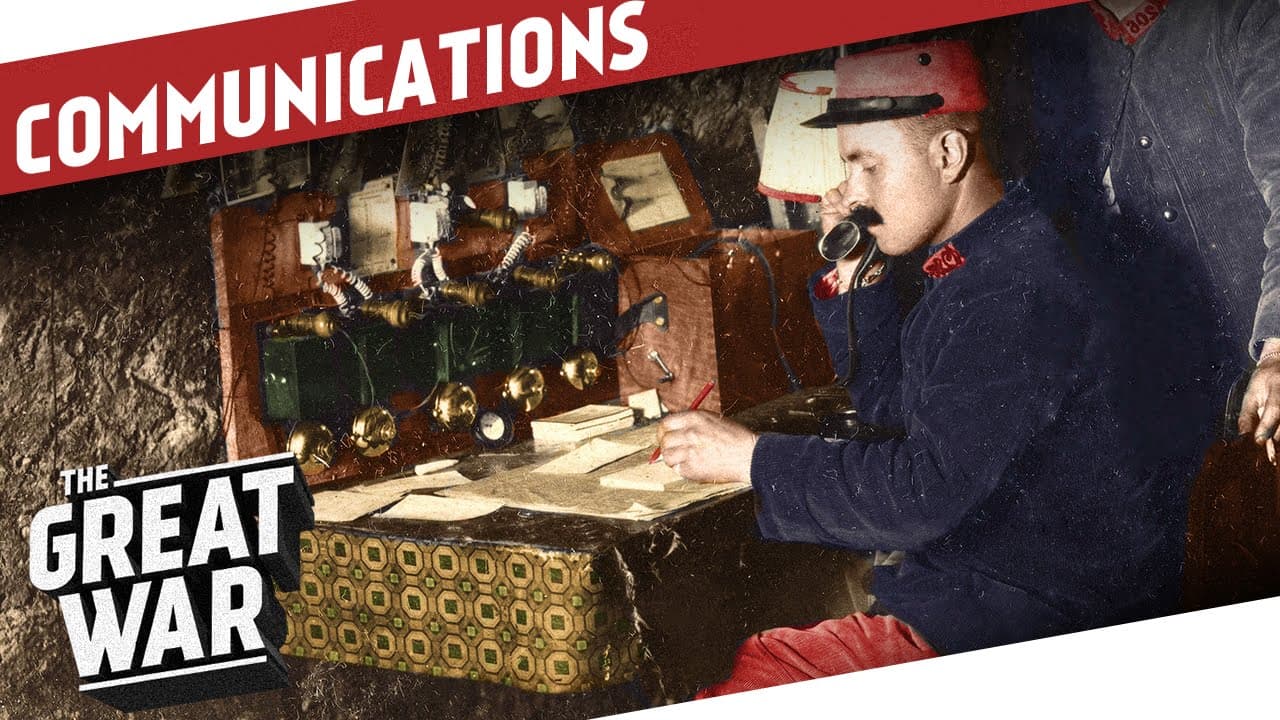
Communications. An army lives and dies by it. Where must the men be? When must they get there? How strong is the enemy? Where is the enemy? During the First World War, one of the biggest problems of all was poor communications, even though technological advances were made all the time. Let’s check it out. I’m Indy Neidell; welcome to a Great War sp... Read More
Key Insights
- Communication played a crucial role in WWI, with armies relying on it for strategic planning and execution. Despite technological advancements, communication failures were common, especially during offensive operations.
- Trenches provided some protection for communication lines, but once soldiers left them, maintaining communication became highly challenging, affecting the army's ability to adapt and respond.
- Various methods like runners, telephones, and pigeons were used for communication, but each had significant limitations, including vulnerability to enemy fire and one-way communication issues.
- The Germans effectively practiced electronic warfare, intercepting unencrypted Russian radio communications, which gave them a strategic advantage in battles like Tannenberg.
- The British faced challenges with field phones as German forces could intercept their communications. This led to the invention of the Fullerphone, which improved communication security.
- By 1918, radios became more common in infantry and tanks, although they remained rare. Communication systems continued to evolve, becoming more effective by the war's end.
- The development of communication systems during WWI laid the foundation for modern military communications, with systems becoming more organized and efficient over the war's duration.
- The Western Front saw significant communication advancements, largely due to focused efforts and the contributions of experts like Mike Hayes, a communications officer in the Canadian army.
Install to Summarize YouTube Videos and Get Transcripts
Explore YouTube Video Summarizer or Get YouTube Transcript Extractor
Questions & Answers
Q: What were the main challenges of communication during WWI?
The main challenges included maintaining communication during offensive operations, vulnerability of communication lines to enemy fire, and the difficulty of adapting plans without reliable information. Various methods like runners and telephones had limitations, and there was a constant struggle to keep lines secure from enemy interception.
Q: How did the Germans gain an advantage through electronic warfare?
The Germans gained an advantage by intercepting unencrypted Russian radio communications, particularly during the Battle of Tannenberg. The Russians relied on outdated codes, assuming the Germans weren't listening, which proved to be a costly mistake, allowing the Germans to anticipate and counter Russian strategies effectively.
Q: What innovations improved communication security for the British?
The invention of the Fullerphone significantly improved communication security for the British. This device was a DC line telegraph that was mostly immune to interception, addressing the issue of Germans intercepting British field phone communications. It allowed for more secure and reliable message transmission.
Q: How did communication systems evolve by the end of WWI?
By the end of WWI, communication systems had evolved to include more common use of radios, although they were still relatively rare. Systems became more organized and efficient, with improved security measures like the Fullerphone. These advancements laid the foundation for modern military communication systems.
Q: What role did trenches play in communication during WWI?
Trenches provided some protection for communication lines, allowing for relatively reliable communication in static positions. However, once soldiers left the trenches for offensive operations, maintaining communication became highly challenging, affecting the army's ability to effectively adapt and respond to battlefield dynamics.
Q: What were the limitations of using pigeons for communication?
Pigeons were limited to one-way communication and often involved delays, as the coops were typically located at senior headquarters rather than regional ones. Despite their use, pigeons could not provide real-time updates, which were crucial during fast-paced military operations.
Q: How did the use of radios change by 1918?
By 1918, radios became more common in infantry and tanks, although they remained rare. The bulky and heavy equipment made them difficult to move, and they required large antenna systems. Despite these challenges, radios represented a significant step forward in military communication technology.
Q: What impact did communication advancements have on military operations?
Advancements in communication significantly impacted military operations by improving coordination and response times. Secure and reliable communication systems allowed for better strategic planning and execution, reducing the likelihood of miscommunication and enabling armies to adapt more effectively to changing battlefield conditions.
Summary & Key Takeaways
-
World War I communication systems faced numerous challenges, including maintaining contact during offensive operations and vulnerability to enemy interception. Despite these hurdles, significant advancements were made, leading to more efficient systems by the war's end.
-
Various communication methods were employed, such as runners, telephones, and pigeons, each with its limitations. The Germans' effective electronic warfare highlighted the need for secure communication, prompting innovations like the Fullerphone.
-
By 1918, radios became more prevalent, and communication systems were significantly improved. These developments laid the groundwork for modern military communication, demonstrating how crucial communication was to military success during WWI.
Read in Other Languages (beta)
Share This Summary 📚
Summarize YouTube Videos and Get Video Transcripts with 1-Click
Try YouTube Summary with ChatGPT & Claude or YouTube Transcript Generator
Explore More Summaries from The Great War 📚

Summarize YouTube Videos and Get Video Transcripts with 1-Click
Try YouTube Summary with ChatGPT & Claude or YouTube Transcript Generator