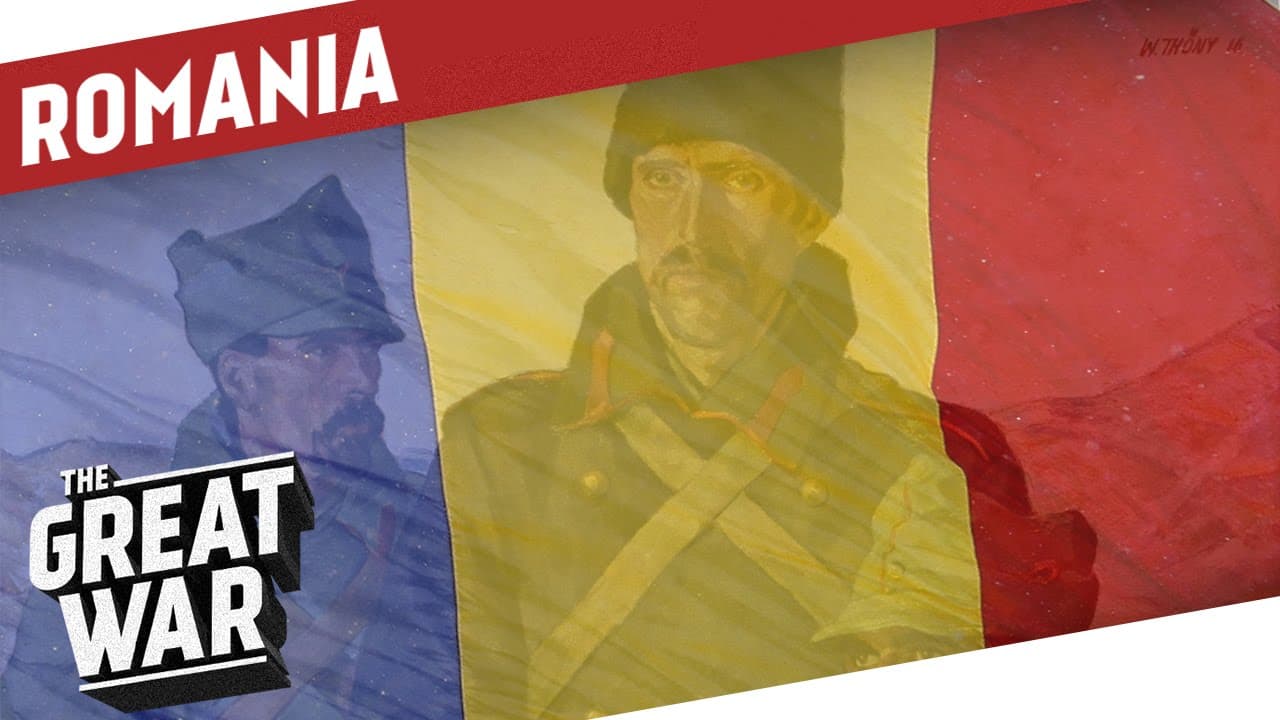
Romania in World War 1 I THE GREAT WAR Special
TL;DR
Romania's strategic neutrality shifted to joining WWI in 1916.
Transcript
Romania joined the First World War in August 1916, and you may well be wondering just what that country was doing while the rest of Europe was at war during the preceding years, and that’s what I’m going to talk about today. I’m Indy Neidell; welcome to a Great War special episode about Romania prior to its entry in World War One. The three regions... Read More
Key Insights
- Romania's territories, Wallachia, Transylvania, and Moldavia, have a history of foreign occupation, influencing its modern state formation.
- In 1859, Alexandru Ioan Cuza united Wallachia and Moldova, modernizing Romania but facing aristocratic opposition, leading to his abdication.
- Romania became a constitutional monarchy under Prince Karl, breaking Ottoman control during the Russo-Turkish War and gaining independence in 1877.
- The secret 1883 treaty bound Romania to the Triple Alliance, limiting intervention in Austro-Hungarian affairs, impacting Transylvanian Romanians.
- Romania's neutrality in the First Balkan War was swayed by Russia, but post-war tensions with Bulgaria highlighted military shortcomings.
- King Ferdinand I succeeded King Carol in 1914, steering Romania towards the Entente, influenced by his British and Russian family ties.
- Romania's WWI entry in 1916 was delayed by strategic negotiations to secure territorial claims, despite military unpreparedness.
- Romania's 1916 battle plan, the Z Hypothesis, was overly optimistic, underestimating Central Powers' strength and logistical challenges.
Install to Summarize YouTube Videos and Get Transcripts
Explore YouTube Video Summarizer or Get YouTube Transcript Extractor
Questions & Answers
Q: Why did Romania remain neutral during the early years of WWI?
Romania remained neutral during the early years of WWI due to a combination of strategic considerations and internal political dynamics. The secret treaty with the Triple Alliance restricted Romania's actions, while public opinion and political leaders favored the Entente. This neutrality allowed Romania to assess the situation and negotiate terms that aligned with its territorial ambitions before eventually joining the war in 1916.
Q: What were the key factors influencing Romania's decision to join the Entente in WWI?
Romania's decision to join the Entente in WWI was influenced by several factors, including public opinion favoring France, political leadership seeking territorial gains in Austro-Hungarian lands, and King Ferdinand I's alignment with his British and Russian family ties. Additionally, strategic negotiations ensured Romania's territorial claims were recognized by the Allies, prompting its eventual entry into the war in 1916.
Q: How did Romania's territorial ambitions shape its WWI strategy?
Romania's territorial ambitions significantly shaped its WWI strategy, particularly its desire to annex Austro-Hungarian territories inhabited by ethnic Romanians. This ambition drove Romania to negotiate terms with the Allies that recognized its claims, influencing its decision to join the Entente. The strategic focus on Transylvania and defensive measures against potential threats from the south were central to Romania's military plans.
Q: What were the challenges faced by Romania's military during the Balkan Wars?
During the Balkan Wars, Romania's military faced significant challenges, including a lack of equipment and ammunition, disorganized supply lines, inefficient medical corps, and inadequate officer quality. These shortcomings were highlighted during the Second Balkan War, where despite minimal combat casualties, 6,000 Romanian soldiers died from cholera. These issues persisted into WWI, affecting Romania's military effectiveness.
Q: How did Romania's historical foreign occupations influence its WWI involvement?
Romania's history of foreign occupations, particularly by the Ottomans and Russians, influenced its WWI involvement by shaping its territorial ambitions and alliances. The desire to consolidate and expand its territories, especially in regions with ethnic Romanians, drove Romania to negotiate with the Allies for territorial recognition. Historical conflicts with neighboring powers also informed Romania's strategic considerations during the war.
Q: What was the significance of the secret treaty with the Triple Alliance for Romania?
The secret treaty with the Triple Alliance was significant for Romania as it provided a strategic security arrangement with Germany, Austria-Hungary, and Italy. However, it also restricted Romania's ability to intervene in Austro-Hungarian affairs, particularly in Transylvania, where a large ethnic Romanian population resided. This limitation influenced Romania's cautious approach and eventual alignment with the Entente in WWI.
Q: How did King Ferdinand I's background influence Romania's alignment in WWI?
King Ferdinand I's background played a crucial role in Romania's alignment during WWI. Unlike his predecessor, King Carol, who had strong Germanic ties, Ferdinand was influenced by his British and Russian family connections. His wife, Princess Marie of Edinburgh, and her familial ties to the British and Russian royal families, further swayed Ferdinand towards the Entente, aligning with public and political sentiment in Romania.
Q: What role did diplomatic negotiations play in Romania's WWI entry?
Diplomatic negotiations were pivotal in Romania's entry into WWI, as Prime Minister Ion Bratianu carefully negotiated terms with the Allies to ensure Romania's territorial claims were recognized. This involved securing agreements that acknowledged Romania's right to annex Austro-Hungarian territories, aligning with its national interests. These negotiations delayed Romania's entry until August 1916, but ensured favorable conditions for its participation in the war.
Summary & Key Takeaways
-
Romania's entry into World War I in 1916 was preceded by a complex history of territorial disputes and alliances with major powers. Initially neutral, Romania's strategic position and political dynamics led to its eventual alignment with the Entente, seeking territorial gains in Austro-Hungarian lands.
-
Romania's modern state formation involved uniting Wallachia and Moldova under Alexandru Ioan Cuza in 1859, followed by a constitutional monarchy under Prince Karl. Independence from Ottoman control was achieved in 1877, but regional tensions persisted, influencing Romania's WWI strategies.
-
Despite military shortcomings exposed during the Balkan Wars, Romania's strategic entry into WWI was motivated by territorial ambitions and diplomatic negotiations. King Ferdinand I's alignment with the Entente contrasted with his predecessor's Germanic ties, reflecting Romania's shifting alliances.
Read in Other Languages (beta)
Share This Summary 📚
Summarize YouTube Videos and Get Video Transcripts with 1-Click
Try YouTube Summary with ChatGPT & Claude or YouTube Transcript Generator
Explore More Summaries from The Great War 📚
Summarize YouTube Videos and Get Video Transcripts with 1-Click
Try YouTube Summary with ChatGPT & Claude or YouTube Transcript Generator