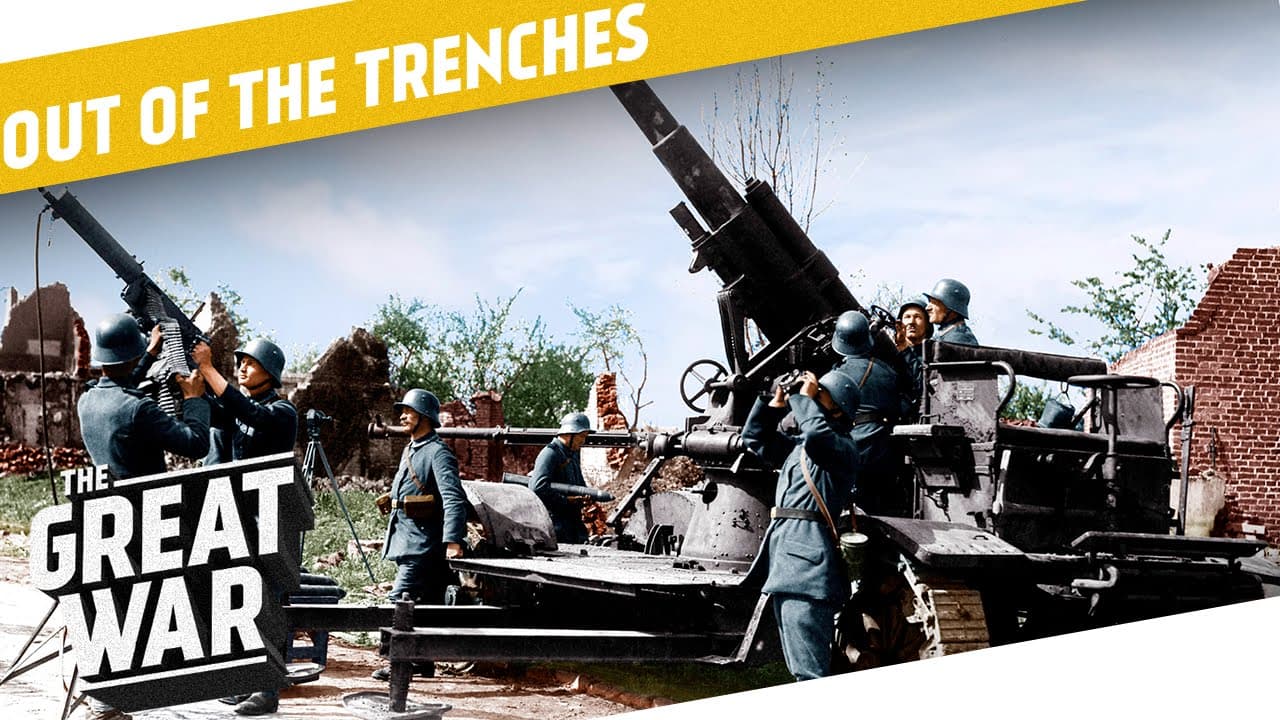
Flamethrowers - Anti Aircraft Guns I OUT OF THE TRENCHES
TL;DR
Discusses flamethrowers, anti-aircraft guns, and reserve forces in WWI.
Transcript
my name is Indie nidel and this is another exciting episode of out of the trenches where I sit here in the chair of wisdom and answer all of your questions about the first world war Matthew writes uh hello Indian the Great War team with the Advent of these complex Mazes of barbed wire how effective were the flamethrower ERS to reach over the barbed... Read More
Key Insights
- Flamethrowers were developed in smaller and larger versions, with the larger ones requiring a team to operate and having a range of 40 meters.
- Flamethrowers were primarily used in the initial assault phases to clear out dugouts or machine gun nests, but were not suitable for No Man's Land due to their size and visibility.
- The first use of flamethrowers caused panic among British troops during the German assault at Hooge in July 1915.
- Airships posed minimal direct threat due to their high altitude, but fighter planes strafed ground troops, especially during the war's later stages.
- Early anti-aircraft tactics involved gathering soldiers to fire simultaneously at low-flying planes, with the first successful downing by a field gun occurring in 1915.
- Specialized anti-aircraft guns with high-explosive rounds were developed later in the war, though aiming remained challenging.
- Reserve units, consisting of previously trained soldiers, were crucial for supplementing regular forces, notably in Germany, France, and Britain.
- The Harlem Hellfighters, a notable American reserve unit, played a significant role in the war and will be featured in future episodes.
Install to Summarize YouTube Videos and Get Transcripts
Explore YouTube Video Summarizer or Get YouTube Transcript Extractor
Questions & Answers
Q: How effective were flamethrowers over barbed wire and into trenches?
Flamethrowers, particularly the larger versions, were effective in clearing out dugouts and machine gun nests during the initial phases of an assault. However, their use was limited due to their size and the visibility of the operator, making them unsuitable for No Man's Land operations.
Q: Did planes and airships pose a direct threat to ground troops?
Airships generally flew too high to be a direct threat, but fighter planes did attack ground troops with machine guns, especially in the later stages of the war. These attacks were more frequent as the war progressed, causing significant disruption to retreating and disorganized troops.
Q: What were the early anti-aircraft tactics used by ground troops?
The first anti-aircraft tactics were relatively simple, involving groups of soldiers using binoculars to spot planes and then firing simultaneously when the aircraft came within range. This method was effective enough to down planes, with the first recorded success occurring during the Serbian campaign in 1915.
Q: How did anti-aircraft guns evolve during the war?
As the war progressed, nations developed specialized anti-aircraft guns, such as the British 12 and 13 Pounders and the German 7.7 cm guns. These were equipped with high-explosive rounds and airburst fuses, though aiming remained challenging until better rangefinders and optical systems were developed later in the war.
Q: What role did reserve forces play in World War I?
Reserve forces, composed of soldiers with prior military experience, were crucial in supplementing regular armies. Countries like Britain, Germany, and France relied heavily on reserves to maintain their fighting strength, especially as the war dragged on and regular units suffered heavy casualties.
Q: Were there any notable reserve units during the war?
Yes, several reserve units played significant roles. For example, German reserves were instrumental during the Battle of Tannenberg, while the 15th New York National Guard Infantry Regiment, later known as the Harlem Hellfighters, became one of the most famous American reserve units for their bravery and effectiveness.
Q: How were flamethrowers perceived by enemy forces?
Flamethrower operators were often regarded with fear and hostility by enemy forces. There were rumors, though unsubstantiated, that operators would not be shown mercy if captured. This perception was due to the terrifying nature of the weapon and its deadly effectiveness in close combat situations.
Q: What were the limitations of using flamethrowers in combat?
Flamethrowers were limited by their weight, cumbersome operation, and short duration of effectiveness. The larger versions required a team to operate and had a limited fuel supply, making them suitable only for quick, initial assaults rather than prolonged engagements or use in open areas like No Man's Land.
Summary & Key Takeaways
-
This episode of 'Out of the Trenches' covers the use of flamethrowers, their effectiveness, and their operational limitations during World War I. It also explores the development and use of anti-aircraft guns, highlighting their evolution from simple tactics to specialized weaponry.
-
The discussion includes the role of reserve forces in WWI, emphasizing their importance in supplementing regular troops for major powers like Britain, Germany, and France. Notable reserve units, such as the Harlem Hellfighters, are mentioned as significant contributors to the war effort.
-
The episode addresses viewer questions, providing detailed historical insights into the use of flamethrowers and anti-aircraft weaponry. It also touches on the strategic deployment of reserve forces and their impact on various battles throughout the war.
Read in Other Languages (beta)
Share This Summary 📚
Summarize YouTube Videos and Get Video Transcripts with 1-Click
Try YouTube Summary with ChatGPT & Claude or YouTube Transcript Generator
Explore More Summaries from The Great War 📚


Summarize YouTube Videos and Get Video Transcripts with 1-Click
Try YouTube Summary with ChatGPT & Claude or YouTube Transcript Generator