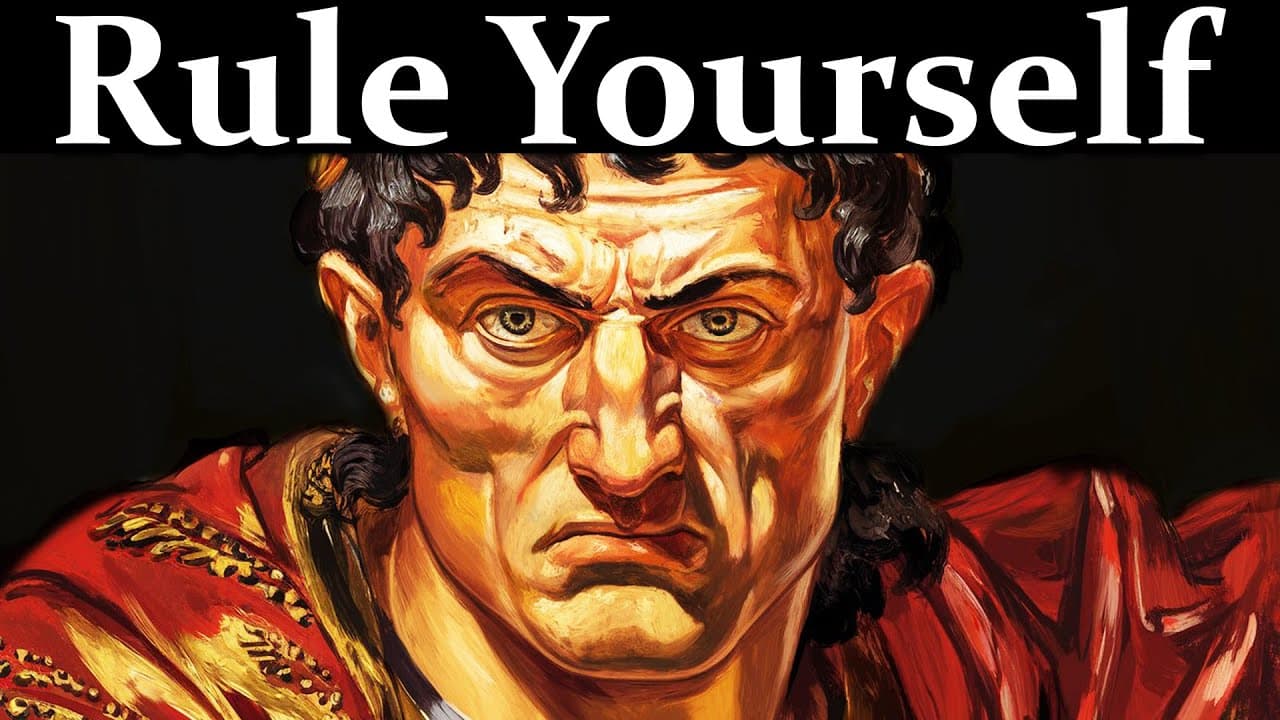
Follow No One, Learn To Rule Yourself – Nietzsche
TL;DR
Nietzsche’s path to self-rule is to question inherited morality, stop seeking approval, and create values and meaning from within. The Übermensch embodies this freedom by transcending herd morality without becoming a tyrant or rebelling from childish impulse. True virtue then becomes an overflow of inner strength rather than obedience, guilt, or self-erasure. Read on to distinguish authentic virtue from conformity.
Transcript
the biggest lie you've been told is that being good makes you free But the truth is that often what you call virtue is just a sophisticated mechanism of obedience Since childhood you have been shaped to please You were praised when you yielded punished when you dared to be yourself You were taught that the right thing is to sacrifice to be silent t... Read More
Key Insights
- Nietzsche challenges the conventional notion of virtue, suggesting it often masks obedience and conformity rather than true freedom.
- Traditional morality is criticized as a mechanism to domesticate individuals, keeping them predictable and submissive.
- The concept of the Übermensch is introduced as a person who creates their own values, transcending societal norms and expectations.
- True virtue arises from abundance and self-fulfillment, not from societal obligation or guilt-driven actions.
- The death of God symbolizes the collapse of absolute truths and the need for individuals to create personal meaning in life.
- Nietzsche emphasizes the importance of detachment and renewal, suggesting that even virtuous giving needs to pause and regenerate.
- The video critiques the 'slave morality' that condemns strength and promotes a virtue based on weakness and conformity.
- Nietzsche advocates for a life of authenticity, where actions stem from one's essence rather than external validation or fear.
Install to Summarize YouTube Videos and Get Transcripts
Explore YouTube Video Summarizer or Get YouTube Transcript Extractor
Questions & Answers
Q: How can you learn to rule yourself according to Nietzsche?
Question inherited beliefs, stop organizing your life around approval, and create your own values and meaning. This requires the courage to abandon the security of ready-made morality and act from authenticity rather than conformity.
Q: What is the biggest lie about virtue according to Nietzsche?
The biggest lie is that being good automatically makes you free. What society calls virtue can instead be a mechanism of obedience that rewards yielding, silence, self-sacrifice, and conformity.
Q: How does Nietzsche describe the Übermensch?
The Übermensch, or overman, is someone who transcends herd morality and creates values from within rather than relying on an external guide. This person is neither a superhero nor a tyrant and does not rebel merely from childish impulse.
Q: What does Nietzsche mean by “God is dead”?
The phrase describes the collapse of absolute truths, unquestionable commandments, and inherited morality. It ends the assumption that life has a prefabricated meaning and leaves individuals responsible for creating meaning themselves.
Q: Why does Nietzsche criticize herd morality?
Herd morality rewards people who follow rules, adapt, and repeat what society accepts. The transcript argues that it domesticates individuals by keeping them predictable, submissive, and afraid to create their own path.
Q: How does Nietzsche distinguish true virtue from imposed virtue?
Imposed virtue demands obedience, sacrifice, and approval while presenting those constraints as moral goodness. True virtue does not merely fit in or follow a rule; it overflows from inner strength and can reinvent the rule.
Q: Why is becoming the Übermensch described as painful?
It requires destroying beliefs and identities that were accepted without question. The process resembles a symbolic death and rebirth, forcing a person to release old certainties, face emptiness, and create without a ready-made map.
Q: Does Nietzsche’s rejection of conformity promote selfishness or arrogance?
No. The transcript explicitly says the argument is not a defense of vulgar selfishness or a romanticization of arrogance; it is about authenticity and living from oneself. It also distinguishes self-created values from impulsive rebellion.
Summary & Key Takeaways
-
Nietzsche argues that societal virtues often hide mechanisms of control, encouraging individuals to conform rather than seek true freedom. He presents the Übermensch as an ideal of self-created values, transcending traditional morality and societal expectations.
-
The video emphasizes the difference between a virtue that demands and one that gives freely. True virtue, according to Nietzsche, arises from abundance and does not seek approval or reward, contrasting with the traditional morality that is often rooted in fear and control.
-
Nietzsche's philosophy suggests that true freedom requires abandoning societal norms and creating personal meaning. He highlights the importance of detachment and renewal, encouraging individuals to embrace their authentic selves and live from a place of inner abundance.
Read in Other Languages (beta)
Share This Summary 📚
Summarize YouTube Videos and Get Video Transcripts with 1-Click
Try YouTube Summary with ChatGPT & Claude or YouTube Transcript Generator
Explore More Summaries from Psyphoria 📚
Summarize YouTube Videos and Get Video Transcripts with 1-Click
Try YouTube Summary with ChatGPT & Claude or YouTube Transcript Generator