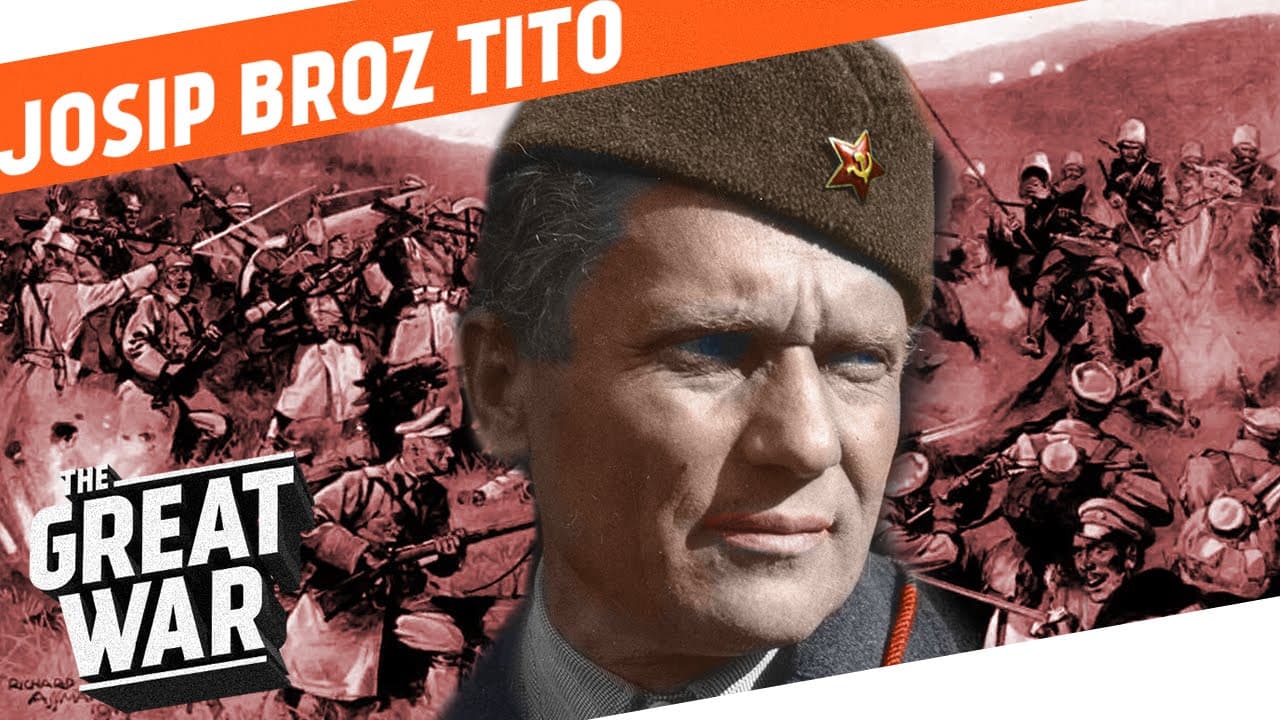
Josip Broz Tito in World War 1 I WHO DID WHAT IN WW1?
TL;DR
Tito's WWI service shaped his political and military identity.
Transcript
Josip Broz Tito was Marshal and President of Yugoslavia after World War Two and during that war was leader of the Partisan Yugoslav forces, but much of his worldview was influenced by his service during the First World War and that’s what I’m going to talk about today. I’m Indy Neidell; welcome to a Great War bio special of “Who did what in World W... Read More
Key Insights
- Josip Broz Tito's early life in the Austro-Hungarian Empire influenced his later political and military career, providing a foundation for his leadership style.
- Tito's military service began in 1913, and he quickly rose to become a junior officer, displaying leadership potential that would define his future roles.
- His disdain for the Austro-Hungarian army's oppressive nature and lack of initiative shaped his socialist beliefs and opposition to authoritarian regimes.
- Tito's experience on the Serbian front and later the Carpathian front exposed him to the harsh realities of war, influencing his anti-war stance.
- Captured by the Russians, Tito survived as a prisoner and later joined the Bolsheviks, marking a significant shift in his political ideology.
- Tito's participation in major battles, including those against Serbia and Russia, provided him with firsthand experience of warfare's brutality and the suffering of soldiers.
- His time in Russia post-WWI, including joining the Red Guards, further solidified his communist beliefs and set the stage for his future leadership roles.
- Tito's experiences in WWI were pivotal in shaping his identity as a leader, influencing his actions during WWII and his presidency of Yugoslavia.
Install to Summarize YouTube Videos and Get Transcripts
Explore YouTube Video Summarizer or Get YouTube Transcript Extractor
Questions & Answers
Q: What influenced Tito's early political beliefs?
Tito's early political beliefs were influenced by his service in the Austro-Hungarian army, where he perceived the military as an oppressive force. His experiences during World War I, including the harsh conditions and lack of initiative allowed to soldiers, reinforced his socialist ideals and opposition to authoritarian regimes.
Q: How did Tito's military service impact his leadership style?
Tito's military service taught him valuable leadership skills, as he quickly rose to become a junior officer in the Austro-Hungarian army. His experiences on the battlefield, coupled with his disdain for the oppressive military structure, helped shape his future leadership style, emphasizing initiative and resistance against authoritarian control.
Q: What role did Tito play in World War I?
During World War I, Tito served in the Austro-Hungarian army, initially on the Serbian front and later on the Carpathian front against Russia. He was involved in significant battles and was eventually captured by Russian forces. His experiences in the war were pivotal in shaping his anti-war stance and political ideology.
Q: How did Tito's experiences as a prisoner of war influence him?
As a prisoner of war in Russia, Tito was exposed to Bolshevik ideology, which had a profound impact on his political beliefs. His survival through harsh conditions and illnesses further solidified his resolve and commitment to socialist principles, eventually leading him to join the Red Guards and embrace communism.
Q: What was Tito's perspective on the Austro-Hungarian army?
Tito viewed the Austro-Hungarian army as an oppressive force that relied on outdated methods and stifled individual initiative. He criticized the army for its role in enslaving various peoples and its ineffective military strategies, which contributed to his growing disdain for authoritarian military structures.
Q: How did Tito's World War I experiences shape his future political career?
Tito's World War I experiences were instrumental in shaping his future political career. The harsh realities of war, combined with his socialist beliefs, influenced his leadership of the Yugoslav Partisans during World War II and his presidency of Yugoslavia, where he pursued a unique form of socialism independent of Soviet influence.
Q: What were the conditions like on the Carpathian front where Tito fought?
The conditions on the Carpathian front were extremely harsh, with Tito's division suffering significant casualties due to both combat and environmental factors. The Austro-Hungarian forces were ill-equipped, and many soldiers, including those in Tito's division, succumbed to frostbite during the brutal winter offensives of early 1915.
Q: How did Tito's military service conclude during World War I?
Tito's military service during World War I concluded with his capture by Russian forces after being wounded in battle. He spent the remainder of the war as a prisoner in Russia, where he embraced Bolshevik ideology, setting the stage for his future role as a communist leader in Yugoslavia.
Summary & Key Takeaways
-
Josip Broz Tito's experiences during World War I were instrumental in shaping his political and military identity, as he served in the Austro-Hungarian army and later became a prisoner of war in Russia, where he embraced Bolshevik ideology.
-
Tito's early life in Croatia, his rapid rise in the military, and his opposition to the oppressive Austro-Hungarian regime laid the groundwork for his future as a prominent socialist leader and his role in the Yugoslav Partisan resistance during WWII.
-
The harsh conditions and brutal realities of the Serbian and Carpathian fronts contributed to Tito's anti-war sentiments and his eventual leadership of Yugoslavia, where he famously defied Stalin and established a unique socialist state.
Read in Other Languages (beta)
Share This Summary 📚
Summarize YouTube Videos and Get Video Transcripts with 1-Click
Try YouTube Summary with ChatGPT & Claude or YouTube Transcript Generator
Explore More Summaries from The Great War 📚
Summarize YouTube Videos and Get Video Transcripts with 1-Click
Try YouTube Summary with ChatGPT & Claude or YouTube Transcript Generator