Endangered Species: an explainer
TL;DR
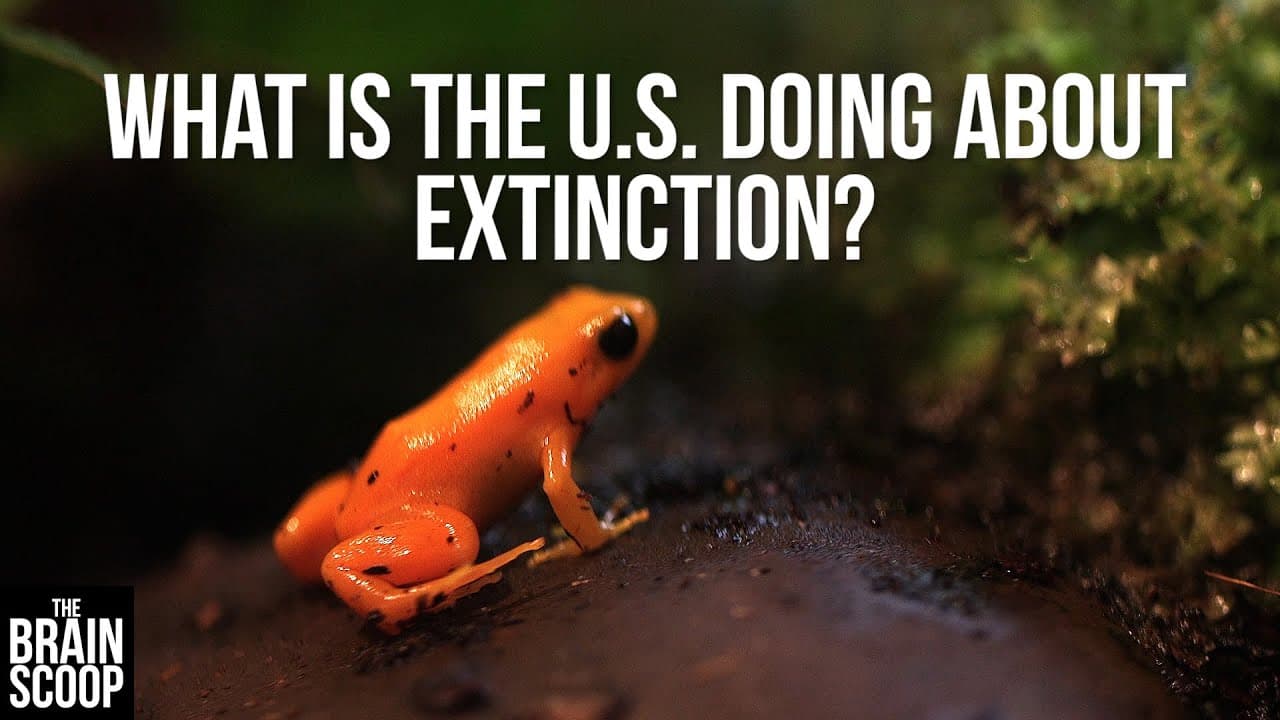
The Endangered Species Act (ESA) aims to prevent harm to endangered and threatened species, protect their habitats, and restore healthy populations.
Transcript
Hey everyone did you know that the Field Museum and The Brain Scoop are nonprofit and now we have super exciting news! You can support our program directly by donating to one of the cards in this video. All of the donations are completely anonymous and every single dollar goes exclusively to supporting our programming. We appreciate whatever you ca... Read More
Key Insights
- 🤘 The ESA was signed in 1973 and aims to protect endangered or threatened species and their habitats.
- 👂 Currently, there are 2,245 species listed under the ESA.
- 👂 Listing a species can prompt protective measures but can also hinder studies on the species and others in the same habitat.
- ❣️ Invertebrates, including clams, make up a significant portion of the species listed under the ESA.
- 💦 The ESA encourages proactive conservation efforts, such as working with landowners and developers to find sustainable solutions.
- 🌍 The ESA reminds us of our responsibility to interact with the natural world responsibly.
- ❓ Efforts to volunteer, learn about endangered species, and promote conservation can make a difference in protecting biodiversity.
Install to Summarize YouTube Videos and Get Transcripts
Explore YouTube Video Summarizer or Get YouTube Transcript Extractor
Questions & Answers
Q: How does a species gain endangered status under the ESA?
A species can gain endangered status through petitions by private citizens or organizations, or through the assessment and prioritization by Fish and Wildlife Service (FWS) biologists. It can take months to years for a species to be listed, and even longer for protection programs to be implemented.
Q: What types of species are covered by the ESA?
The ESA covers animals, plants, and invertebrates, with 1,354 animals and 901 plants currently listed. Invertebrates, including clams, account for 21% of all listed animals.
Q: Is it considered good to be listed as an endangered or threatened species?
While listing suggests that a species needs government protection, it can also make it difficult to study or study species in the same habitat. The ESA aims to prompt support and change before a species requires protection.
Q: How does the ESA encourage conservation efforts?
The ESA requires measures to be taken to ensure the safety of listed species, such as securing their habitats and enforcing regulations. Proactive approaches, like the case of the greater sage-grouse, involve working with landowners and developers to find sustainable solutions.
Summary & Key Takeaways
-
The ESA, signed in 1973, aims to conserve endangered or threatened species and their ecosystems.
-
There are currently 2,245 species listed under the ESA, with over half being animals and 280 being invertebrates.
-
Listing a species as endangered or threatened prompts protective measures but can also make it challenging to study or study other species in the same habitat.
Read in Other Languages (beta)
Share This Summary 📚
Summarize YouTube Videos and Get Video Transcripts with 1-Click
Try YouTube Summary with ChatGPT & Claude or YouTube Transcript Generator
Explore More Summaries from thebrainscoop 📚

Summarize YouTube Videos and Get Video Transcripts with 1-Click
Try YouTube Summary with ChatGPT & Claude or YouTube Transcript Generator