Mammoths vs. Mastodons: Can we 'de-extinct' them both?
TL;DR
Scientists are researching ways to bring back the woolly mammoth using the well-preserved genetic information found in permafrost, raising questions about the ethics and practicality of de-extinction.
Transcript
There's a lot of buzz in the news about de-extinction. With the growing interest in technologies and research, that could possibly bring animals and plants back from being, well, extinct. One of the candidates high on that list is the woolly mammoth. They're the closest relatives to our living Asian elephants today, and only widely disappeared abou... Read More
Key Insights
- 💁 De-extinction of the woolly mammoth is being explored due to well-preserved genetic information.
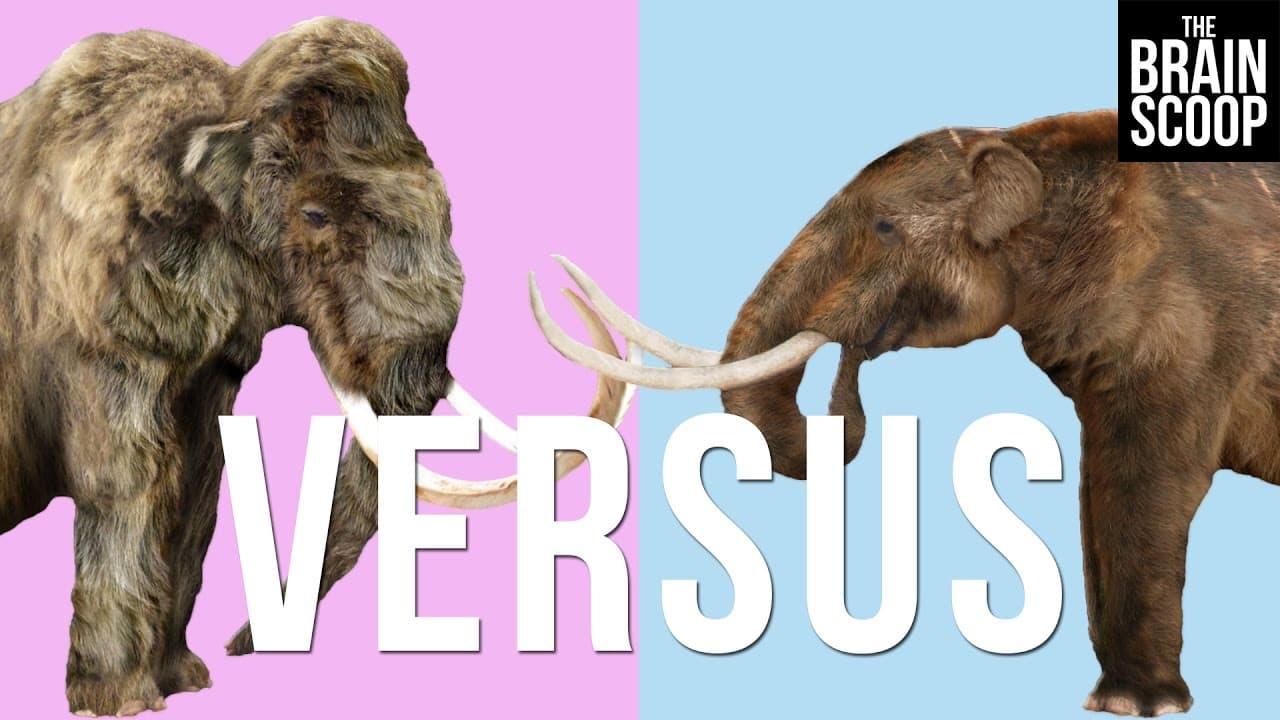
- 🦣 Mammoths and mastodons have significant genetic and morphological differences.
- 🦷 Mastodons had different teeth and diets compared to mammoths.
- 🦣 There were multiple species of mammoths and mastodons.
- 🦣 Dwarf mammoths evolved due to island dwarfism.
- 👻 Mammoths were proficient swimmers, allowing them to reach islands.
- 🦣 The cause of extinction for mammoths and mastodons is still uncertain.
Install to Summarize YouTube Videos and Get Transcripts
Explore YouTube Video Summarizer or Get YouTube Transcript Extractor
Questions & Answers
Q: Why are scientists focusing on bringing back the woolly mammoth instead of other extinct species like mastodons?
Mammoths and mastodons belong to the same order but have been genetically different for millions of years. It would not be feasible to splice mastodon DNA into living elephant cells due to the large genetic differences between the two species.
Q: What are the morphological differences between mammoths and mastodons?
Mammoths have flat grinding surfaces on their molars, indicating a grazing diet, while mastodons have cusped teeth suitable for browsing on shrubs and sticks. Mastodons were also shorter and stockier with smaller ears compared to mammoths.
Q: Were there different species of mammoths and mastodons?
Yes, there were ten different species of mammoths and four different species of mastodons. The woolly mammoth is the most commonly known, but there was also a dwarf mammoth species found on the Channel Islands off California.
Q: How did the dwarf mammoths end up on the Channel Islands?
The dwarf mammoths most likely reached the islands by swimming from the mainland. Elephants, including mammoths, are capable of long-distance swimming, and the absence of predators on the islands led to their smaller size through island dwarfism.
Summary & Key Takeaways
-
The woolly mammoth, extinct about 10,000 years ago, is a potential candidate for de-extinction due to well-preserved genetic information in permafrost.
-
Scientists are sequencing mammoth genomes and exploring ways to insert mammoth genes into living elephants to potentially bring them back.
-
Mammoths and mastodons, although similar in appearance, have been genetically and morphologically different for around 25 million years.
Read in Other Languages (beta)
Share This Summary 📚
Summarize YouTube Videos and Get Video Transcripts with 1-Click
Try YouTube Summary with ChatGPT & Claude or YouTube Transcript Generator
Explore More Summaries from thebrainscoop 📚




Summarize YouTube Videos and Get Video Transcripts with 1-Click
Try YouTube Summary with ChatGPT & Claude or YouTube Transcript Generator