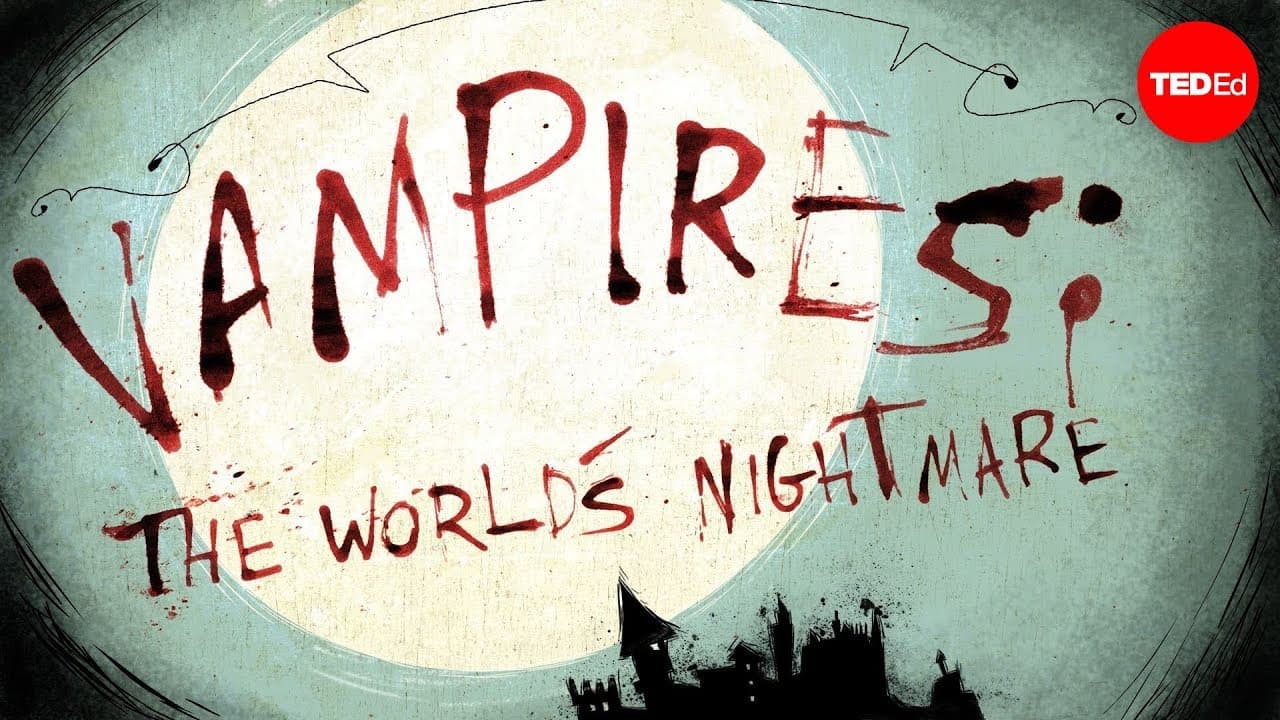
Vampires: Folklore, fantasy and fact - Michael Molina
TL;DR
Vampires have transformed from grotesque beings to charismatic figures throughout history.
Transcript
Good evening! What's the matter? Are you afraid of vampires? He he, no need to worry, I'm not staying for dinner. (Laughter) I'm here to guide you through a brief history of vampires, illustrating how our image has changed from a shambling corpse to the dapper gentleman you see before you. Vampires are nearly as old as you humans. Stories about us,... Read More
Key Insights
- 🧡 Ancient vampires were depicted in a wide range of grotesque forms, varying from culture to culture.
- 🧛 Superstitions in 18th-century Eastern Europe contributed to the modern image of elegant and mysterious vampires.
- 😷 The fear of the unknown and lack of medical knowledge led to the belief in reanimated corpses as blood-sucking creatures.
- 🧛 Vampire slaying rituals were based on misinterpretations of natural decomposition processes.
- 👶 Bram Stoker's "Dracula" solidified many common vampire attributes while introducing new, enduring traits.
- 🧛 The evolution of vampires in literature reflects a continuous storytelling tradition that keeps the legend alive.
- 🧛 Vampires continue to captivate audiences through reimagining and expanding their mythological traits.
Install to Summarize YouTube Videos and Get Transcripts
Explore YouTube Video Summarizer or Get YouTube Transcript Extractor
Questions & Answers
Q: How did vampires differ in ancient cultures compared to modern depictions?
In ancient cultures, vampires took on various forms, from bloodthirsty birds to flying heads, unlike the suave and sophisticated vampires of modern literature and cinema.
Q: What led to the rise of vampire superstitions in 18th-century Eastern Europe?
Mysterious deaths from plagues and diseases, combined with lack of medical knowledge, fueled superstitions and the belief in reanimated vampires feasting on the living.
Q: How did traditional vampire-slaying rituals originate?
Villagers misinterpreted normal signs of decomposition as evidence of vampirism, leading to practices like beheadings, burnings, and staking to prevent the undead from rising.
Q: How did Bram Stoker contribute to the portrayal of vampires in popular culture?
Stoker's "Dracula" drew inspiration from local myths and superstitions, incorporating elements like garlic, stakes, and Transylvanian settings that have become iconic in vampire lore.
Summary & Key Takeaways
-
Vampires have existed in various forms throughout ancient cultures, each with unique and horrifying characteristics.
-
The modern image of vampires emerged in 18th-century Eastern Europe due to superstitions and fear of the unknown.
-
Local myths and superstitions inspired famous vampire literature, like Bram Stoker's "Dracula," shaping the vampire legend we know today.
Read in Other Languages (beta)
Share This Summary 📚
Summarize YouTube Videos and Get Video Transcripts with 1-Click
Try YouTube Summary with ChatGPT & Claude or YouTube Transcript Generator
Explore More Summaries from TED-Ed 📚

Summarize YouTube Videos and Get Video Transcripts with 1-Click
Try YouTube Summary with ChatGPT & Claude or YouTube Transcript Generator