Therapeutic Organ Engineering: Highlights From The 8th Annual Wyss Symposium
TL;DR
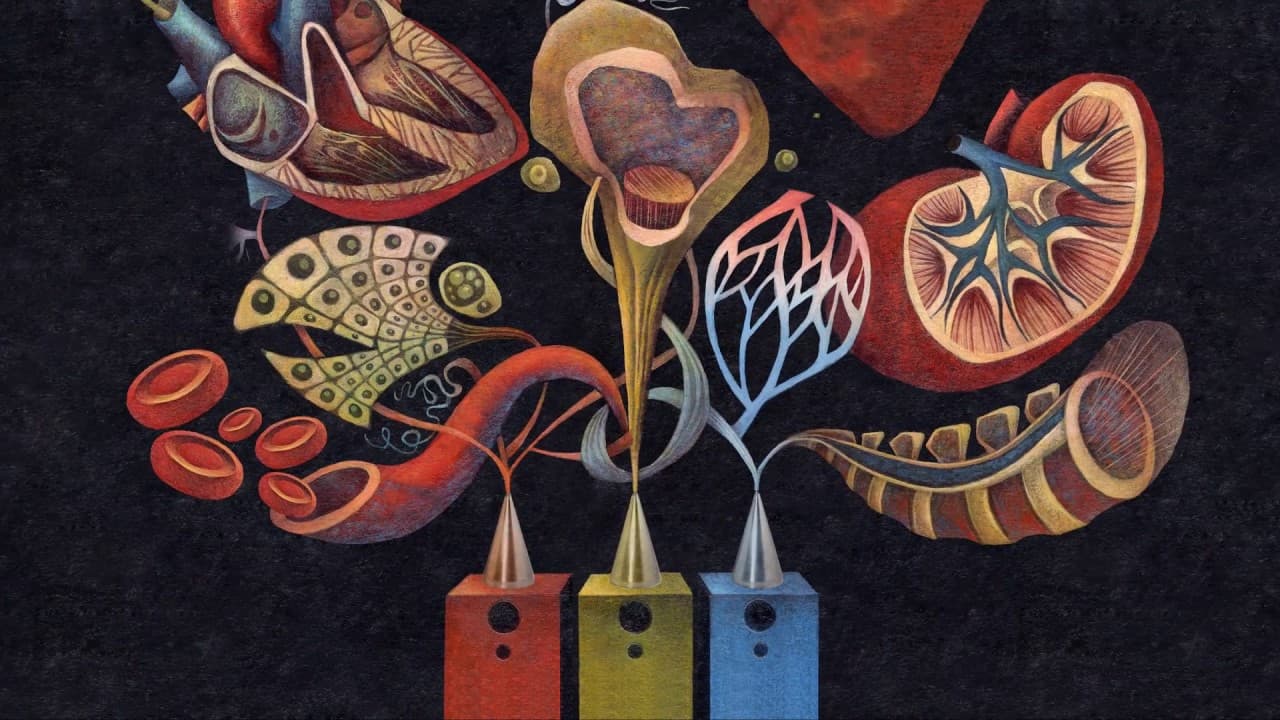
Therapeutic organ engineering aims to design new therapies to treat diseased or non-functioning tissues in the body, with a focus on building complex organs to alleviate medical conditions.
Transcript
how do we coordinate complex events to go from single cells and material environments to forming organoids or organ tissues that perform complex functions there's a tremendous need also from the perspective of people that are waiting for organs the organ donor lists in the US alone has over a hundred thousand people and roughly a hundred thousand o... Read More
Key Insights
- 👂 The organ donor lists have a significant number of people waiting for transplants, highlighting the need for therapeutic organ engineering solutions.
- 🏛️ Vascularization is a challenging yet critical aspect of building functional organs, as it ensures proper nutrient and oxygen supply.
- 🤳 Biofabrication technologies, such as bio-printing and self-assembly, offer promising approaches to construct complex tissues and organs.
- 💨 The ability to manipulate molecules and cells has advanced but understanding function and large-scale anatomy is still a long way off.
- 🈸 Collaboration between industry, clinicians, and researchers is crucial to effectively translate therapeutic organ engineering into practical applications for patients.
- 🏑 Utilizing animal systems and bringing together experts from different disciplines can help shape the development and guidelines for the field.
- 🖐️ The extracellular matrix plays a vital role in the mechanical function of connective tissues, suggesting its importance in tissue engineering.
Install to Summarize YouTube Videos and Get Transcripts
Explore YouTube Video Summarizer or Get YouTube Transcript Extractor
Questions & Answers
Q: What is therapeutic organ engineering?
Therapeutic organ engineering refers to designing new therapies to treat tissues or organs that are diseased or not functioning properly. It involves materials, cells, drugs, or any other means to prevent damage and rebuild tissues in the body.
Q: Why is the vasculature important in building organs?
The vasculature, which provides nutrients and oxygen throughout the body, is crucial in organ construction. However, it is difficult to vascularize tissues without harvesting vascular beds from other parts of the body, leading to the need for new approaches.
Q: What role does biofabrication play in tissue engineering?
Biofabrication technologies like bio-printing and self-assembly allow for the assembly of building blocks to generate complex tissues. By using different materials and techniques, researchers can create structures with the desired composition, complexity, function, and scale.
Q: What is the goal of therapeutic organ engineering?
The ultimate goal is to build functional organs, such as the heart, that can effectively replace damaged or diseased organs in patients. This can be achieved through various steps, from building single cells to constructing 3D tissue structures and even heart valves.
Summary & Key Takeaways
-
Therapeutic organ engineering involves designing therapies to treat damaged tissues or organs to address medical conditions.
-
The vasculature is a critical part of building organs, but its construction is challenging in engineering tissue.
-
Biofabrication technologies, such as bio-printing and self-assembly, can help in the bottom-up assembly of tissues and organs.
Read in Other Languages (beta)
Share This Summary 📚
Summarize YouTube Videos and Get Video Transcripts with 1-Click
Try YouTube Summary with ChatGPT & Claude or YouTube Transcript Generator
Explore More Summaries from Harvard University 📚





Summarize YouTube Videos and Get Video Transcripts with 1-Click
Try YouTube Summary with ChatGPT & Claude or YouTube Transcript Generator