Meat Glue Mania | Lecture 10 (2010)

TL;DR
Transglutaminase is an enzyme that binds proteins together by forming a covalent cross-link between the amino acids glutamine and lysine. Because covalent bonds are extremely strong and cannot be broken by heating, meat glued with it stays bound firmly. Proteins rich in glutamine and lysine bind best.
Transcript
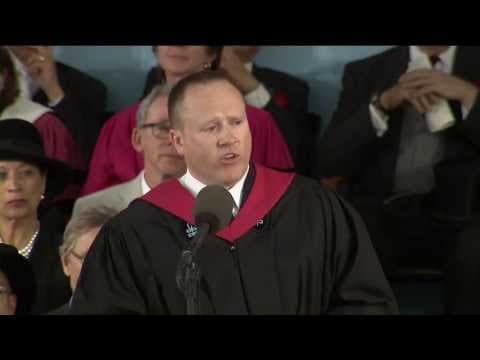
MICHAEL P. BRENNER: So I'd like to welcome everyone to another glorious edition of the Science and Cooking Public Lecture Series. And as is tradition in this series, we start by thanking our many sponsors who made this event possible. So the sponsors include José Andrés's ThinkFoodGroup and the Alicia Foundation, who provided both financial and int... Read More
Key Insights
- Transglutaminase is a naturally occurring enzyme, present in humans, that binds together proteins that already exist in a food product. The cooking version was discovered and produced by a company and comes from a type of soil bacteria.
- The enzyme works by creating a covalent cross-link between two specific amino acids, glutamine and lysine. Proteins rich in glutamine and lysine therefore bind especially well together when treated with it.
- Covalent cross-links are very strong and hard to break, and they cannot be broken by heating. This is why meat glued together with transglutaminase binds strongly and holds its bond during cooking.
- Flavor production has no critical temperature at which it switches on. Unlike boiling water at 100 degrees or albumin denaturing around 60-something degrees, flavor is produced gradually as temperature and time increase.
- The Arrhenius equation describes how reaction rates depend on temperature in physical chemistry. It explains why flavor compounds are produced over a wide temperature range rather than turning on suddenly at one point.
- Flavor compounds like ethyl, methyl, and pyrazine cannot be bought at a grocery store the way salt can. They must be produced by cooking through complex chemical reactions known as the Maillard reactions.
- Good taste depends on generating the right combination and amount of flavor compounds over time while cooking. Different compounds are produced at different rates and temperatures, which is the real difficulty in cooking well.
- The 1826 book The Physiology of Taste by Savarin, available free online, argues that discovering a new dish confers more happiness on humanity than discovering a new star, framing food as central to human life.
Install to Summarize YouTube Videos and Get Transcripts
Explore YouTube Video Summarizer or Get YouTube Transcript Extractor
Questions & Answers
Q: What is transglutaminase?
Transglutaminase is an enzyme that binds proteins together. It takes proteins that already exist in a food product and binds them, and it is a naturally occurring enzyme that also exists in humans. The version used in cooking was discovered and produced by a company and is made by a type of soil bacteria. It is the tool behind so-called meat glue.
Q: How does meat glue bind proteins together?
It works by producing a covalent cross-link between two specific amino acids, glutamine and lysine. Because the bond forms between these amino acids, proteins that are rich in glutamine and lysine bind especially well together. If you want proteins to bind strongly, you should choose proteins that contain plenty of glutamine and lysine so the enzyme has the right sites to connect.
Q: Why does transglutaminase bind meat so strongly?
The cross-link it creates is covalent, and covalent cross-links are very, very strong and very hard to break. Critically, they cannot be broken by heating. So when meat is glued together with transglutaminase, it binds strongly and stays bound even when cooked, which is why the enzyme is effective for making new foods from separate pieces of meat.
Q: Why is there no critical temperature for producing flavor?
Unlike boiling water at 100 degrees or albumin denaturing around 60-something degrees, flavor production does not switch on above a single critical temperature and off below it. Instead it is very gradual. As temperature rises, the rate of producing a flavor compound increases, and waiting longer produces more flavor. This gradual behavior, described by the Arrhenius equation, is what makes cooking for taste difficult to control.
Q: How does the Arrhenius equation relate to cooking flavor?
The Arrhenius equation is an important physical chemistry formula expressing that reaction rates depend on temperature. When plotted for a flavor compound that begins being produced around 150 degrees, the rate rises from about a tenth to about 0.3, only a threefold difference, yet the compound is still produced over a wide range. This shows flavor builds gradually rather than turning on suddenly.
Q: Why can't you buy flavor compounds at the grocery store?
Flavor compounds have names like ethyl, methyl, and pyrazine, and unlike salt you cannot simply go buy them at a store. They have to be produced by cooking. This happens through complex chemical reactions, namely the Maillard reactions, which generate the various chemicals that give food its taste. Good cooking depends on generating the right amounts of these compounds over time.
Q: What is the book The Physiology of Taste and why is it mentioned?
The Physiology of Taste is a book by Savarin published in 1826, available free online. The lecturer reads several of its aphorisms, including that the universe would be nothing without life and all lives must be fed, and that discovering a new dish confers more happiness on humanity than discovering a new star. It frames food and taste as central to human life.
Q: What did students make in the transglutaminase laboratory?
The week's laboratory was inspired by wd~50 and Wylie Dufresne, and about 300 students made shrimp noodles using transglutaminase. Whole Foods donated 40 pounds of shrimp to make this possible, and Whole Foods also donated all of the food for the course's laboratory component. Earlier labs included spherification, which produced creations such as a spherified egg made of mango and cheese.
Summary
This video is part of a series called "Science and Cooking Public Lecture Series" and features Wiley Dufresne, a chef from New York City, discussing the use of transglutaminase, also known as meat glue, in cooking. Dufresne explains how meat glue works and demonstrates its various applications, including making shrimp noodles, binding proteins together, and using it with vegetables and grains. He emphasizes the importance of understanding the science behind cooking and how it can enhance culinary techniques.
Questions & Answers
Q: Who are the sponsors of the science and cooking public lecture series?
The sponsors include Jose Andres, the Think Food Group, the Alesia Foundation, Whole Foods, Harvard University, and the Sade Business School.
Q: What is the purpose of the laboratory component in the cooking class?
The laboratory component allows students to experiment with different cooking techniques and create unique dishes. It provides a hands-on learning experience and showcases the creations made by the students.
Q: How did Wiley Dufresne and his team learn to make shrimp noodles?
Wiley Dufresne and his team learned how to make shrimp noodles during a field trip to WD 50, a restaurant in New York City. They were taught by the chefs there, and the students were able to make the noodles themselves in the laboratory.
Q: What is the book "The Physiology of Taste" by Saverin about?
"The Physiology of Taste" is a book that explores the science behind taste and the physiology of eating. It was written by Jean Anthelme Brillat-Savarin and published in 1826. The book delves into topics such as the role of taste in human life and the relationship between taste and digestion.
Q: How do flavor compounds affect the taste of food?
Flavor compounds are chemicals that give food its taste. The amount of flavor compound present in food affects its taste, and different compounds are produced at different rates during cooking. Therefore, understanding how to generate the right amount of flavor compounds at the right time is crucial to creating dishes with the desired taste.
Q: What is the purpose of transglutaminase in cooking?
Transglutaminase, also known as meat glue, is an enzyme that binds proteins together. It can be used to bind proteins that already exist in a product, creating a strong covalent bond between the amino acids glutamine and lysine. This allows for the restructuring of proteins and the creation of unique food textures and presentations.
Q: How does the rate of transglutaminase binding depend on temperature?
The rate of transglutaminase bonding is not dependent on a critical temperature but increases gradually with temperature. There is a threshold temperature, around 50 to 55 degrees Celsius, at which the rate of bonding becomes more effective. However, some bonding can occur at lower temperatures as well.
Q: What applications of meat glue did Wiley Dufresne demonstrate?
Wiley Dufresne demonstrated the use of meat glue in making shrimp noodles, binding proteins together in beef dishes, creating sheets of soybean puree, and binding cooked barley. He also mentioned using meat glue with other ingredients such as quinoa.
Q: How does meat glue work with gelatin?
Meat glue and gelatin have a strong affinity for each other. By adding gelatin to ingredients that do not contain their own protein source, such as soybeans or grains, and then using meat glue, it allows for binding and restructuring these ingredients in unique ways.
Q: What are some practical applications of meat glue in cooking?
Some practical applications of meat glue include binding proteins together to create larger cuts of meat, making tubes or rolls of meat, and creating unique textures and presentations with various ingredients. Meat glue can also be used with vegetables, grains, and seafood to bind them together or create new forms.
Takeaways
The use of transglutaminase, also known as meat glue, in cooking allows for unique culinary techniques and presentations. Understanding the science behind cooking and how ingredients react to each other can enhance the culinary experience. Transglutaminase can be used to bind proteins together, create new forms and textures, and experiment with various ingredients. It opens up possibilities for creativity and pushes the boundaries of traditional cooking methods.
Summary & Key Takeaways
-
The lecture, part of Harvard's Science and Cooking series with chef Wylie Dufresne of wd~50, focuses on transglutaminase. Whole Foods donated all lab food including 40 pounds of shrimp, and 300 students made shrimp noodles in the accompanying laboratory session.
-
Before covering the enzyme, Brenner explores flavor. Flavor compounds such as ethyl, methyl, and pyrazine cannot be purchased but are produced by cooking via Maillard reactions. Unlike boiling or protein denaturing, flavor has no critical temperature and builds gradually, as described by the Arrhenius equation.
-
Transglutaminase is an enzyme, naturally present in humans and made by soil bacteria, that binds proteins by forming a covalent cross-link between glutamine and lysine. Because covalent bonds are very strong and unbreakable by heat, meat glued this way binds firmly and holds during cooking.
Read in Other Languages (beta)
Share This Summary 📚
Summarize YouTube Videos and Get Video Transcripts with 1-Click
Try YouTube Summary with ChatGPT & Claude or YouTube Transcript Generator
Explore More Summaries from Harvard University 📚





Summarize YouTube Videos and Get Video Transcripts with 1-Click
Try YouTube Summary with ChatGPT & Claude or YouTube Transcript Generator