How to Build Computers Like the Human Brain
TL;DR
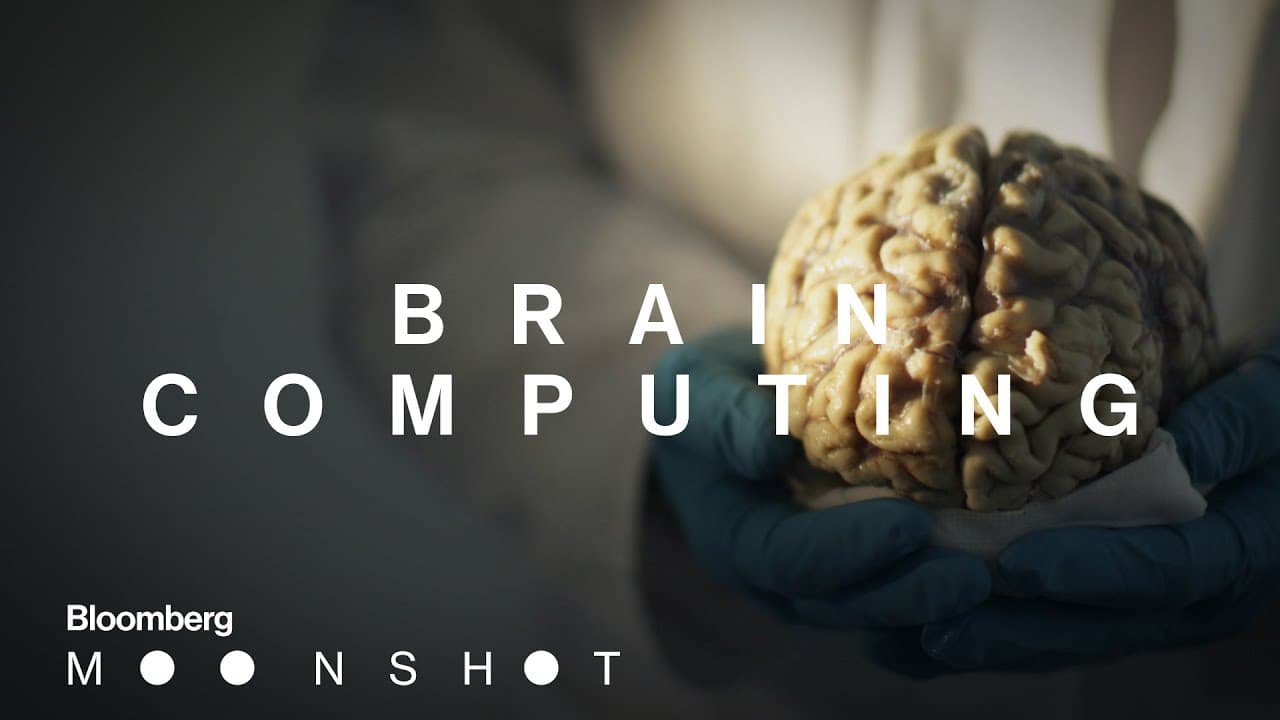
To advance technology, scientists are developing computers that mimic the brain's structure and function. Neuromorphic computing is a key area, aiming to create systems that learn and process information like human brains. This approach could revolutionize AI, making it more efficient and capable of understanding complex patterns with minimal data.
Transcript
The human brain is the most powerful supercomputer in the world. All right, let’s see this electrical headquarters of yours in operation. It helps us navigate our environment by carrying out about one thousand trillion logical operations per second. It’s compact, uses less power than a lightbulb and has potentially endless storage. The human brai... Read More
Key Insights
- The human brain performs about one thousand trillion logical operations per second.
- Neurons communicate through electrical pulses, similar to computer binary code.
- The Human Brain Project aims to map the brain's complex structure and functions.
- Neuromorphic hardware mimics brain neurons, increasing computational speed and efficiency.
- Current AI systems require vast data sets, unlike human learning which needs minimal examples.
- Neuromorphic computing could significantly enhance AI's ability to recognize patterns and learn.
- Despite advancements, our understanding of the brain remains incomplete and fragmented.
- The Human Brain Project fosters collaboration across scientific fields to advance brain research.
Install to Summarize YouTube Videos and Get Transcripts
Explore YouTube Video Summarizer or Get YouTube Transcript Extractor
Questions & Answers
Q: How do neuromorphic computers mimic the human brain?
Neuromorphic computers mimic the human brain by replicating its structure and function using hardware that operates like neurons. These systems communicate through electrical spikes, similar to how neurons transmit signals. This design allows for faster and more efficient processing, enabling the computers to learn and adapt like human brains.
Q: What is the Human Brain Project?
The Human Brain Project is a large-scale research initiative aimed at mapping the human brain's structure and functions. It involves collaboration across over 100 universities and seeks to create detailed 3D maps of neurons and their connections. The project aims to enhance our understanding of the brain and support the development of neuromorphic computing.
Q: Why is neuromorphic computing important for AI development?
Neuromorphic computing is important for AI development because it enables systems to process information and learn in a manner similar to the human brain. This approach could significantly enhance AI's efficiency, reducing the need for large data sets and allowing for more human-like pattern recognition and learning capabilities.
Q: How do neurons communicate in the brain?
Neurons in the brain communicate through electrical pulses known as spikes. Each neuron releases molecules that act as messengers, determining whether the electrical pulse is passed along the chain. This process occurs simultaneously across billions of neurons, forming the basic language of the brain and enabling complex cognitive functions.
Q: What challenges do scientists face in understanding the brain?
Scientists face challenges in understanding the brain due to its complexity and the intricate interactions between its components. Many cognitive functions cannot be fully explained at the cellular level, and despite years of research, our understanding remains fragmented. Mapping the brain's structure and functions is crucial for advancing our knowledge.
Q: What are the potential applications of neuromorphic computing?
Potential applications of neuromorphic computing include enhanced AI systems capable of better pattern and speech recognition, face recognition, and text reading. These systems could revolutionize everyday tasks and lead to the development of true artificial intelligence, providing more efficient and human-like processing capabilities.
Q: How does current AI differ from human learning?
Current AI differs from human learning in that it requires large data sets to perform tasks, whereas humans can learn with minimal examples. AI systems, like neural networks, need extensive training with numerous examples to recognize patterns, while humans can quickly grasp new concepts with limited exposure.
Q: What role does the Human Brain Project play in neuromorphic computing?
The Human Brain Project plays a crucial role in neuromorphic computing by providing detailed maps of the brain's structure and functions. This information is essential for designing hardware that mimics the brain's architecture, enabling the development of more advanced and efficient AI systems that learn and process information like human brains.
Summary & Key Takeaways
-
Scientists are developing neuromorphic computers that replicate the brain's structure to improve AI. These systems aim to learn and process information like human brains, potentially revolutionizing technology. The Human Brain Project is crucial in mapping the brain to aid this development, fostering collaboration across scientific fields.
-
Neuromorphic computing, inspired by the brain's architecture, seeks to enhance AI's efficiency and learning capabilities. Unlike traditional AI, which requires large data sets, these systems aim to learn with minimal examples. This approach could lead to more advanced, human-like AI systems.
-
The Human Brain Project is a significant effort to map the brain's intricate structure, which involves creating detailed 3D maps of neurons and their connections. This research is essential for developing neuromorphic computing, which could unlock new capabilities in AI and improve our understanding of cognitive processes.
Read in Other Languages (beta)
Share This Summary 📚
Summarize YouTube Videos and Get Video Transcripts with 1-Click
Try YouTube Summary with ChatGPT & Claude or YouTube Transcript Generator
Explore More Summaries from Bloomberg Originals 📚






Summarize YouTube Videos and Get Video Transcripts with 1-Click
Try YouTube Summary with ChatGPT & Claude or YouTube Transcript Generator