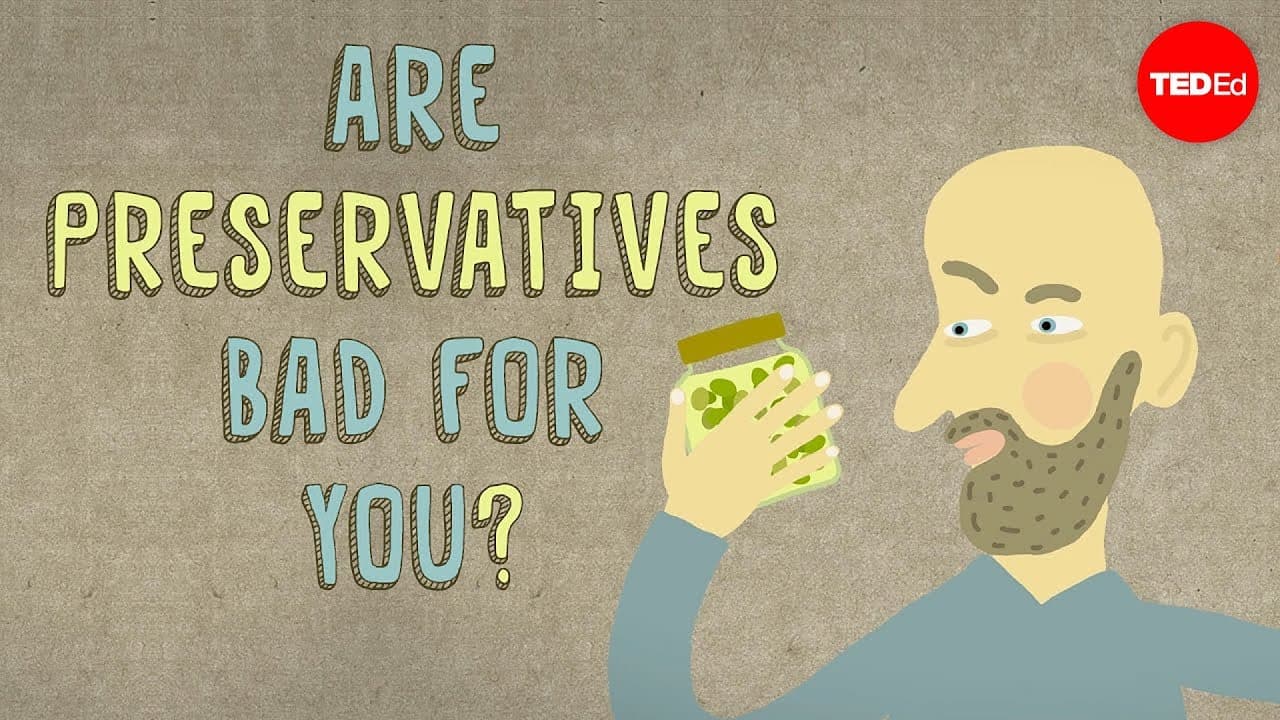
Are food preservatives bad for you? - Eleanor Nelsen
TL;DR
Preservatives prevent food spoilage caused by microbes and oxidation, but their safety and health impacts are still debated.
Transcript
Food doesn't last. In days, sometimes hours, bread goes moldy, apple slices turn brown, and bacteria multiply in mayonnaise. But you can find all of these foods out on the shelf at the grocery store, hopefully unspoiled, thanks to preservatives. But what exactly are preservatives? How do they help keep food edible and are they safe? There are two m... Read More
Key Insights
- 😋 Preservatives prevent food spoilage by inhibiting both microbial growth and oxidation.
- ❓ Common preservatives include acids like benzoic acid, sorbic acid, and propionic acid.
- 😋 Antioxidants like BHT, tocopherol (vitamin E), and citric acid help prevent off-flavors and browning in foods.
- 😒 The use of sugar, salt, and nitrates/nitrites can also act as antimicrobial preservatives.
- 🧑⚕️ Preservatives are deemed safe when used in small amounts, but concerns about potential health risks exist.
- 👯 Some people may have allergies to preservatives like sulfites.
- 💅 Smoking, salting, and curing meats with antimicrobial agents have been traditional preservation methods.
Install to Summarize YouTube Videos and Get Transcripts
Explore YouTube Video Summarizer or Get YouTube Transcript Extractor
Questions & Answers
Q: What are the two major factors that cause food to go bad?
Food spoilage is primarily caused by microbes like bacteria and fungi invading food and oxidation, which leads to rancid fats and browning of produce.
Q: How do preservatives prevent food spoilage?
Preservatives create an inhospitable environment for microbes and inhibit oxidation, preserving the quality and safety of food products.
Q: Are synthetic preservatives safe for consumption?
While synthetic preservatives like benzoic acid and sorbic acid are generally considered safe, some studies suggest potential health risks, prompting ongoing research.
Q: Are there alternative methods to preserve food without using preservatives?
Some companies and consumers are exploring packaging techniques and other methods to extend shelf life without relying on chemical preservatives.
Summary & Key Takeaways
-
Food spoilage is mainly caused by microbes like bacteria and fungi invading food and oxidation, leading to rancidity and browning.
-
Preservatives help prevent spoilage by creating an inhospitable environment for microbes and inhibiting oxidation.
-
While preservatives are generally safe in small amounts, some studies suggest potential health concerns, prompting exploration of alternative preservation methods.
Read in Other Languages (beta)
Share This Summary 📚
Summarize YouTube Videos and Get Video Transcripts with 1-Click
Try YouTube Summary with ChatGPT & Claude or YouTube Transcript Generator
Explore More Summaries from TED-Ed 📚



Summarize YouTube Videos and Get Video Transcripts with 1-Click
Try YouTube Summary with ChatGPT & Claude or YouTube Transcript Generator