From Backwards Walking to the Send Away Command: A Game-Changer in Dog Training
TL;DR
Learn advanced dog training techniques for better obedience and fun.
Transcript
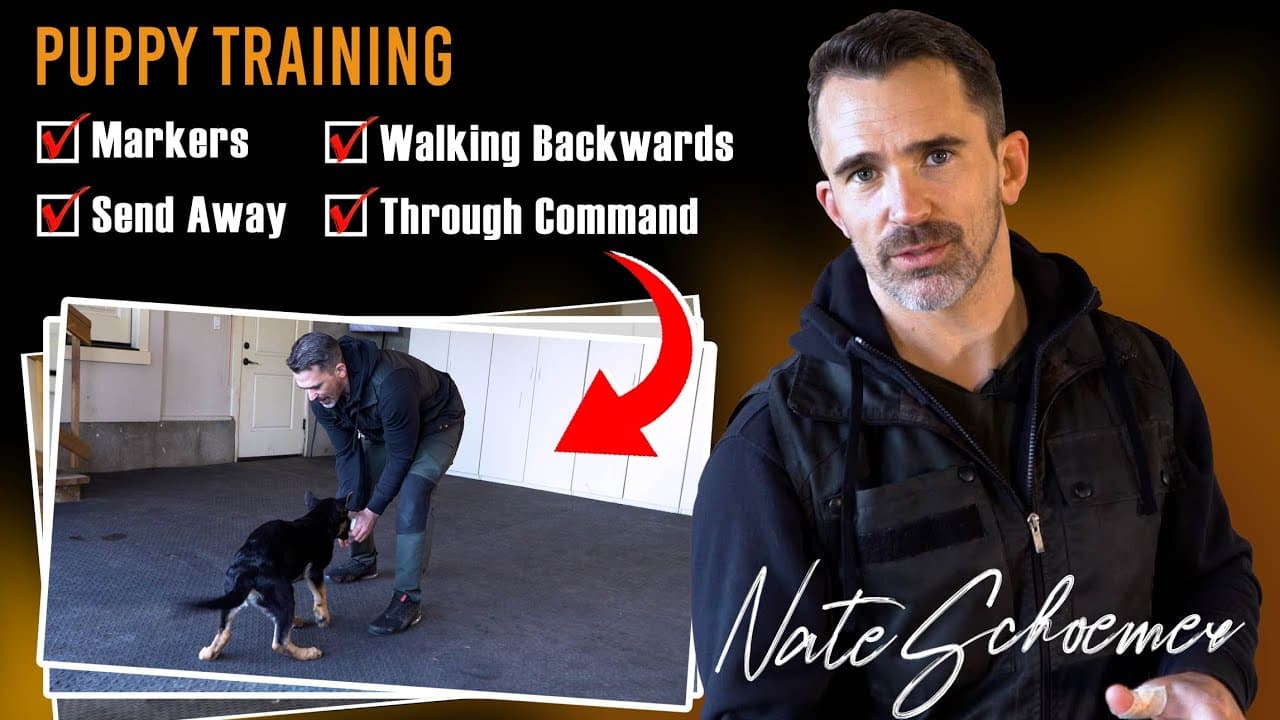
this is the third video where we're working with the young German Shepherd Maverick if you've seen the last two we're going to be adding to those this week we're going to be teaching him markers the send away walking backwards and the through command so it's a lot of different things that we're adding but we want to keep the training very exciting ... Read More
Key Insights
- The video emphasizes the importance of movement in dog training to maintain enthusiasm and motivation, especially in active breeds like the German Shepherd.
- Markers are crucial in dog training, serving as signals for positive and negative reinforcement, and are used to predict rewards after a behavior.
- Three types of markers are introduced: continuation, terminal, and secondary terminal, each serving different purposes in training scenarios.
- Walking backwards is highlighted as an essential skill, improving a dog's spatial awareness, agility, and focus, and is foundational for advanced training.
- The 'send away' command is used for competition obedience and fun, encouraging dogs to run towards a target, building excitement and drive.
- The 'through' command involves the dog running through the trainer's legs, enhancing movement and motivation through playful interaction.
- The video stresses the importance of short, fun sessions to keep training engaging for puppies, with a focus on not pairing verbal cues with physical actions.
- High-pitched praise and enthusiastic engagement are recommended to reinforce positive behavior and maintain a strong bond between the dog and trainer.
Install to Summarize YouTube Videos and Get Transcripts
Explore YouTube Video Summarizer or Get YouTube Transcript Extractor
Questions & Answers
Q: What is the purpose of using markers in dog training?
Markers serve as signals to predict rewards after a behavior, helping dogs understand the consequences of their actions. They are crucial for clear communication and effective training, allowing trainers to reinforce desired behaviors through positive and negative reinforcement, and punishment.
Q: How does the 'send away' command benefit a dog?
The 'send away' command encourages dogs to run towards a target, building excitement and drive. It's used in competition obedience and as a fun exercise, enhancing a dog's motivation and eagerness to learn, while also improving their spatial awareness and obedience.
Q: Why is walking backwards an important skill for dogs?
Walking backwards improves a dog's spatial awareness, agility, and focus. It's not only a fun trick but also a foundational skill for advanced training techniques, helping to deepen the bond between the dog and trainer through step-by-step reinforcement and clear communication.
Q: What is the significance of high-pitched praise in dog training?
High-pitched praise is significant as it reinforces positive behavior, making the dog feel appreciated and motivated. It helps maintain enthusiasm during training sessions and strengthens the bond between the dog and trainer, ensuring the dog remains engaged and eager to learn.
Q: How should training sessions be structured for puppies?
Training sessions for puppies should be short and fun, lasting about five minutes. This keeps the puppy engaged and prevents boredom. The focus should be on movement and motivation, avoiding pairing verbal cues with physical actions to ensure clear communication and effective learning.
Q: What is the role of the 'through' command in training?
The 'through' command involves the dog running through the trainer's legs, enhancing movement and motivation. It's a playful exercise that increases the dog's enthusiasm and engagement, serving as a stepping stone to more complex behaviors and boosting the dog's eagerness to learn.
Q: Why is movement emphasized in the training of active breeds like German Shepherds?
Movement is emphasized to maintain enthusiasm and motivation in active breeds like German Shepherds. It helps channel their energy positively, ensuring they remain engaged and responsive during training sessions, which is crucial for effective learning and behavior reinforcement.
Q: What is the importance of not pairing verbal cues with physical actions?
Not pairing verbal cues with physical actions is important to ensure clear communication with the dog. It prevents confusion and helps the dog understand the specific cue associated with a behavior, leading to more effective training and a better response to commands over time.
Summary & Key Takeaways
-
The video focuses on advanced dog training techniques, emphasizing the use of movement to maintain enthusiasm and motivation in dogs. Key skills include walking backwards, the send away command, and the through command, all designed to improve a dog's obedience and engagement.
-
Markers play a crucial role in training, serving as signals for different types of reinforcement. The video introduces three markers: continuation, terminal, and secondary terminal, each predicting different rewards and helping in clear communication with the dog.
-
Short, fun training sessions are recommended to keep puppies engaged. The video also highlights the importance of not pairing verbal cues with physical actions, and using high-pitched praise to reinforce positive behavior and strengthen the trainer-dog bond.
Read in Other Languages (beta)
Share This Summary 📚
Summarize YouTube Videos and Get Video Transcripts with 1-Click
Try YouTube Summary with ChatGPT & Claude or YouTube Transcript Generator
Explore More Summaries from Nate Schoemer 📚

Summarize YouTube Videos and Get Video Transcripts with 1-Click
Try YouTube Summary with ChatGPT & Claude or YouTube Transcript Generator