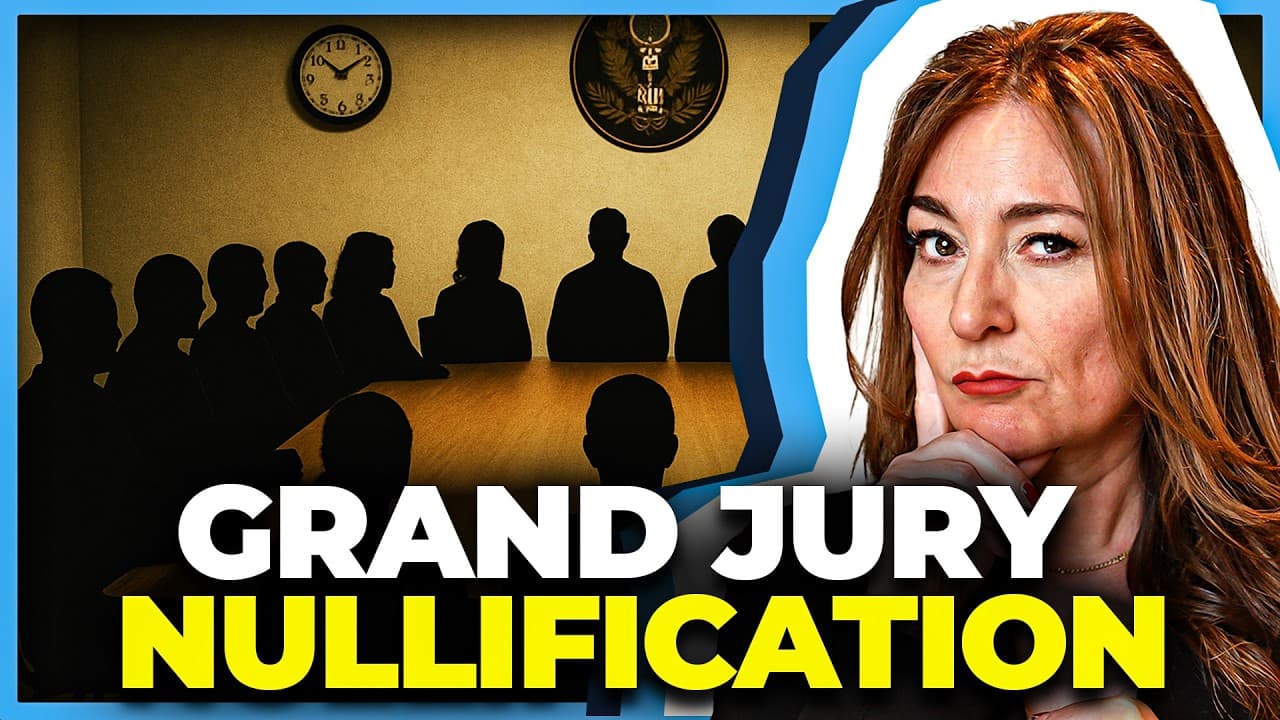
DC Juries Refuse to Indict Protestors
TL;DR
DC grand juries frequently reject indictments despite increased arrests.
Transcript
The Justice Department keeps getting its ass kicked in court, especially in Washington DC, which is weird because President Trump assured us that he fixed crime in the nation's capital by flooding the streets with maskmen and tactical gear. Washington DC, you'll be happy to know, is a free and safe zone. It's so safe. And Attorney General Pam Bondi... Read More
Key Insights
- The Justice Department is facing repeated failures in getting indictments from DC grand juries despite numerous arrests.
- President Trump's crime crackdown has overwhelmed DC courts with minor cases, leading to inefficiencies and judicial frustration.
- Grand juries in DC are notably rejecting indictments, even in cases where evidence appears straightforward, such as the 'sandwich throwing' incident.
- The US Attorney's Office in DC has downgraded several cases from felonies to misdemeanors after failing to secure indictments.
- DC residents are skeptical of the federal law enforcement surge, leading to jury nullification where jurors refuse to indict despite evidence.
- The unique legal status of DC means the US Attorney handles both federal and local crimes, complicating prosecution efforts.
- High-profile cases like those involving protests and immigration raids are often rejected by grand juries, reflecting public dissent.
- The increased arrests and charges have not necessarily translated to convictions, highlighting inefficiencies in the current approach.
Install to Summarize YouTube Videos and Get Transcripts
Explore YouTube Video Summarizer or Get YouTube Transcript Extractor
Questions & Answers
Q: Why are DC grand juries rejecting so many indictments?
DC grand juries are rejecting many indictments due to a combination of factors, including skepticism towards the federal law enforcement surge and the perception that many charges are minor or unjust. This reflects a broader public dissent against the current administration's approach to crime in the city.
Q: How has Trump's crime crackdown affected the DC court system?
Trump's crime crackdown has overwhelmed the DC court system with a surge of minor cases, leading to inefficiencies and frustrations among judges and court staff. The increased volume of cases has not only clogged the courts but also resulted in many cases being downgraded from felonies to misdemeanors.
Q: What is jury nullification and how is it relevant here?
Jury nullification occurs when jurors refuse to convict a defendant despite evidence, often due to disagreement with the law or perceived injustice in prosecution. In DC, this phenomenon is relevant as jurors have frequently refused to indict in cases related to the federal law enforcement surge, reflecting public dissent.
Q: What challenges does the US Attorney's Office face in DC?
The US Attorney's Office in DC faces challenges due to the city's unique legal status, where it prosecutes both federal and local crimes. The surge in arrests has overwhelmed the office, leading to inefficiencies and difficulties in securing indictments, particularly in cases perceived as minor or politically motivated.
Q: How has the public reacted to the increased law enforcement presence in DC?
The public has reacted with skepticism and dissent towards the increased law enforcement presence in DC. This is reflected in the actions of grand juries, which have frequently rejected indictments, and in the broader sentiment against the federal crackdown on minor offenses.
Q: What are the implications of the grand juries' repeated no bills?
The repeated no bills from grand juries in DC highlight significant inefficiencies in the current legal approach and suggest a disconnect between the government's actions and public sentiment. This situation underscores the challenges in prosecuting cases that lack community support or are perceived as unjust.
Q: Why are some cases being downgraded from felonies to misdemeanors?
Cases are being downgraded from felonies to misdemeanors after failing to secure grand jury indictments. This often occurs in cases where the evidence is insufficient to meet the higher standards required for felony charges, reflecting the challenges faced by prosecutors in the current legal climate.
Q: What role does DC's legal status play in the current situation?
DC's legal status plays a significant role in the current situation as it is not a state, and the US Attorney's Office handles both federal and local crimes. This unique arrangement complicates prosecution efforts and contributes to the challenges faced in securing indictments amid the surge in arrests.
Summary & Key Takeaways
-
The Justice Department struggles to secure indictments from DC grand juries, with many cases being rejected despite increased arrests under President Trump's crime crackdown. This has led to inefficiencies and frustrations within the judicial system.
-
DC's unique legal status complicates prosecution efforts, as the US Attorney handles both federal and local crimes. The surge in arrests has overwhelmed courts, often resulting in cases being downgraded from felonies to misdemeanors.
-
Public skepticism towards the federal law enforcement surge in DC has led to jury nullification, where jurors refuse to indict despite evidence. This highlights the disconnect between government actions and public sentiment.
Read in Other Languages (beta)
Share This Summary 📚
Summarize YouTube Videos and Get Video Transcripts with 1-Click
Try YouTube Summary with ChatGPT & Claude or YouTube Transcript Generator
Explore More Summaries from LegalEagle 📚

Summarize YouTube Videos and Get Video Transcripts with 1-Click
Try YouTube Summary with ChatGPT & Claude or YouTube Transcript Generator