What Influenced Ancient Egyptian Civilization?
TL;DR
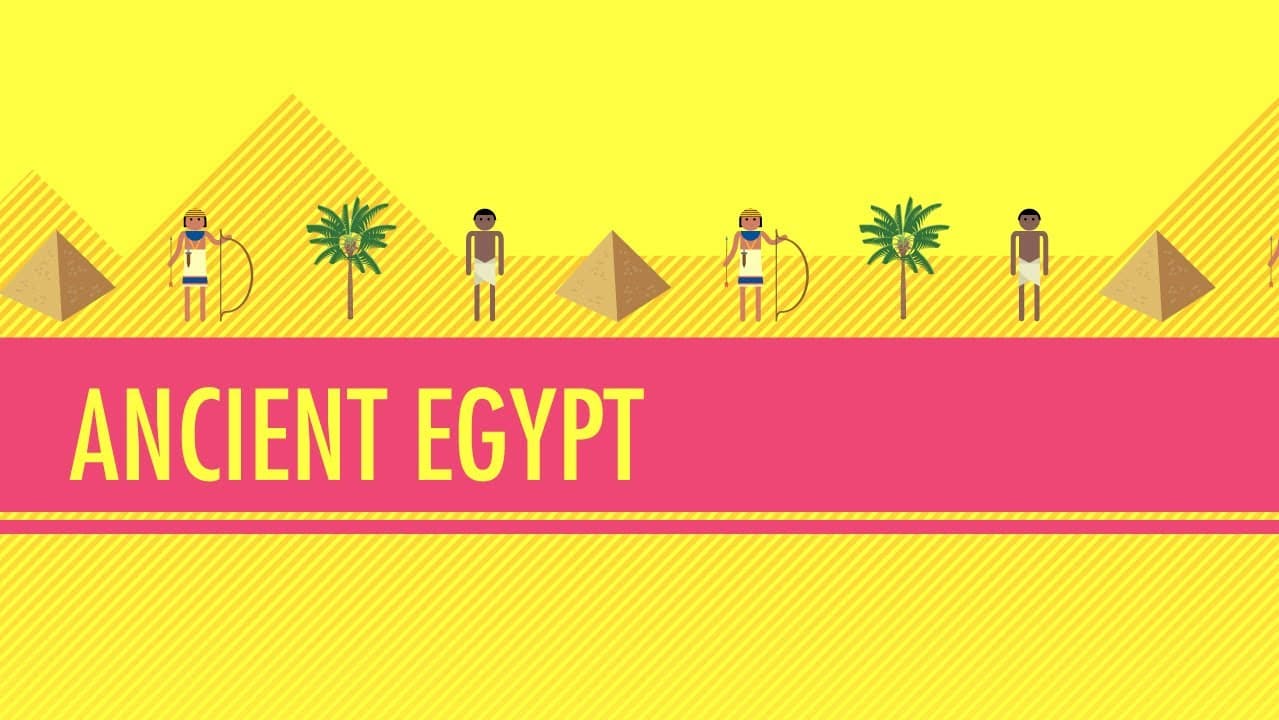
Ancient Egypt, lasting from 3000 BCE to 332 BCE, was significantly shaped by the Nile River, which provided abundant resources and influenced their optimistic worldview. The civilization is divided into the Old, Middle, and New Kingdoms, each marked by unique developments like pyramids, divine kingship, and military expansion. Despite its eventual decline, Egypt's cultural impact remains profound.
Transcript
Hi there, my name’s John Green and this is Crash Course: World History, and today we’re going to talk about Egypt. No, not that Egypt. Older. Older. Older. Less fictional. Yes, that one. Ancient Egypt is probably the most influential of the river valley civilizations. Like you might not recognize any Assyrian Kings or Assyrian language, but you pro... Read More
Key Insights
- Ancient Egypt lasted from 3000 BCE to 332 BCE, making it one of the longest-lasting civilizations.
- The Nile River's regular flooding provided nutrient-rich soil, enabling agricultural surplus with minimal effort.
- Egyptian society was highly centralized, with pharaohs seen as divine or close to gods, exemplified by pyramid construction.
- The Old Kingdom is known for the construction of pyramids and the establishment of divine kingship.
- The Middle Kingdom saw the rise of new gods like Ammun-Ra and military expansions into Nubia.
- The New Kingdom expanded Egypt's territory through military conquests but eventually led to conflicts with other empires.
- King Tutankhamen is famous primarily due to the discovery of his intact tomb in the 20th century.
- Ancient Egypt's culture remained consistent over millennia, blending together in historical memory.
Install to Summarize YouTube Videos and Get Transcripts
Explore YouTube Video Summarizer or Get YouTube Transcript Extractor
Questions & Answers
Q: How did the Nile River influence Ancient Egyptian civilization?
The Nile River's predictable flooding provided nutrient-rich soil, making agriculture highly productive and allowing for food surpluses with minimal labor. This stability contributed to Egypt's prosperity and shaped an optimistic worldview, as seen in their positive view of the afterlife. The river also facilitated trade and communication, centralizing communities along its banks.
Q: What were the key features of the Old Kingdom in Ancient Egypt?
The Old Kingdom, lasting from 2649 to 2152 BCE, is noted for the construction of the pyramids, which symbolize the centralized power and divine kingship of the pharaohs. This period also saw the establishment of a structured society and a belief system where pharaohs were considered gods or close to gods, influencing Egyptian culture and religion.
Q: How did the Middle Kingdom differ from the Old Kingdom in Ancient Egypt?
The Middle Kingdom, from 2040 to 1640 BCE, restored pharaonic rule with rulers from Nubia and introduced new deities like Ammun-Ra. This period focused on military expansion, particularly into Nubia, and saw changes in religious practices and governance, emphasizing a more militaristic and expansive approach compared to the Old Kingdom's focus on monumental architecture.
Q: What were the main accomplishments of the New Kingdom in Ancient Egypt?
The New Kingdom, from 1550 to 1070 BCE, marked a period of military expansion, transforming Egypt into an empire. Notable pharaohs like Hatshepsut expanded trade rather than military conquest. However, most pharaohs focused on territorial expansion, leading to conflicts with other empires. This period also saw significant cultural developments and the construction of grand temples.
Q: Why is King Tutankhamen famous today?
King Tutankhamen, who ruled around 1322 BCE, is famous primarily because his tomb was discovered almost intact in 1922, unlike other pharaohs whose tombs were looted in antiquity. This discovery provided immense insight into Egyptian burial practices and artifacts, sparking global interest in Ancient Egypt and making King Tut one of the most recognizable names in history.
Q: What role did religion play in Ancient Egyptian society?
Religion was central to Ancient Egyptian society, influencing governance, culture, and daily life. The pharaohs were seen as divine or semi-divine beings, and religious beliefs shaped their view of the afterlife as a continuation of life on earth. Egyptians practiced polytheism, worshipping a pantheon of gods and using amulets and magic in daily life, reflecting their spiritual beliefs.
Q: How did Ancient Egypt's geography affect its development?
Ancient Egypt's geography, dominated by the Nile River, provided natural protection and resources, fostering a stable and prosperous civilization. The river's predictable flooding supported agriculture, while deserts and seas offered natural barriers against invasions. This geographical stability allowed Egypt to develop a unique and enduring culture, relatively isolated from external influences.
Q: What is the significance of the pyramids in Ancient Egypt?
The pyramids, particularly those built during the Old Kingdom, symbolize Ancient Egypt's architectural and engineering prowess. They served as monumental tombs for pharaohs, reflecting the belief in the pharaohs' divine status and the importance of the afterlife. The construction of pyramids demonstrated the centralized power and resources available to the Egyptian state, leaving a lasting legacy.
Summary & Key Takeaways
-
Ancient Egypt, spanning from 3000 BCE to 332 BCE, was profoundly influenced by the Nile River, which provided a stable agricultural foundation. The civilization is divided into the Old, Middle, and New Kingdoms, each marked by distinct developments such as pyramid construction, divine kingship, and military expansion. Despite its eventual decline, Egypt's cultural and historical impact remains significant.
-
The Nile River's predictable flooding allowed for a rich agricultural area, contributing to Egypt's prosperity and shaping its optimistic worldview. The Old Kingdom is noted for its pyramids and divine kingship, while the Middle Kingdom introduced new gods and military expansion. The New Kingdom continued territorial conquests, leading to conflicts with neighboring empires.
-
King Tutankhamen, although a minor pharaoh, became famous in modern times due to the discovery of his nearly intact tomb. Ancient Egypt's culture remained remarkably consistent over thousands of years, blending together in historical memory and outlasting many other civilizations in duration and influence.
Read in Other Languages (beta)
Share This Summary 📚
Summarize YouTube Videos and Get Video Transcripts with 1-Click
Try YouTube Summary with ChatGPT & Claude or YouTube Transcript Generator
Explore More Summaries from CrashCourse 📚





Summarize YouTube Videos and Get Video Transcripts with 1-Click
Try YouTube Summary with ChatGPT & Claude or YouTube Transcript Generator