What Happened on the Western Front in Early 1915?
TL;DR
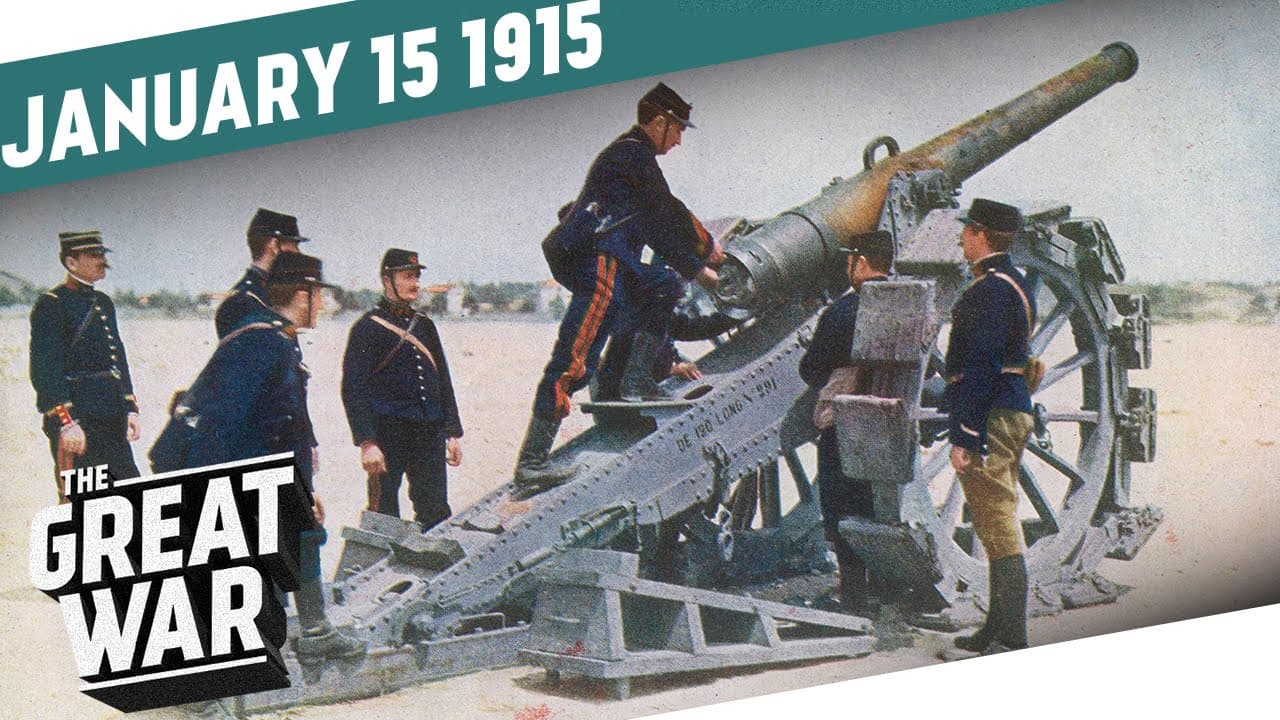
In early 1915, the Western Front saw the French struggling against German defenses, with the Battle of Soissons ending in a German victory. French General Joffre faced a dilemma: continue offensives or dig in. Meanwhile, new strategies emerged, including air raids by Germany and the South African invasion of German Southwest Africa.
Transcript
Nearly six months of war have gone, and with them have gone casualties in the millions. Huge offensives have not produced the breakthrough victories that were expected and optimism has given way to reality in every warring nation, and that reality is that the current concepts and tactics of war do not work, and each leader must come up with complet... Read More
Key Insights
- The Battle of Soissons ended with a German victory, capturing 5,000 French prisoners.
- French General Joffre faced a strategic dilemma between continuing offensives and digging in.
- German air raids on Britain began in 1915, marking a psychological shift in warfare.
- The Ottoman Third Army faced a disastrous defeat at Sarikamis, leading to significant losses.
- South African troops invaded German Southwest Africa, aiming to expand influence.
- Joffre's new trench strategy involved active and passive sectors to optimize resources.
- The German airship raids aimed to diminish British morale more than cause physical damage.
- The Armenian Genocide's groundwork was laid post-Sarikamis, as tensions escalated.
Install to Summarize YouTube Videos and Get Transcripts
Explore YouTube Video Summarizer or Get YouTube Transcript Extractor
Questions & Answers
Q: What was the outcome of the Battle of Soissons in 1915?
The Battle of Soissons in January 1915 ended in a German victory. The Germans captured 5,000 French prisoners and pushed the French back several kilometers from the Aisne River. This battle was significant as it highlighted the challenges faced by the French in breaking through German defenses on the Western Front.
Q: How did German air raids affect Britain during World War I?
German air raids on Britain during World War I were designed to have a psychological impact, instilling fear and uncertainty among the British population. Although the raids caused some physical damage and casualties, their primary aim was to undermine British morale by demonstrating that no location was truly safe from attack.
Q: What was the significance of the Ottoman defeat at Sarikamis?
The Ottoman defeat at Sarikamis was catastrophic, with the Third Army nearly destroyed due to harsh winter conditions and Russian opposition. This defeat significantly weakened Ottoman military capabilities and contributed to escalating tensions with the Armenian population, setting the stage for the Armenian Genocide.
Q: Why did South African troops invade German Southwest Africa in 1915?
South African troops invaded German Southwest Africa in 1915 to demonstrate loyalty to the British Crown and expand South Africa's sphere of influence. The invasion was partly motivated by the desire to show support following the Boer War and to gain strategic advantage in the region, despite internal controversy over fighting former allies.
Q: What changes did French General Joffre make to trench warfare strategy?
French General Joffre revised trench warfare strategy by designating active and passive sectors along the Western Front. Active sectors focused on offensive operations, while passive sectors provided support and were heavily fortified with barbed wire. This approach aimed to optimize resource allocation and maintain offensive capabilities while conserving manpower.
Q: How did the German airship raids during World War I aim to impact Britain?
German airship raids during World War I aimed to impact Britain by causing psychological distress rather than significant physical damage. The raids sought to diminish British morale by making civilians feel vulnerable and unsafe, thereby weakening their resolve to continue the war effort, even though the actual damage was limited.
Q: What role did the Armenian volunteers play in the Ottoman defeat at Sarikamis?
Armenian volunteers in the Russian army played a role in the Ottoman defeat at Sarikamis by contributing to the Russian military efforts. Their involvement, along with the harsh winter conditions, led to the Ottoman Third Army's significant losses. This participation was later used by Ottoman leaders as a pretext for blaming Armenians and escalating tensions.
Q: How did World War I strategies evolve in early 1915?
In early 1915, World War I strategies evolved as military leaders sought new methods to gain advantage. French General Joffre revised trench strategies, Germany initiated air raids on Britain, and South African troops invaded German Southwest Africa. These changes reflected a shift towards more innovative and diverse tactics in response to the stalemate on multiple fronts.
Summary & Key Takeaways
-
In early 1915, French General Joffre faced a strategic dilemma on the Western Front. The Battle of Soissons ended in a German victory, capturing 5,000 French prisoners. Meanwhile, Germany began air raids on Britain, marking a psychological shift in warfare.
-
The Ottoman Third Army suffered a catastrophic defeat at Sarikamis, with most troops lost to the harsh winter and Russian forces. This defeat contributed to the tensions leading to the Armenian Genocide.
-
South African troops invaded German Southwest Africa, aiming to demonstrate loyalty to Britain and expand their influence. Joffre revised trench strategies, focusing on active and passive sectors to manage resources effectively.
Read in Other Languages (beta)
Share This Summary 📚
Summarize YouTube Videos and Get Video Transcripts with 1-Click
Try YouTube Summary with ChatGPT & Claude or YouTube Transcript Generator
Explore More Summaries from The Great War 📚

Summarize YouTube Videos and Get Video Transcripts with 1-Click
Try YouTube Summary with ChatGPT & Claude or YouTube Transcript Generator