What Are Hidden Meanings in Nature Art?
TL;DR
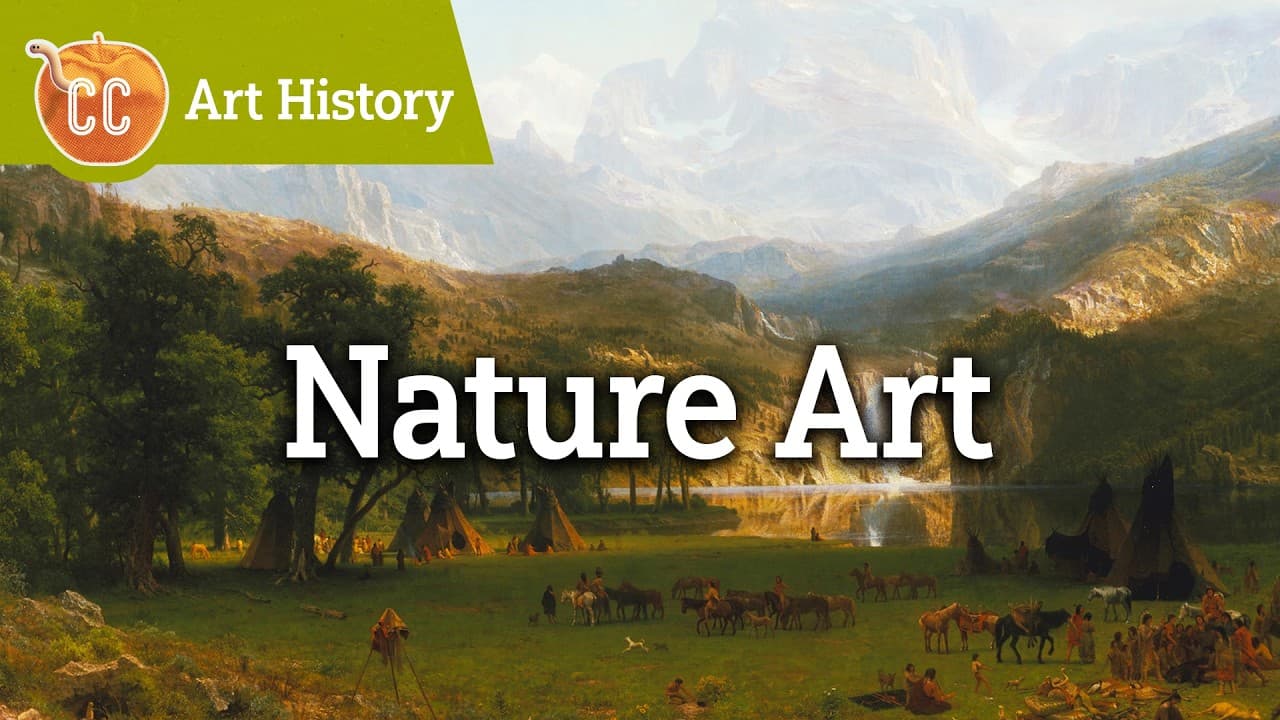
Nature art often conveys deep human concerns and social issues, despite its seemingly neutral appearance. Artists use nature to express religious, social, and environmental arguments, reflecting cultural contexts and biases. Art about nature reveals insights into human relationships with the environment and society, challenging the viewer to reconsider the role and impact of art in depicting nature.
Transcript
In 1917, Toribio Mejía Xesspe, a Peruvian archeologist, was flying over the Nazca Plateau, when he noticed something incredible. Massive line drawings — known as geoglyphs — stretching 175 square miles. Turns out these artworks, which depicted a monkey, a spider, plants, and more, were created around 500 BCE. What had compelled people thousands... Read More
Key Insights
- The Nazca geoglyphs were created around 500 BCE and may have been used for spiritual or functional purposes.
- Art about nature is not neutral; it reflects the artist's choices and the cultural context.
- Chinese landscape art uses color palettes to invoke dreamlike states, reflecting Daoist ideals.
- Xu Bing's 'Background Story: Mount Lu' uses discarded materials to challenge traditional views of nature.
- Turner's 'Slave Ship' uses a stormy seascape to critique the horrors of slavery.
- 19th-century American landscape art often omitted Indigenous peoples to support Manifest Destiny narratives.
- Valerie Hegarty's 'Fallen Bierstadt' critiques the romanticized view of the American West.
- Christi Belcourt's 'The Wisdom of the Universe' emphasizes the interconnectedness of life and environmental concerns.
Install to Summarize YouTube Videos and Get Transcripts
Explore YouTube Video Summarizer or Get YouTube Transcript Extractor
Questions & Answers
Q: What are the Nazca geoglyphs, and what might they represent?
The Nazca geoglyphs are massive line drawings on the Nazca Plateau, created around 500 BCE. They depict animals and plants and may have served spiritual or functional purposes, such as marking water sources. The geoglyphs reflect the cultural and societal values of the people who created them, offering insights into their relationship with the natural world.
Q: How does Chinese landscape art reflect Daoist ideals?
Chinese landscape art often uses soft blue and green color palettes to evoke dreamlike, magical environments where humans live in harmony with nature, aligning with Daoist ideals. These colors symbolize tranquility and balance, offering an aspirational vision of the world. Over time, artists have built on this tradition, using these palettes to connect past and present emotions.
Q: What message does Turner's 'Slave Ship' convey?
Turner's 'Slave Ship' uses a stormy seascape to critique the horrors of slavery. The painting depicts human limbs in the waves, highlighting the inhumane practice of throwing sick and dying slaves overboard for insurance payouts. The approaching storm symbolizes nature's potential retribution, while also emphasizing the chaos and neutrality of nature itself.
Q: How does Valerie Hegarty's 'Fallen Bierstadt' critique Manifest Destiny?
Valerie Hegarty's 'Fallen Bierstadt' critiques the romanticized view of the American West and the concept of Manifest Destiny by depicting a decaying landscape painting. The artwork suggests that nature itself is reclaiming the land, challenging the idea of westward expansion as a divine right and questioning the tradition of heroic American landscape painting.
Q: What themes does Christi Belcourt explore in 'The Wisdom of the Universe'?
Christi Belcourt's 'The Wisdom of the Universe' explores themes of interconnectedness and environmental conservation. The painting features native and endangered species rendered in a style inspired by Métis beadwork. Belcourt emphasizes the connections between all living things, highlighting the risks of environmental and human violence and urging viewers to consider their role in preserving nature.
Q: How does Xu Bing's 'Background Story: Mount Lu' reinterpret traditional nature art?
Xu Bing's 'Background Story: Mount Lu' reinterprets traditional Chinese landscape art by using discarded materials to create a Daoist paradise. The artwork challenges the idealized view of nature as an ethereal realm, drawing attention to contemporary environmental issues. By innovating on a classic theme, Xu prompts viewers to reconsider their perceptions of nature and art.
Q: What role does art play in depicting social issues through nature?
Art plays a significant role in depicting social issues through nature by using representations of the natural world to convey deeper human concerns. Artists make choices that reflect cultural contexts and biases, highlighting issues such as class, race, and environmental conservation. By examining nature art, viewers can uncover hidden meanings and arguments about societal values and relationships.
Q: How do site-specific artworks like Maya Lin's 'Storm King Wavefield' engage with the environment?
Site-specific artworks like Maya Lin's 'Storm King Wavefield' engage with the environment by transforming neglected areas into habitats for native species. Lin's 'living sculpture' reshapes a gravel pit into waves of earth, encouraging viewers to explore and interact with the landscape. These works highlight the potential for humans to positively impact the natural world, fostering a mutually beneficial relationship.
Summary & Key Takeaways
-
Nature art is not merely a reflection of the natural world but often conveys deeper human concerns and social issues. Through choices in representation, artists reveal cultural contexts and biases, making arguments about religion, society, and the environment. By examining various artworks, we see how nature art challenges viewers to reconsider their relationship with the natural world.
-
Chinese landscape art, with its use of color palettes, reflects Daoist ideals of harmony and tranquility. Contemporary artists like Xu Bing innovate on traditional themes, using discarded materials to highlight environmental issues. Similarly, Valerie Hegarty critiques romanticized views of the American West, questioning historical narratives.
-
Art about nature often reveals hidden meanings and arguments about human relationships with the environment. Works like Turner's 'Slave Ship' and Belcourt's 'The Wisdom of the Universe' highlight social and environmental issues, urging viewers to reflect on their impact on the natural world. Nature art serves as a dialogue, challenging perceptions and biases.
Read in Other Languages (beta)
Share This Summary 📚
Summarize YouTube Videos and Get Video Transcripts with 1-Click
Try YouTube Summary with ChatGPT & Claude or YouTube Transcript Generator
Explore More Summaries from CrashCourse 📚





Summarize YouTube Videos and Get Video Transcripts with 1-Click
Try YouTube Summary with ChatGPT & Claude or YouTube Transcript Generator