How Did Submarine Warfare Change During World War 1? I OUT OF THE TRENCHES
TL;DR
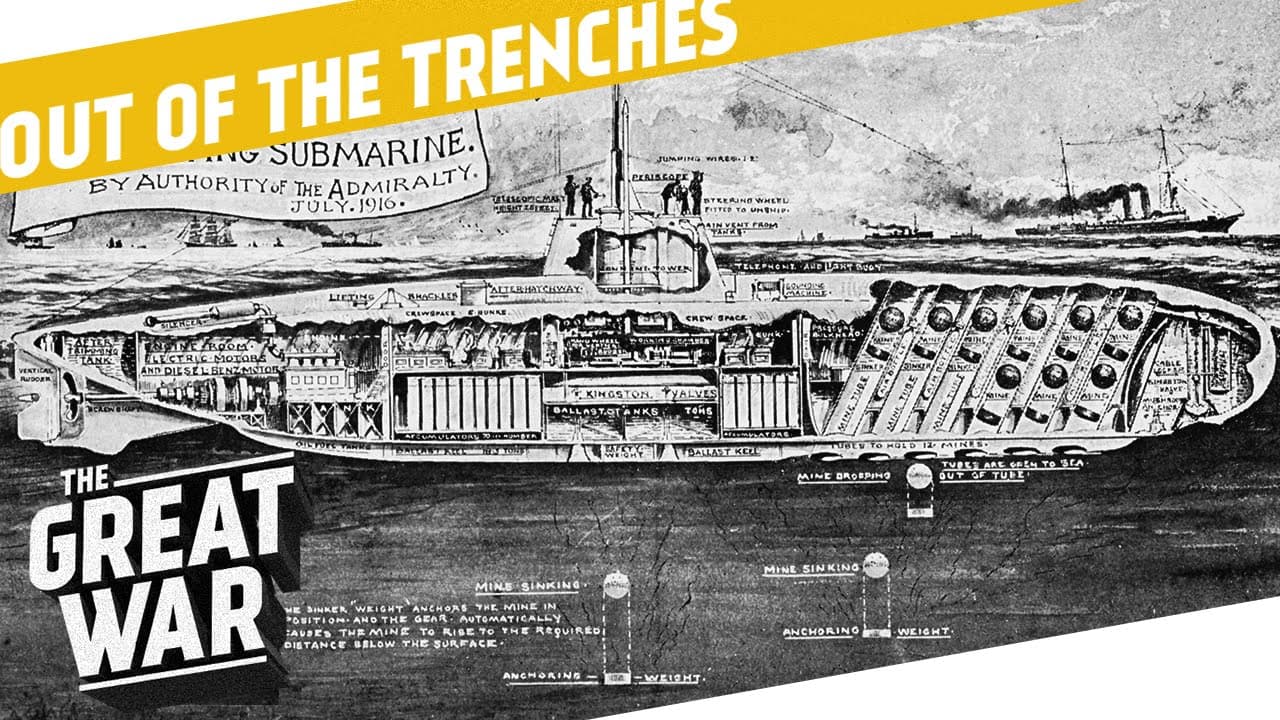
Submarine tactics evolved significantly during World War I.
Transcript
hi I'm Indie nidel and this is another Great War exciting special episode of out of the trenches where I sit here in the chair of wisdom and answer your questions about the first world war ATL rad from patreon says uh hi Indie did the German submarine war change during the War I heard that early in the war the Germans boarded ships and scuttled the... Read More
Key Insights
- Early German submarines initially targeted enemy ships carrying goods, boarding them before scuttling if necessary. This tactic evolved over time.
- The introduction of Q-ships, heavily armed merchant vessels, aimed to lure and destroy German submarines but proved largely ineffective.
- Unrestricted submarine warfare began in 1915, targeting all ships in British waters, leading to significant diplomatic tensions, especially with the United States.
- The sinking of passenger liners like the Lusitania led Germany to temporarily cease targeting passenger ships without warning.
- Despite initial successes, German U-boats faced increasing challenges from convoy systems, depth charges, and other countermeasures by mid-1917.
- By 1918, the introduction of aircraft as a countermeasure forced U-boats to submerge, significantly reducing their effectiveness.
- The resumption of unrestricted submarine warfare in 1917 was a desperate measure by Germany, hoping to knock Britain out of the war before the U.S. could effectively intervene.
- By the end of the war, the effectiveness of German U-boats had diminished significantly due to Allied countermeasures and resource shortages.
Install to Summarize YouTube Videos and Get Transcripts
Explore YouTube Video Summarizer or Get YouTube Transcript Extractor
Questions & Answers
Q: How did German submarine tactics change during World War I?
Initially, German submarines targeted enemy ships carrying goods, boarding them before scuttling. However, as the war progressed, Germany adopted unrestricted submarine warfare, targeting any ship in British waters, which led to significant diplomatic tensions, particularly with the United States after incidents like the sinking of the Lusitania.
Q: What were Q-ships and how effective were they?
Q-ships were heavily armed merchant vessels designed to lure and destroy German submarines. However, they proved largely ineffective compared to other countermeasures like the convoy system and depth charges. In 1915, for instance, Q-ships sank only two German submarines, highlighting their limited success.
Q: Why did Germany resume unrestricted submarine warfare in 1917?
Germany resumed unrestricted submarine warfare in 1917 as a desperate measure to knock Britain out of the war before the United States could effectively intervene. They hoped to sink enough British shipping to force Britain to surrender within six months, despite the risk of bringing the U.S. into the war.
Q: What impact did the convoy system have on German U-boats?
The convoy system, introduced by the Allies in 1917, significantly reduced the effectiveness of German U-boats. By organizing merchant ships into protected groups, the Allies increased the difficulty for U-boats to attack successfully, leading to higher U-boat losses and contributing to the decline of Germany's submarine campaign.
Q: How did the use of aircraft affect German submarine operations?
The introduction of aircraft as a countermeasure forced German U-boats to submerge, limiting their ability to attack and increasing their vulnerability. Aircraft could spot U-boats from above and call in warships, making it riskier for U-boats to operate near convoys, which significantly reduced their effectiveness by 1918.
Q: What was the diplomatic impact of unrestricted submarine warfare?
Unrestricted submarine warfare strained Germany's diplomatic relations, particularly with the United States. The sinking of passenger liners like the Lusitania, which resulted in American casualties, outraged the U.S. and contributed to its eventual entry into the war. Germany had to temporarily cease targeting passenger ships to mitigate diplomatic fallout.
Q: Why were German U-boats less effective by the end of the war?
By the end of World War I, German U-boats were less effective due to several factors: the implementation of the convoy system, advancements in depth charges, increased use of aircraft, and resource shortages in Germany. These countermeasures significantly reduced U-boat successes and increased their losses.
Q: What role did resource shortages play in the decline of German U-boats?
Resource shortages in Germany, particularly in labor and materials, hindered the production of new U-boats and the maintenance of existing ones. As the war progressed, the Allies' countermeasures became more effective, and Germany struggled to replace lost U-boats, contributing to the overall decline of their submarine campaign.
Summary & Key Takeaways
-
German submarine warfare during WWI evolved from targeted attacks on enemy goods to unrestricted warfare, causing diplomatic tensions, especially with neutral countries like the U.S.
-
The introduction of Q-ships and the convoy system were key countermeasures against German U-boats, although Q-ships were not particularly effective.
-
By 1918, advancements in Allied countermeasures, including the use of aircraft, significantly reduced the effectiveness of German U-boats, contributing to their decline.
Read in Other Languages (beta)
Share This Summary 📚
Summarize YouTube Videos and Get Video Transcripts with 1-Click
Try YouTube Summary with ChatGPT & Claude or YouTube Transcript Generator
Explore More Summaries from The Great War 📚





Summarize YouTube Videos and Get Video Transcripts with 1-Click
Try YouTube Summary with ChatGPT & Claude or YouTube Transcript Generator