Courts Can’t Stop Trump Now
TL;DR
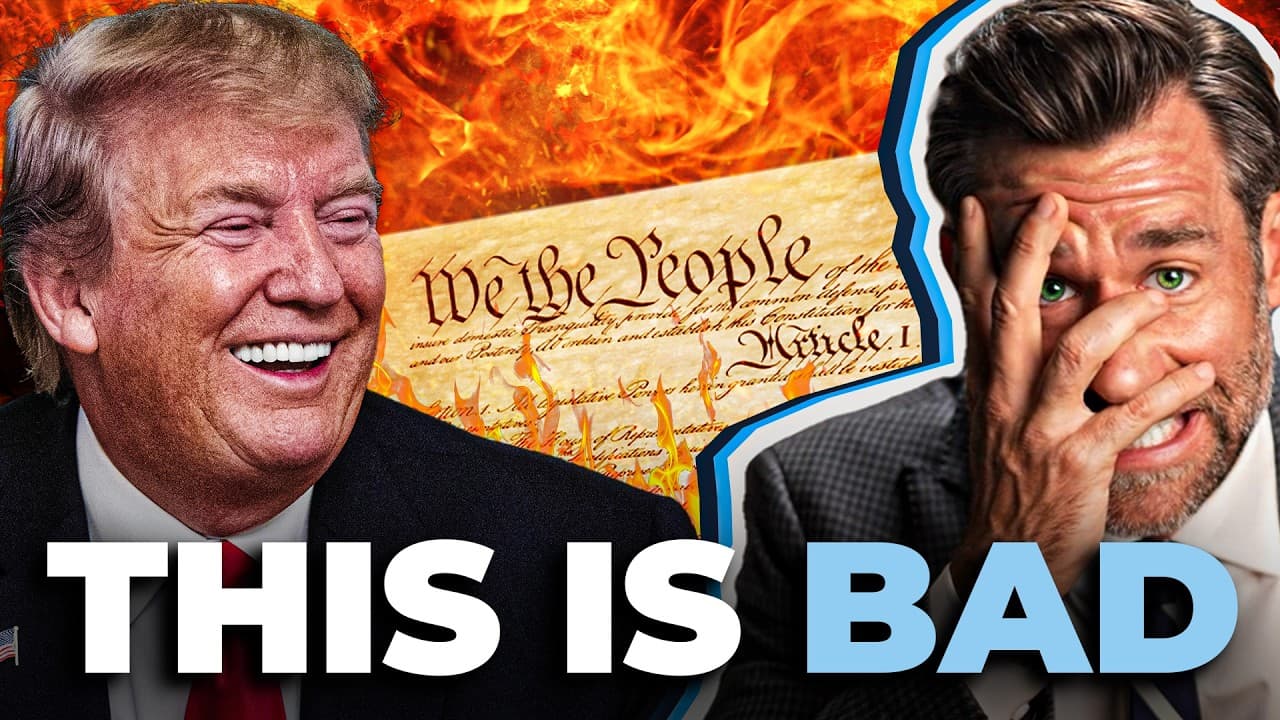
Supreme Court ruling limits federal courts' power to issue nationwide injunctions.
Transcript
This is a five alarm code red brace yourself for impact disaster for anyone that cares about constitutional rights. So far, federal courts have been the only half successful check on President Trump's unconstitutional authoritarianism. And now it seems like the Supreme Court just took away the court's ability to stop the president from doing all ki... Read More
Key Insights
- The Supreme Court's decision restricts federal courts from issuing nationwide injunctions, altering how constitutional rights are enforced across the U.S.
- The ruling creates a legal patchwork where rights can vary by state, reminiscent of historical inequalities like Jim Crow laws.
- The decision stems from Trump's executive order on birthright citizenship, challenging federal courts' equitable authority.
- Nationwide injunctions have been a tool to prevent unconstitutional executive actions, but their use has become politically polarized.
- The ruling may lead to increased litigation as individuals must now file in each jurisdiction to protect their constitutional rights.
- Critics argue the decision empowers the executive branch while limiting judicial oversight of unconstitutional actions.
- The Supreme Court's decision does not address the constitutionality of birthright citizenship, focusing solely on procedural issues.
- Class action lawsuits are proposed as an alternative to nationwide injunctions, though the court has been hostile to such actions.
Install to Summarize YouTube Videos and Get Transcripts
Explore YouTube Video Summarizer or Get YouTube Transcript Extractor
Questions & Answers
Q: What is the impact of the Supreme Court's ruling on nationwide injunctions?
The Supreme Court's ruling limits the ability of federal courts to issue nationwide injunctions, which restricts their power to block unconstitutional executive actions across the entire country. This decision could result in a fragmented legal system where constitutional rights vary by state, complicating the enforcement of federal laws and potentially leading to a patchwork of rights similar to historical inequalities.
Q: How does the ruling affect birthright citizenship?
The ruling does not directly address the constitutionality of birthright citizenship but focuses on the procedural aspect of injunctions. It allows Trump's executive order on birthright citizenship to take effect in 28 states, creating disparities in citizenship rights depending on the state. This decision places the burden on individuals to challenge the order in each jurisdiction, potentially leaving many without legal recourse.
Q: What are the criticisms of the Supreme Court's decision?
Critics argue that the decision empowers the executive branch by limiting judicial oversight of unconstitutional actions. It shifts the burden to individuals to file lawsuits in multiple jurisdictions, potentially leading to a fragmented legal landscape. The ruling is seen as a setback for civil rights, as it undermines the judiciary's role in protecting constitutional rights on a broad scale.
Q: What alternatives does the ruling propose to nationwide injunctions?
The ruling suggests that class action lawsuits could serve as an alternative to nationwide injunctions. However, the Supreme Court has been hostile to such actions, and the process of certifying a class action is complex and time-consuming. This proposal may not provide an effective solution for protecting constitutional rights across the country.
Q: How has the use of nationwide injunctions been politically polarized?
Nationwide injunctions have increasingly been used by judges appointed by presidents of the opposing political party, reflecting a trend of political polarization. A Harvard Law Review study found that a significant majority of such injunctions were issued by judges opposing the administration's party, indicating that these legal tools have become entangled in partisan battles.
Q: What historical context is relevant to the discussion of injunctions?
Historically, federal courts have used their equitable powers to issue sweeping injunctions to prevent widespread constitutional harm. The concept of nationwide injunctions became more common in the 20th century as executive power expanded. The current ruling challenges this historical use, potentially leading to a fragmented legal system reminiscent of inequalities seen during the Jim Crow era.
Q: What is the significance of the Supreme Court's focus on procedural issues?
By focusing on procedural issues rather than the constitutionality of birthright citizenship, the Supreme Court's decision avoids directly addressing the substantive legal questions. This approach emphasizes the limits of judicial power in issuing nationwide injunctions and highlights the court's role in interpreting procedural aspects of federal authority, potentially leaving broader constitutional questions unresolved.
Q: How might the ruling affect future litigation against executive actions?
The ruling could lead to increased litigation, as individuals must now file lawsuits in each jurisdiction to protect their constitutional rights. This requirement may result in a more complex and burdensome legal process, with the potential for inconsistent outcomes across different states. The decision could also encourage more strategic legal challenges and forum shopping to obtain favorable rulings.
Summary & Key Takeaways
-
The Supreme Court's ruling in Trump vs. CASA restricts federal courts from issuing nationwide injunctions, a significant change in how constitutional rights are protected. This decision could lead to a fragmented legal landscape where rights vary by state, complicating the enforcement of federal laws.
-
The ruling emerged from challenges to Trump's executive order on birthright citizenship, highlighting the tension between executive power and judicial oversight. While nationwide injunctions have been criticized for their political use, they remain a crucial check on unconstitutional actions.
-
Critics argue that the decision undermines civil rights, placing the burden on individuals to file lawsuits in multiple jurisdictions. The ruling suggests class action lawsuits as a potential solution, though the court's stance on such actions remains uncertain.
Read in Other Languages (beta)
Share This Summary 📚
Summarize YouTube Videos and Get Video Transcripts with 1-Click
Try YouTube Summary with ChatGPT & Claude or YouTube Transcript Generator
Explore More Summaries from LegalEagle 📚





Summarize YouTube Videos and Get Video Transcripts with 1-Click
Try YouTube Summary with ChatGPT & Claude or YouTube Transcript Generator