What Led to the Munich Agreement's Betrayal of Czechoslovakia?
TL;DR
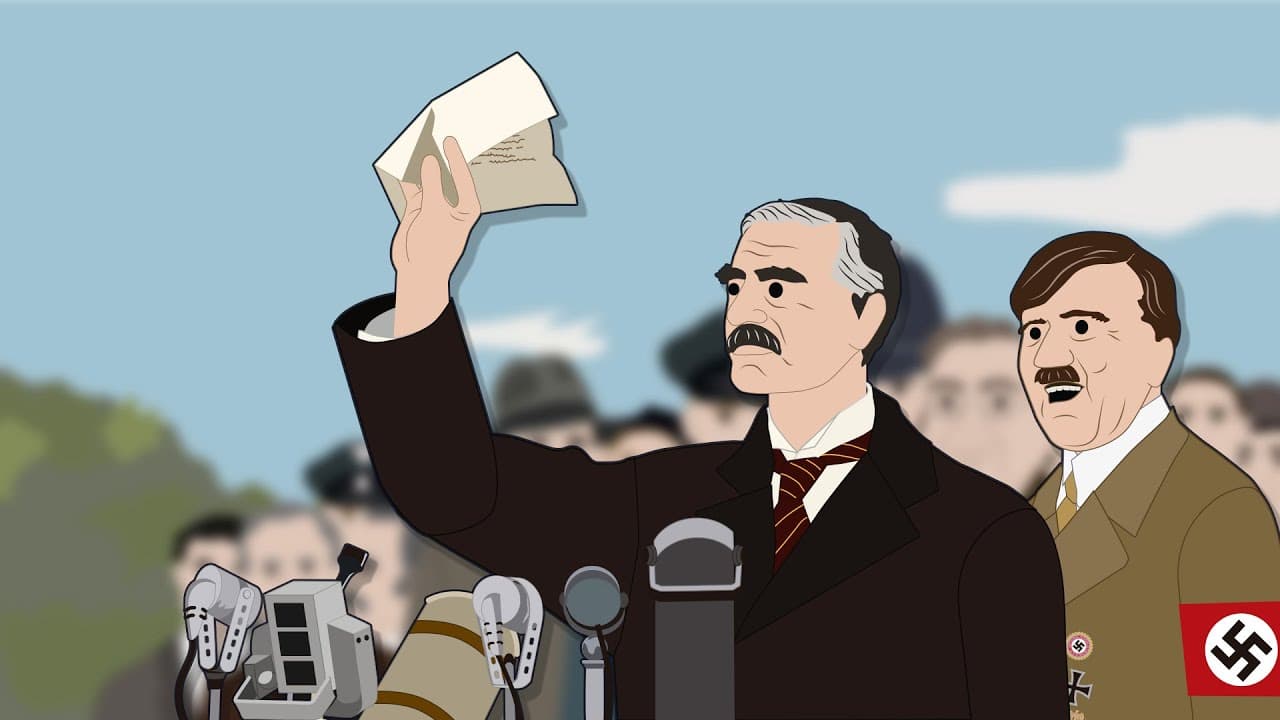
The Munich Agreement of 1938 resulted from Western appeasement, allowing Nazi Germany to occupy Czechoslovakia's Sudetenland. This agreement not only undermined Czechoslovakia's independence but also emboldened Hitler's expansionist ambitions, leading to the country's eventual disintegration.
Transcript
the Munich agreement How the West gave Czechoslovakia to the Nazis September 30th 1938. October 28 1918 Czechoslovakia declared its independence following the collapse of the austro-hungarian empire in World War One within the new state structure was a mix of ethnic groups and territories all with different historical political and economic Traditi... Read More
Key Insights
- ❓ Czechoslovakia's diversity and historical conflicts with ethnic Germans contributed to tensions before the Munich Agreement.
- ⛽ Hitler's support for the Sudeten Germans fueled demands for autonomy and provided a pretext for Germany's annexation.
- 🥺 Chamberlain's appeasement policies prioritized avoiding war over defending Czechoslovakia, leading to the Munich Agreement.
- 😥 The Munich Agreement marked a turning point in European history, showcasing the futility of appeasing aggressive totalitarian states.
- 🇩🇪 The agreement allowed Nazi Germany to gain strategic resources and weakened Czechoslovakia's ability to resist German invasion.
- 🌸 The annexation of the Sudetenland was followed by further territorial losses for Czechoslovakia to Hungary and Poland.
- 🤝 Hitler's betrayal of those he had dealt with showed that appeasement was ineffective in deterring aggression.
Install to Summarize YouTube Videos and Get Transcripts
Explore YouTube Video Summarizer or Get YouTube Transcript Extractor
Questions & Answers
Q: Why did the Sudeten Germans oppose the Czechoslovak government?
The Sudeten Germans felt oppressed by the national government and believed they were not being treated equally. They wanted autonomy or to join Austria or Germany due to cultural and ethnic differences.
Q: How did Hitler's rise to power influence the situation in Czechoslovakia?
Hitler sought to unite all German-speaking people, which included the Sudeten Germans in Czechoslovakia. He supported and financed the Sudeten German Party, escalating tensions with the Czechoslovak government.
Q: Why did British Prime Minister Chamberlain pursue appeasement policies?
Chamberlain believed Britain was unprepared for war and wanted to avoid conflict at all costs. He hoped to prevent war by giving concessions to Germany, believing it to be the lesser of two evils.
Q: What were the consequences of the Munich Agreement?
The Munich Agreement allowed Nazi Germany to occupy the Sudetenland, giving Hitler strategic resources and weakening Czechoslovakia's defenses. It further emboldened Hitler and Chamberlain's appeasement policies, ultimately leading to World War II.
Summary & Key Takeaways
-
Czechoslovakia declared independence in 1918 but had a diverse population and faced conflicts with ethnic Germans in the Sudetenland.
-
Hitler supported the German minority in Czechoslovakia and demanded the Sudetenland's autonomy, leading to tensions and the threat of war.
-
British Prime Minister Neville Chamberlain pursued appeasement policies and agreed to the Munich Agreement, which allowed Nazi Germany to occupy the Sudetenland.
Read in Other Languages (beta)
Share This Summary 📚
Summarize YouTube Videos and Get Video Transcripts with 1-Click
Try YouTube Summary with ChatGPT & Claude or YouTube Transcript Generator
Explore More Summaries from Simple History 📚
Summarize YouTube Videos and Get Video Transcripts with 1-Click
Try YouTube Summary with ChatGPT & Claude or YouTube Transcript Generator