Why Did Canada’s Military Become So Ruthless?
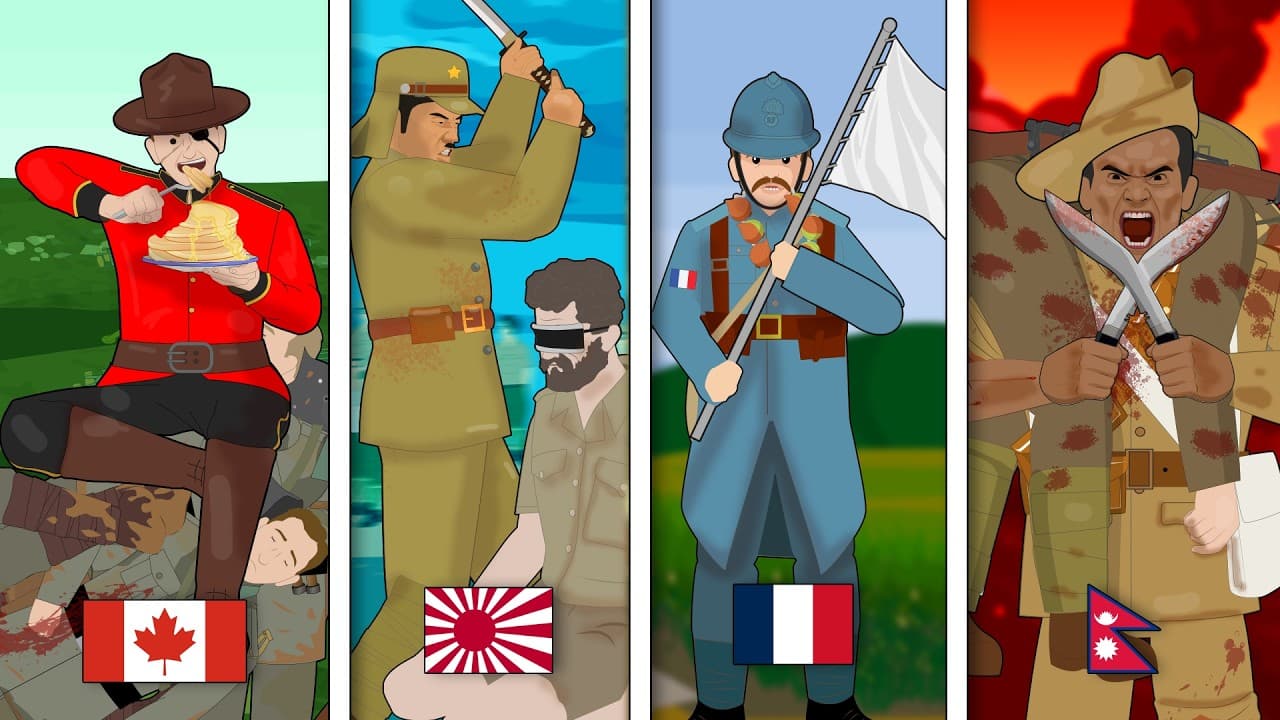
TL;DR
Canada's military gained a fearsome reputation for brutality during both World Wars, especially noted for their trench raids and harsh treatment of prisoners of war. Driven by experiences of trauma and revenge, Canadian forces showcased exceptional tactical skills in key battles, such as during D-Day at Juno Beach.
Transcript
Why do Canadians go ballistic in war? Ah, Canadians, we all know the stereotype. Nice, friendly, and extremely apologetic. If you're fighting them, though, avoid them at all costs. Because for some strange reason, these usually calm Maple Leaf lovers go absolutely ballistic when there's a war on. Trench raids. In World War I, the only thing scarier... Read More
Key Insights
- 🎖️ The Canadian military earned a reputation for aggression, characterized by trench raids and fierce combat techniques during both World Wars.
- 😨 They utilized stealth tactics, employing homemade weapons and aggressive strategies that struck fear into their enemies, particularly German forces.
- 🫱 The harsh treatment of prisoners of war reveals a troubling aspect of Canadian military history, as revenge and resource scarcity drove a tactical approach that often resulted in execution.
- 💋 Canadian forces distinguished themselves in World War II by executing successful strategies at Juno Beach, marking their transition to a respected military power.
- 👮 The psychological impact of battle rumors, such as tales of crucified officers, influenced the Canadians' intense combat style.
- 🫒 The concept of "live and let live" was often abandoned by Canadian troops, highlighting the brutal reality of trench warfare during World War I.
- ❓ Their reputation evolved from being an under-recognized fighting force to one of the most respected armies due to their effective tactics and bravery.
Install to Summarize YouTube Videos and Get Transcripts
Explore YouTube Video Summarizer or Get YouTube Transcript Extractor
Questions & Answers
Q: Why are Canadians described as ferocious in battle despite their polite nature?
Canadians are often seen as friendly and polite, but in battle, they adopted incredibly aggressive strategies. Historical accounts, particularly from World War I, depict Canadian soldiers as brutal fighters who conducted trench raids with ruthless efficiency, maximizing stealth and using innovative weaponry. This contrast has contributed to their reputation as fierce warriors despite their typically gentle demeanor.
Q: What tactics did Canadians use during trench raids in World War I?
During trench raids, Canadians focused on stealth and surprise, often blackening their faces for concealment. They employed various homemade weapons, such as spiked clubs and knives, to engage silently, alongside pipe bombs for more explosive tactics. This approach resulted in fearsome efficiency and substantial territorial gains, marking them as skilled raiders on the battlefield.
Q: How did the Canadian military respond to prisoners of war during WWI?
The Canadian military had a brutal policy regarding prisoners of war, encouraged by some commanders. Motivated by scarcity of resources and a desire for revenge, they often executed German soldiers rather than capturing them. Accounts recount chilling incidents of Canadians mercilessly killing surrendering enemies, reflecting a harsh moral landscape in wartime.
Q: What was the significance of the Canadian performance during the Battle of Vimy Ridge?
The Battle of Vimy Ridge was a pivotal moment for Canadian forces, showcasing their ability to conduct numerous successful trench raids, demonstrating advanced military tactics and teamwork. Despite suffering high casualties, Canadians managed to capture critical positions, reinforcing their reputation as elite soldiers who could execute complex maneuvers under pressure.
Summary & Key Takeaways
-
The Canadian military built a reputation for ruthlessness during both World Wars, particularly noted for their trench raids and methods of engaging the enemy.
-
They earned fearsome nicknames from Germans, and their brutal approach included killing prisoners of war, partly driven by revenge and trauma from earlier battles.
-
In World War II, Canadians showcased their tactical skill during D-Day, notably at Juno Beach, enhancing their status as an elite fighting force.
Read in Other Languages (beta)
Share This Summary 📚
Summarize YouTube Videos and Get Video Transcripts with 1-Click
Try YouTube Summary with ChatGPT & Claude or YouTube Transcript Generator
Explore More Summaries from Simple History 📚

Summarize YouTube Videos and Get Video Transcripts with 1-Click
Try YouTube Summary with ChatGPT & Claude or YouTube Transcript Generator