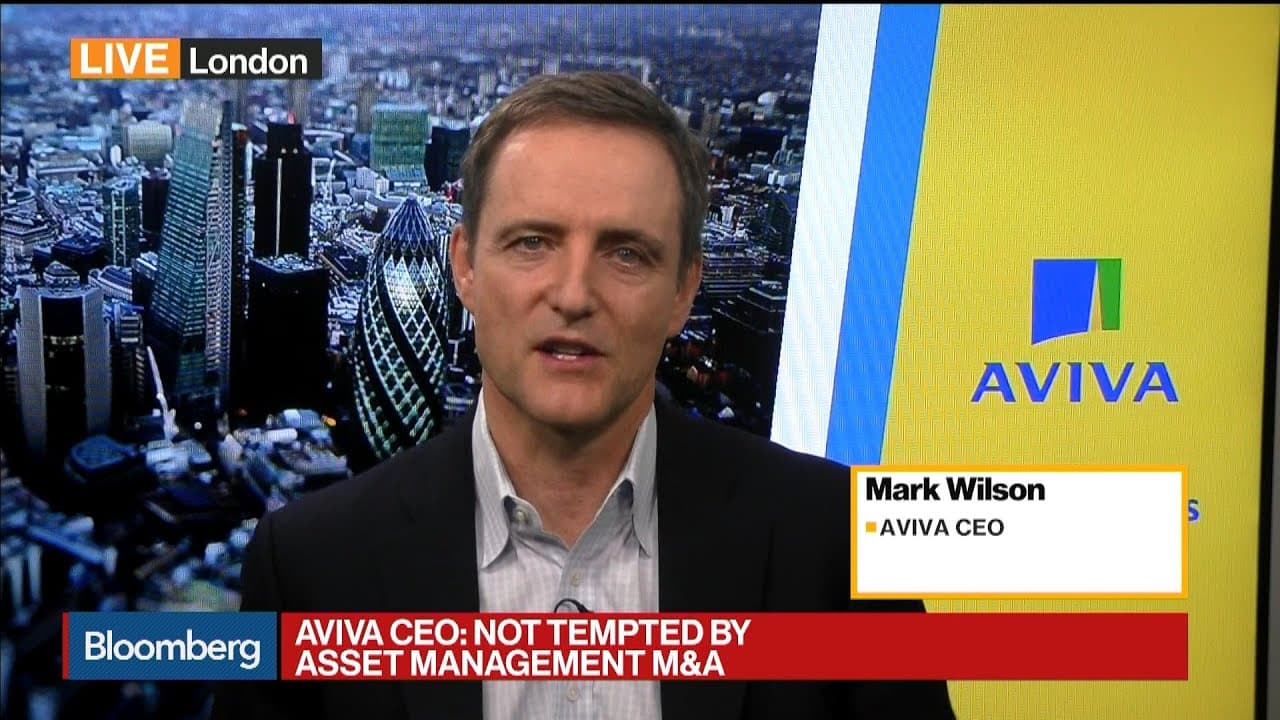
CEO Wilson Says Aviva Has Too Much Capital
TL;DR
Aviva plans to return excess capital to shareholders and pursue organic growth.
Transcript
the top line on your numbers it's simple it's clearcut more operating profit more Capital more cash more dividends uh and there's more to come how much more to come you're committing to this 50% payout uh ratio by the end of 2017 Mark H so are you now a fully paid up dividend stock committed to your shareholders well I think we're committed to our ... Read More
Key Insights
- Aviva is committed to increasing dividends and returning excess capital to shareholders by 2017, reflecting a strong financial position.
- The company intends to invest in its business and pay down expensive hybrid debt, demonstrating a balanced approach to capital management.
- Aviva's strategy includes organic growth rather than pursuing large mergers and acquisitions, with successful past deals like RBC's insurance operation in Canada.
- The company's general insurance and life insurance sectors performed well, with notable profit growth and strong market fund flows.
- Aviva's fund management business has seen a breakout year with positive net flows, focusing on organic growth rather than acquisitions.
- The Ogden rate change affects Aviva's business, but the company expects common sense to prevail, leading to a more logical compensation rate.
- Aviva's strategy in Asia focuses on digital disruption, leveraging partnerships with major tech firms like Tencent to innovate in the insurance industry.
- The CEO acknowledges the evolving Chinese banking system and aims to disrupt traditional insurance distribution models in the region.
Install to Summarize YouTube Videos and Get Transcripts
Explore YouTube Video Summarizer or Get YouTube Transcript Extractor
Questions & Answers
Q: What is Aviva's strategy for returning capital to shareholders?
Aviva plans to return excess capital to shareholders by increasing dividends and committing to a 50% payout ratio by the end of 2017. The company is in a strong financial position, allowing it to invest in its business operations and pay down expensive hybrid debt, reflecting a balanced approach to capital management.
Q: How is Aviva approaching mergers and acquisitions?
Aviva is focusing on organic growth rather than pursuing large mergers and acquisitions. The company is open to tactical bolt-on acquisitions, as evidenced by the successful integration of RBC's insurance operation in Canada. This strategy allows Aviva to grow its business without relying on major deals, ensuring sustainable development across its sectors.
Q: What are the recent performance highlights of Aviva's insurance sectors?
Aviva's general and life insurance sectors have performed exceptionally well, with the general insurance business experiencing its best year in over a decade. The life insurance sector, particularly in the UK, also showed strong performance. These sectors have contributed to significant profit growth and positive market fund flows, demonstrating Aviva's robust operational capabilities.
Q: How is Aviva's fund management business performing?
Aviva's fund management business has experienced a breakout year, with strong and positive net flows. The company is focusing on organic growth rather than acquisitions, despite industry consolidation trends. This strategic approach has been successful, with Aviva rebuilding its fund management team over the past four years, resulting in favorable consultant evaluations and increased market confidence.
Q: What is the impact of the Ogden rate change on Aviva?
The Ogden rate change, which affects compensation payouts for personal injury claims, has impacted Aviva's business. The CEO believes the policymaking was rushed and disjointed, but expects common sense to prevail, leading to a more logical compensation rate. This change is crucial for ensuring fair compensation without penalizing young and old drivers disproportionately.
Q: What is Aviva's strategy in Asia and China?
Aviva's strategy in Asia and China focuses on digital disruption, aiming to innovate in the insurance industry through partnerships with major tech firms like Tencent. The company is leveraging digital platforms to disrupt traditional insurance distribution models, positioning itself as a leader in the evolving market landscape. This approach aligns with Aviva's broader strategic focus on digital transformation.
Q: How does Aviva view the Chinese banking system?
Aviva acknowledges the evolving nature of the Chinese banking system, particularly with the rise of major payment systems like Tencent and Alibaba. The CEO notes the significant changes in traditional and shadow banking forms, emphasizing the need for strategic adaptation. Aviva aims to disrupt the insurance industry by capitalizing on these changes, enhancing its competitive position in the region.
Q: What are Aviva's key priorities for future growth?
Aviva's key priorities for future growth include returning excess capital to shareholders, investing in business operations, and focusing on organic growth across its sectors. The company aims to enhance its financial position by paying down expensive debt and leveraging digital innovation, particularly in Asia, to disrupt traditional insurance models and capitalize on evolving market trends.
Summary & Key Takeaways
-
Aviva's CEO, Mark Wilson, outlines the company's strong financial position, highlighting plans to return excess capital to shareholders and invest in business operations. The strategy includes paying down expensive debt and focusing on organic growth rather than large acquisitions, with successful past deals like RBC's insurance operation.
-
The company's general and life insurance sectors have performed well, with significant profit growth and strong fund flows in the market. Aviva's fund management business also experienced a breakout year, with a focus on organic growth over acquisitions, despite industry consolidation trends.
-
In Asia, Aviva aims to disrupt traditional insurance distribution models through digital innovation, leveraging partnerships with tech giants like Tencent. The CEO also discusses the impact of the Ogden rate change on the business and the evolving Chinese banking system, emphasizing a strategic focus on digital disruption.
Read in Other Languages (beta)
Share This Summary 📚
Summarize YouTube Videos and Get Video Transcripts with 1-Click
Try YouTube Summary with ChatGPT & Claude or YouTube Transcript Generator
Explore More Summaries from Bloomberg Originals 📚






Summarize YouTube Videos and Get Video Transcripts with 1-Click
Try YouTube Summary with ChatGPT & Claude or YouTube Transcript Generator