Meet the Engineer Tackling Space's Biggest Threat
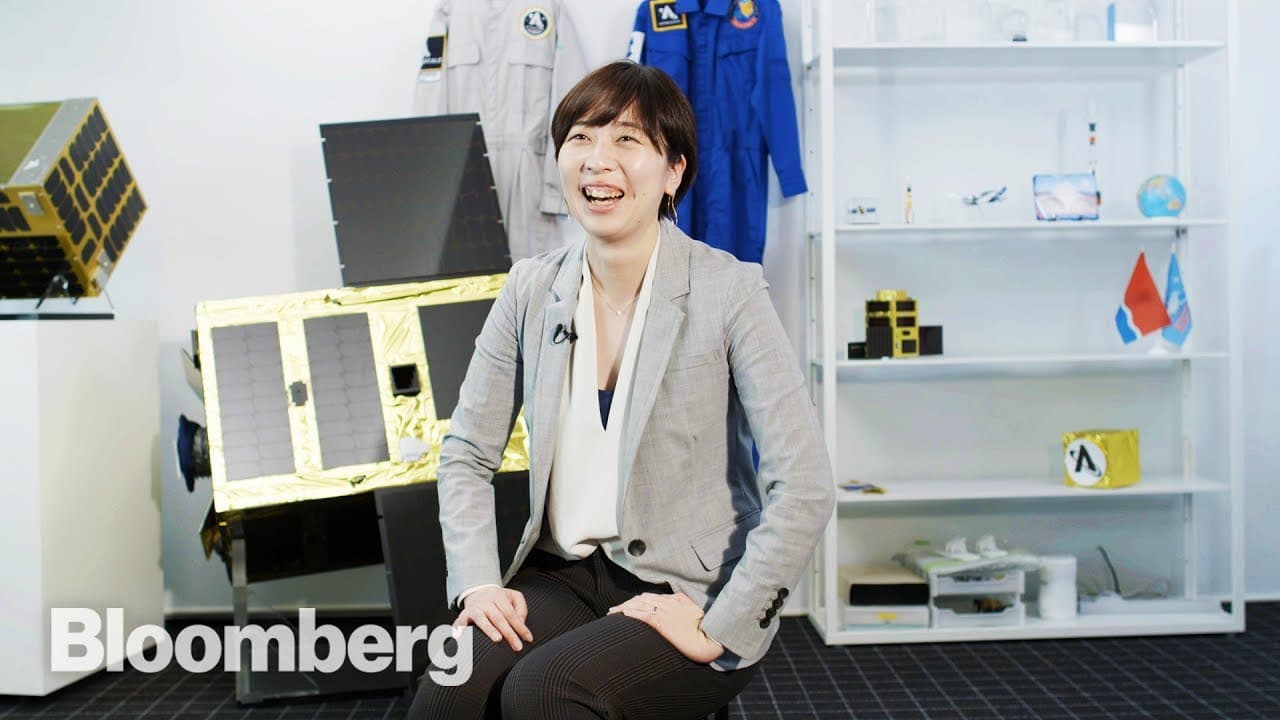
TL;DR
Miki Ito leads efforts to remove dangerous space debris.
Transcript
Space isn’t so empty these days. There are millions of pieces of debris orbiting the Earth, including rocket remnants and dead satellites They travel at up to 17,500 miles an hour, 10 times faster than a bullet. And a piece of debris as small as a marble, can cause catastrophic damage, as shown here in the movie Gravity. But Miki Ito is leading a t... Read More
Key Insights
- Space debris poses a significant threat to satellites and other space infrastructure, traveling at speeds up to 17,500 miles per hour.
- Miki Ito leads a team in Tokyo working on ELSA-d, a spacecraft designed to remove space debris using magnetic plates.
- Future satellites will be equipped with special magnetic plates, allowing ELSA-d to capture and deorbit them safely.
- Miki Ito's interest in space began in her teenage years, leading her to study aerospace engineering and work as a satellite engineer.
- Astroscale, the company Ito joined in 2015, is the only startup focused on addressing the space debris problem.
- The ELSA-d mission is costly, estimated at tens of millions of dollars, but aims to demonstrate its capabilities in early 2020.
- A previous mission by Astroscale faced setbacks when a rocket failed, highlighting the challenges of space operations.
- The successful removal of space debris is crucial for the safe operation and replacement of satellites in Earth's orbit.
Install to Summarize YouTube Videos and Get Transcripts
Explore YouTube Video Summarizer or Get YouTube Transcript Extractor
Questions & Answers
Q: What is the primary challenge that Miki Ito's team is addressing?
Miki Ito's team is addressing the issue of space debris, which consists of millions of pieces of debris orbiting Earth at high speeds. This debris poses a significant threat to operational satellites and other space infrastructure, as even small pieces can cause catastrophic damage upon impact.
Q: How does the ELSA-d spacecraft work to remove debris?
The ELSA-d spacecraft is designed to remove space debris by using magnetic plates. Future satellites will be equipped with these plates, allowing ELSA-d to identify, approach, and capture dead satellites. The captured satellites are then deorbited, burning up in Earth's atmosphere, thus clearing the orbit for new satellites.
Q: What inspired Miki Ito to pursue a career in space engineering?
Miki Ito's interest in space began during her teenage years, which led her to pursue studies in aerospace engineering. Her passion for the field eventually led her to work as a satellite engineer and later join Astroscale, where she focuses on solving the space debris problem.
Q: What setbacks has Astroscale faced in its mission to address space debris?
Astroscale faced a significant setback when a previous mission to launch a spacecraft failed due to a rocket malfunction, resulting in the rocket crashing into the sea. This incident highlights the challenges and risks associated with space operations, but the team remains committed to their mission.
Q: What is the significance of the ELSA-d demonstration mission planned for 2020?
The ELSA-d demonstration mission planned for 2020 is significant as it aims to test the spacecraft's ability to safely capture and deorbit space debris. Successful demonstration of this technology is crucial for reducing the risks associated with space debris and ensuring the safe operation of future satellites.
Q: Why is addressing space debris important for future satellite operations?
Addressing space debris is vital for future satellite operations because debris poses a collision risk to operational satellites. By removing debris, the risk of collisions is minimized, ensuring that satellites can be safely launched, operated, and replaced without being destroyed by existing debris in orbit.
Q: How does Astroscale position itself in the space industry?
Astroscale positions itself as the world's only startup with a mission specifically focused on addressing the issue of space debris. By developing innovative solutions like the ELSA-d spacecraft, Astroscale aims to lead the industry in ensuring safe and sustainable space operations.
Q: What is the estimated cost of the ELSA-d mission, and why is it justified?
The ELSA-d mission is estimated to cost tens of millions of dollars. This cost is justified by the mission's potential to significantly reduce the risks posed by space debris, ensuring the safe and sustainable operation of satellites, which are crucial for various global communications and technological applications.
Summary & Key Takeaways
-
Space debris is a growing concern, with millions of pieces orbiting Earth at high speeds. Miki Ito and her team in Tokyo are developing ELSA-d, a spacecraft that can capture and remove debris using magnetic plates installed on satellites.
-
Ito's interest in space began in her youth, leading to a career in aerospace engineering and a role at Astroscale, the only startup focused on space debris. ELSA-d aims to safely deorbit dead satellites, reducing collision risks.
-
Despite a previous mission setback, Astroscale plans a demonstration mission for ELSA-d in early 2020. The mission is expensive but crucial for ensuring the safe replacement of satellites and reducing space debris.
Read in Other Languages (beta)
Share This Summary 📚
Summarize YouTube Videos and Get Video Transcripts with 1-Click
Try YouTube Summary with ChatGPT & Claude or YouTube Transcript Generator
Explore More Summaries from Bloomberg Originals 📚






Summarize YouTube Videos and Get Video Transcripts with 1-Click
Try YouTube Summary with ChatGPT & Claude or YouTube Transcript Generator