Why Banks Salivate Over Giant IPOs Like Snap’s
TL;DR
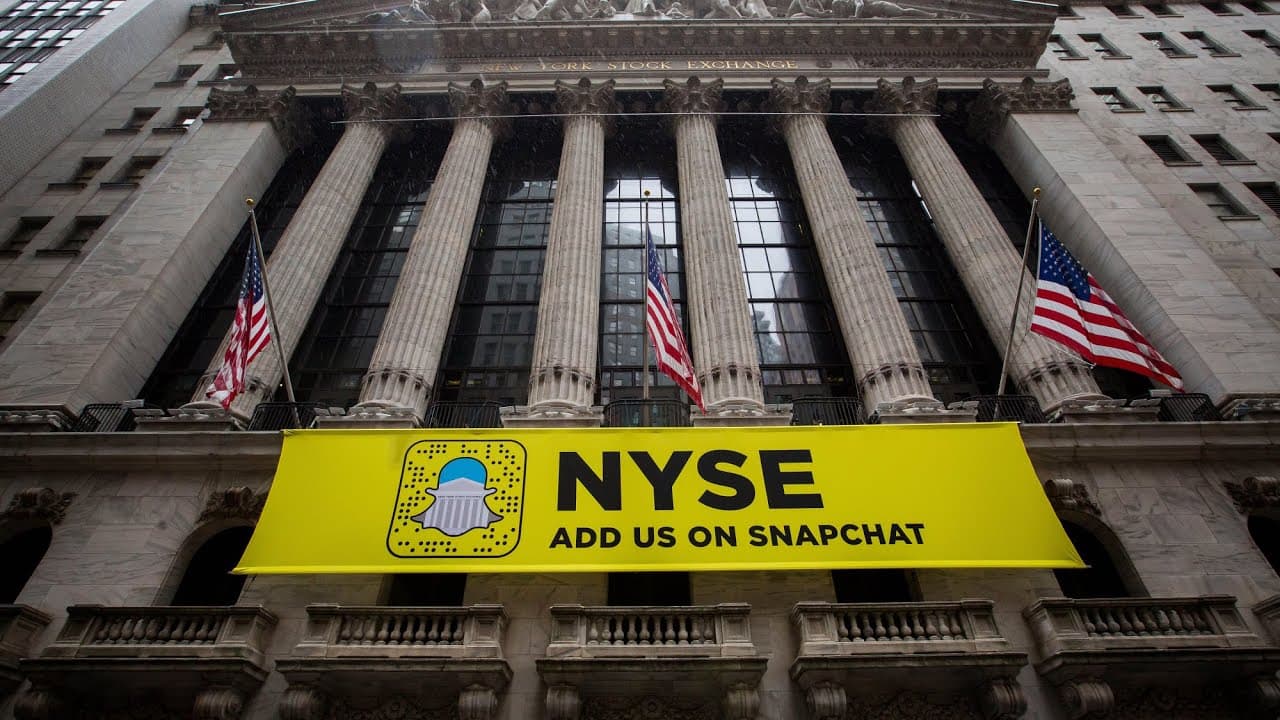
Giant IPOs like Snap's aren't highly profitable for Wall Street.
Transcript
now we'll snap IPO live up to the hype investors won't know until the stock starts trading on Thursday but for Wall Street the question has already been answered and the answer is no Bloomberg's editor at large Eric shatzer is here to explain no Eric why Mark Vonnie it may surprise you but the reality is giant IPOs like Snap aren't a great business... Read More
Key Insights
- The fees on large IPOs like Snap's have significantly decreased, with companies like Facebook paying as low as 1.1% commission, making them less lucrative for Wall Street.
- Morgan Stanley earned $68 million from the Facebook deal, which was a small fraction of their total revenue, highlighting the diminishing returns on large IPOs.
- Snap's IPO is expected to generate around $100 million in total commissions, which will be divided among 12 banks, reducing individual earnings.
- Banks compete fiercely for large IPOs to meet institutional demand and maintain relationships with both the listing companies and investors.
- Banks view these IPOs as opportunities for ongoing corporate client relationships, offering services like equity underwriting, debt raising, and cash management.
- Prestige plays a role in banks' pursuit of large IPOs, as winning such deals enhances their reputation and perceived success.
- Equity underwriting is in decline, with fees earned by major firms decreasing over recent years, due to factors like private capital growth and regulatory changes.
- The decline in equity underwriting underscores the importance of somewhat lucrative deals like Snap's, as every dollar counts in a challenging market.
Install to Summarize YouTube Videos and Get Transcripts
Explore YouTube Video Summarizer or Get YouTube Transcript Extractor
Questions & Answers
Q: Why are giant IPOs like Snap's not great business for Wall Street?
Giant IPOs like Snap's are not great business for Wall Street because the commission fees have significantly decreased over the years. Companies now have more leverage and have reduced these fees to as low as 1.1% in some cases, as seen with Facebook. This reduction in fees makes the financial returns from large IPOs less lucrative for investment banks.
Q: How much did Morgan Stanley earn from the Facebook IPO, and why is it considered low?
Morgan Stanley earned $68 million from leading the Facebook IPO. While this may seem like a large sum, it is considered low because it accounted for only 7% of Morgan Stanley's equity underwriting revenue that year and less than a quarter of 1% of the firm's total revenue. The effort and resources required to secure and manage such deals make the financial returns relatively modest.
Q: What is the expected commission from Snap's IPO and how is it distributed?
Snap's IPO is expected to generate around $100 million in total commissions. This amount, however, will be distributed among 12 banks that are leading and co-managing the offering. As a result, the individual earnings for each bank from this IPO are reduced, making it less financially rewarding despite the large total commission.
Q: Why do banks compete for large IPOs despite the low financial returns?
Banks compete for large IPOs despite low financial returns because these deals help them meet institutional demand and maintain crucial relationships with both listing companies and investors. Additionally, they see these IPOs as opportunities for ongoing corporate client relationships, offering services like equity underwriting, debt raising, and cash management. The prestige associated with winning such deals also enhances their reputation.
Q: What role does prestige play in banks' pursuit of large IPOs?
Prestige plays a significant role in banks' pursuit of large IPOs. Winning such deals enhances a bank's reputation and is perceived as a mark of success in the competitive world of finance. Being associated with high-profile IPOs like Snap's is seen as a validation of the bank's capabilities and can lead to more business opportunities in the future.
Q: What factors contribute to the decline in equity underwriting?
Several factors contribute to the decline in equity underwriting, including the growth of private capital, which allows companies to raise funds without going public. Regulatory changes have also impacted the market, making it less attractive for companies to pursue IPOs. Additionally, there are questions about the pace of innovation in sectors like Silicon Valley, which traditionally fueled IPO activity.
Q: Why is every dollar important in the context of declining equity underwriting?
Every dollar is important in the context of declining equity underwriting because the overall revenue from these activities has decreased over recent years. As the number of IPOs and the fees associated with them decline, investment banks need to maximize earnings from each deal to maintain their financial health and competitive position in the market.
Q: How has the role of private capital affected the IPO market?
The role of private capital has significantly affected the IPO market by providing companies with an alternative means of raising funds without going public. This has led to a decrease in the number of companies choosing to launch IPOs, as they can obtain necessary capital through private investments. This shift has contributed to the decline in equity underwriting and reduced the number of lucrative IPO opportunities for investment banks.
Summary & Key Takeaways
-
Giant IPOs like Snap's are not as profitable for Wall Street as they once were, due to reduced commission fees. Despite the hype, the financial returns are limited, with Snap's IPO expected to generate $100 million, shared among 12 banks.
-
Banks pursue large IPOs to meet institutional demand and maintain relationships with both listing companies and investors. These deals offer opportunities for ongoing corporate client relationships and enhance banks' prestige.
-
Equity underwriting is in secular decline, with major firms earning less from these activities in recent years. The growth of private capital and regulatory changes contribute to this trend, making deals like Snap's critical for revenue.
Read in Other Languages (beta)
Share This Summary 📚
Summarize YouTube Videos and Get Video Transcripts with 1-Click
Try YouTube Summary with ChatGPT & Claude or YouTube Transcript Generator
Explore More Summaries from Bloomberg Originals 📚





Summarize YouTube Videos and Get Video Transcripts with 1-Click
Try YouTube Summary with ChatGPT & Claude or YouTube Transcript Generator