What Is a Calligram and How Did Apollinaire Innovate Poetry?
TL;DR
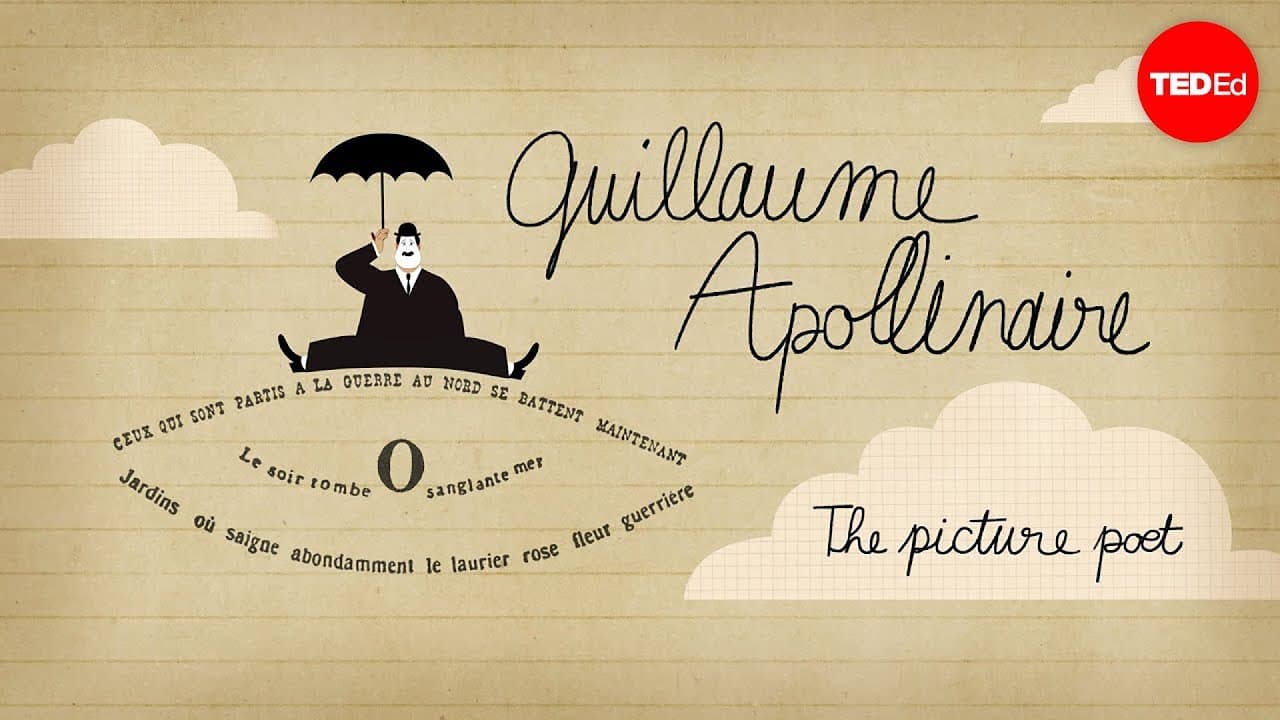
A calligram is a poetic form where text is arranged to create a visual image that enhances the meaning of the words. Guillaume Apollinaire, a pioneering poet of the early 20th century, developed this innovative style, bridging the gap between poetry and visual art while capturing the spirit of Paris's bohemian artists.
Transcript
Among the great poets of literary history, certain names like Homer, Shakespeare, Milton, and Whitman are instantly recognizable. However, there's an early 20th century great French poet whose name you may not know: Guillaume Apollinaire. He was a close friend and collaborator of artists like Picasso, Rousseau, and Chagall. He coined the term surre... Read More
Key Insights
- 🥰 Guillaume Apollinaire was a visionary poet and art critic in early 20th-century Paris.
- 😑 His calligrams combined text and image, foreshadowing a revolution in artistic expression.
- 🥋 Apollinaire's work influenced surrealism and cubism, bridging the gap between traditional and modern art forms.
- 🧑🎨 He captured the passion and anticipation of Paris's bohemian artists, who were ahead of their time.
- 👻 Apollinaire's calligrams allowed readers to experience poetry in a new and visual way.
- 💦 His work paid tribute to modern inventions like the cinema and telegraph.
- 🧑🎨 Each calligram is a snapshot of the excitement and innovation of the bohemian artists of Paris.
Install to Summarize YouTube Videos and Get Transcripts
Explore YouTube Video Summarizer or Get YouTube Transcript Extractor
Questions & Answers
Q: Who was Guillaume Apollinaire, and why is he significant in literary history?
Guillaume Apollinaire was a French poet known for his innovative calligrams, which combined text and image, predicting a revolution in art and poetry. He was a key figure in the early 20th-century Parisian art scene, influencing surrealism and cubism.
Q: What is a calligram, and how did Apollinaire use it in his poetry?
A calligram is a poem picture that visually represents the text. Apollinaire used calligrams to push the boundaries of poetry, creating written portraits and thought drawings that combined text and verse, expressing modernism and pushing poetry into the 20th century.
Q: How did Apollinaire's calligrams reflect his vision as a poet and art critic?
Apollinaire's calligrams reflected his visionary approach to poetry and art by bridging text and imagery, capturing emotional moments, paying tribute to modern inventions like the cinema and telegraph, and allowing readers to experience poetry in a new and visual way.
Q: What impact did Apollinaire and his calligrams have on the bohemian artists of Paris?
Apollinaire's innovative calligrams captured the passion and anticipation of the bohemian artists of Paris, who were ahead of their time and eagerly embracing the future. His work united various art forms and influenced the artistic revolution of the early 20th century.
Summary & Key Takeaways
-
Guillaume Apollinaire, a lesser-known French poet, played a significant role in the early 20th-century art scene in Paris.
-
Apollinaire's calligrams combined text and image, foreshadowing a revolution in artistic expression.
-
His innovative work united various art forms and captured the passion and anticipation of the bohemian artists of Paris.
Read in Other Languages (beta)
Share This Summary 📚
Summarize YouTube Videos and Get Video Transcripts with 1-Click
Try YouTube Summary with ChatGPT & Claude or YouTube Transcript Generator
Explore More Summaries from TED-Ed 📚
Summarize YouTube Videos and Get Video Transcripts with 1-Click
Try YouTube Summary with ChatGPT & Claude or YouTube Transcript Generator