What Were American Handguns in WWI?
TL;DR
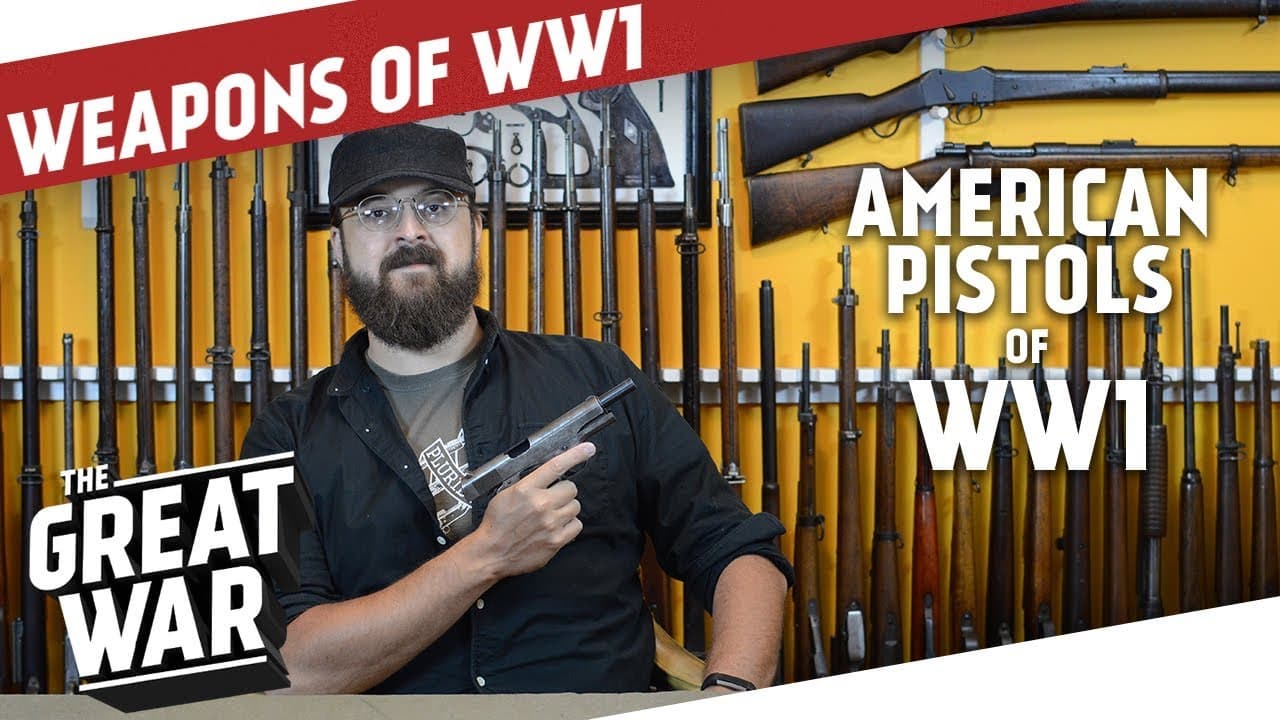
The US primarily used the Colt 1911 during WWI due to its stopping power and reliability, despite its heavy recoil. Other handguns included the Colt New Army and the Model 1917 revolvers, which allowed for shared ammunition with the 1911. These handguns demonstrated American innovation and adaptation to wartime needs.
Transcript
i'm indy neidell and this is another great war weapon special now we've done a whole bunch of these on different weapon different rifles and different handguns used by several of the different warring nations all in collaboration with oath ayahs from his awesome channel see and arsenal Anitha is here with us today Oh thighs can you please say hi to... Read More
Key Insights
- The Colt 1911 was the standard issue US handgun during WWI, known for its stopping power.
- The 1911 uses a .45 ACP cartridge, preferred for its heavy hitting capability.
- Recoil of the 1911 was heavy, but it was still favored for its reliability and design.
- The Colt New Army was a less common revolver, used mainly during the Spanish-American War.
- The Model 1917 revolvers by Colt and Smith & Wesson used a half-moon clip for shared ammunition.
- The US had a strong pistol culture, influencing handgun design and adoption.
- US handguns were superior in design and functionality compared to many European counterparts.
- Production of US handguns was primarily done by Colt and Springfield, with some commercial adaptations.
Install to Summarize YouTube Videos and Get Transcripts
Explore YouTube Video Summarizer or Get YouTube Transcript Extractor
Questions & Answers
Q: What was the primary US handgun in World War I?
The primary US handgun during World War I was the Colt 1911. It was favored for its stopping power, utilizing a .45 ACP cartridge. Despite its heavy recoil, it was considered reliable and well-designed, making it a popular choice among US servicemen.
Q: Why was the Colt 1911 favored by the US military?
The Colt 1911 was favored by the US military due to its significant stopping power provided by the .45 ACP cartridge. Its design offered reliability and a comfortable grip, making it suitable for combat situations. Despite its heavy recoil, it remained a preferred option for its effectiveness.
Q: What were the challenges of using the Colt New Army revolver?
The Colt New Army revolver faced challenges such as mechanical issues leading to 'walking out of time,' where the cylinder's alignment with the barrel could become misaligned. This could result in shaving metal or worse, causing potential misfires or cylinder damage.
Q: How did the Model 1917 revolvers address ammunition compatibility?
The Model 1917 revolvers by Colt and Smith & Wesson addressed ammunition compatibility by using a half-moon clip. This allowed them to use the same .45 ACP rimless cartridges as the Colt 1911, enabling shared ammunition between pistols and revolvers, and facilitating rapid loading.
Q: What influenced the US handgun design during WWI?
US handgun design during WWI was influenced by a strong pistol culture, emphasizing the need for reliable, powerful handguns. The western expansion and familiarity with firearms in American society led to the development of robust handguns like the Colt 1911, focusing on stopping power and reliability.
Q: How did the US handle handgun production during WWI?
During WWI, the US primarily relied on Colt and Springfield for handgun production. Existing commercial assembly lines were adapted to meet military needs, avoiding legal entanglements over production rights. This allowed for efficient production of reliable handguns like the Colt 1911 and Model 1917 revolvers.
Q: What were the advantages of the Colt and Smith & Wesson revolvers?
The Colt and Smith & Wesson revolvers, specifically the Model 1917, offered advantages such as shared ammunition compatibility with the Colt 1911 through the use of half-moon clips. They were also well-fitted and timed, making them reliable choices for US servicemen during WWI.
Q: How did European handguns compare to American handguns in WWI?
European handguns often served more as symbols of office and were not as robust as American handguns like the Colt 1911. The US focused on powerful, reliable handguns, with the 1911 offering superior design and functionality compared to many European models, which often used smaller calibers and less durable designs.
Summary & Key Takeaways
-
The Colt 1911 was the primary US handgun in WWI, favored for its stopping power despite its heavy recoil. It used a .45 ACP cartridge and was reliable in combat. The US also used the Colt New Army and Model 1917 revolvers, which allowed for shared ammunition with the 1911.
-
The US had a strong pistol culture, influencing the design and adoption of handguns like the 1911, which was superior to many European models. The Colt New Army was less common, and the Model 1917 revolvers used a half-moon clip for shared ammunition.
-
Production of US handguns was primarily by Colt and Springfield, with adaptations to existing commercial lines. The 1911 and Model 1917 revolvers demonstrated American innovation and adaptation to wartime needs, making them reliable choices for soldiers.
Read in Other Languages (beta)
Share This Summary 📚
Summarize YouTube Videos and Get Video Transcripts with 1-Click
Try YouTube Summary with ChatGPT & Claude or YouTube Transcript Generator
Explore More Summaries from The Great War 📚



Summarize YouTube Videos and Get Video Transcripts with 1-Click
Try YouTube Summary with ChatGPT & Claude or YouTube Transcript Generator