When You Think Too Much, You Become Dangerous – Schopenhauer
TL;DR
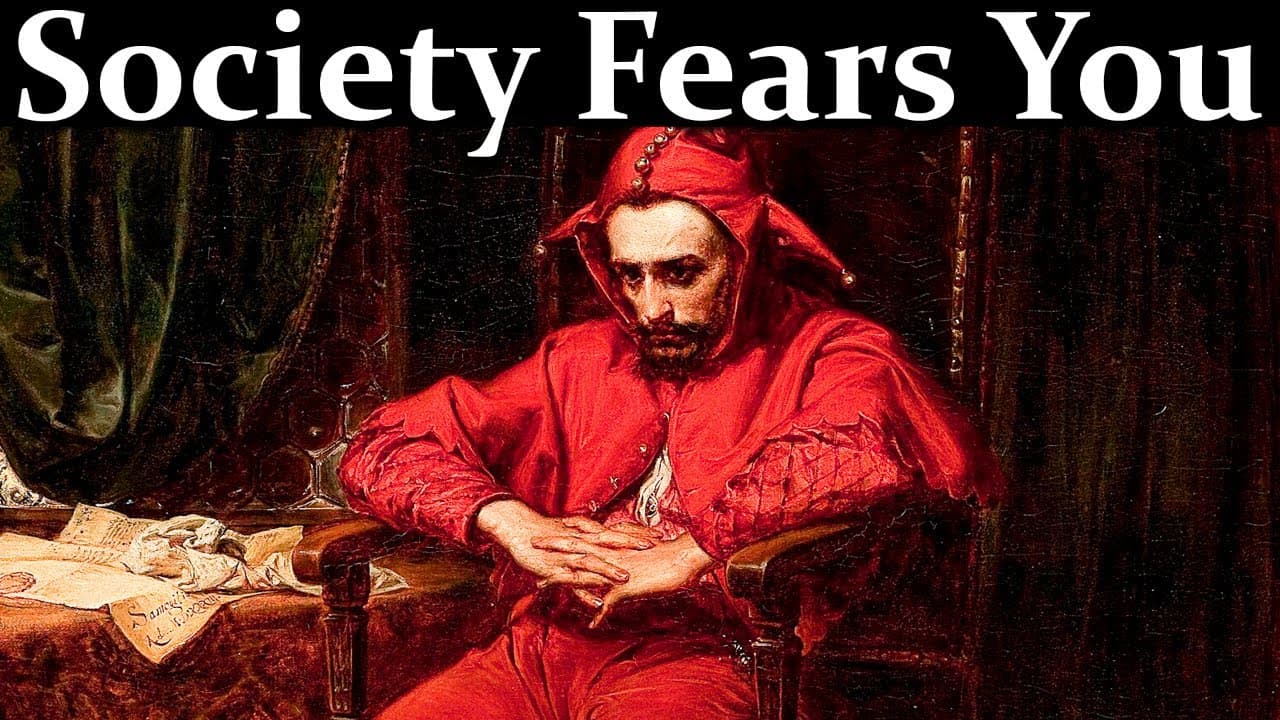
Deep thinkers often feel isolated due to societal rejection.
Transcript
have you ever felt that something is wrong with the world but no one around you seems to notice as if you are seeing hidden layers of reality while everyone around you lives anesthetized entertained resigned Perhaps you have tried to share a deeper thought in a casual conversation and were met with uncomfortable silences empty stares or even disgui... Read More
Key Insights
- Deep thinkers often feel disconnected from society because their insights challenge common beliefs and norms, leading to social rejection and isolation.
- Arthur Schopenhauer highlighted that society tends to push away individuals with high intellect, as their insights threaten societal illusions and comfort.
- The 'mirror effect' explains why intelligent individuals provoke discomfort in others, as they inadvertently force introspection and self-reflection.
- Society prioritizes comfort over truth, which is why deep thinking is often marginalized and seen as a threat to social cohesion.
- Throughout history, many great thinkers were ostracized for challenging societal norms, highlighting a recurring pattern of rejecting intellectual depth.
- The human brain is wired for tribalism, leading to discomfort and rejection of those who challenge group cohesion with their deep thinking.
- Intelligent individuals must navigate their isolation by finding meaningful connections and expressing their insights through creative outlets.
- Despite societal rejection, deep thinkers play a crucial role in challenging comfort and driving progress by revealing uncomfortable truths.
Install to Summarize YouTube Videos and Get Transcripts
Explore YouTube Video Summarizer or Get YouTube Transcript Extractor
Questions & Answers
Q: Why do intelligent people often feel isolated?
Intelligent people often feel isolated because their deep insights and critical thinking challenge societal norms and comfort zones. This can lead to discomfort and rejection from others who prefer to maintain their illusions and avoid introspection. Society tends to marginalize those who think deeply, as they disrupt the status quo and provoke uncomfortable self-reflection.
Q: What is the 'mirror effect' and how does it relate to deep thinkers?
The 'mirror effect' refers to the phenomenon where deep thinkers inadvertently cause others to reflect on themselves, often leading to discomfort and rejection. By questioning accepted ideas and demonstrating clarity, deep thinkers force individuals to confront their own insecurities and fragile beliefs, which can be unsettling and provoke negative reactions.
Q: How does society prioritize comfort over truth?
Society prioritizes comfort over truth by maintaining routines, order, and social roles that discourage deep thinking and reflection. This is evident in educational systems that reward conformity and social media that promotes superficial content. Deep thinkers, who challenge these norms, are often seen as threats to societal cohesion and are marginalized as a result.
Q: Why have great thinkers throughout history been marginalized?
Great thinkers have been marginalized throughout history because their ideas challenge societal norms and provoke discomfort. Figures like Socrates, Galileo, and Tesla faced rejection and persecution for revealing truths that threatened established beliefs. Their deep thinking was seen as a threat to the stability and comfort of society, leading to their isolation and marginalization.
Q: How does the human brain's tribal nature affect deep thinkers?
The human brain's tribal nature affects deep thinkers by causing discomfort and rejection from groups that prioritize cohesion and conformity. Deep thinkers challenge group norms and provoke introspection, which can be perceived as a threat to the group's stability. This tribal mentality leads to the exclusion of those who think deeply and disrupt social harmony.
Q: What strategies can deep thinkers use to cope with isolation?
Deep thinkers can cope with isolation by finding meaningful connections, expressing their insights through creative outlets, and embracing solitude as a source of strength. By selecting quality over quantity in interactions and creating spaces for expression, they can transform their isolation into a tool for personal growth and clarity, rather than a burden.
Q: Why is deep thinking considered an act of rebellion?
Deep thinking is considered an act of rebellion because it challenges societal norms, disrupts comfort zones, and questions the status quo. In a world that values conformity and superficiality, deep thinkers provoke introspection and self-reflection, which can be unsettling and perceived as a threat to social order. This makes deep thinking a subversive and rebellious act.
Q: How can deep thinkers turn their isolation into a source of strength?
Deep thinkers can turn their isolation into a source of strength by embracing solitude as a refuge for introspection and clarity. By expressing their insights through creative outlets and finding meaningful connections with like-minded individuals, they can transform their loneliness into a tool for personal growth and impact. This approach allows them to thrive in a world that often marginalizes deep thinking.
Summary & Key Takeaways
-
Deep thinkers often find themselves isolated as their insights challenge societal norms, leading to rejection and discomfort among others. Arthur Schopenhauer's philosophy highlights this pattern, explaining that society fears those who see beyond surface-level truths.
-
The 'mirror effect' causes discomfort in others when deep thinkers provoke introspection, forcing individuals to confront their own insecurities and inherited beliefs. This leads to social rejection as society prioritizes comfort over truth.
-
Despite facing isolation, deep thinkers are essential for societal progress as they reveal uncomfortable truths and challenge the status quo. Embracing solitude can lead to greater clarity and creative expression, turning isolation into a source of strength.
Read in Other Languages (beta)
Share This Summary 📚
Summarize YouTube Videos and Get Video Transcripts with 1-Click
Try YouTube Summary with ChatGPT & Claude or YouTube Transcript Generator
Explore More Summaries from Psyphoria 📚



Summarize YouTube Videos and Get Video Transcripts with 1-Click
Try YouTube Summary with ChatGPT & Claude or YouTube Transcript Generator