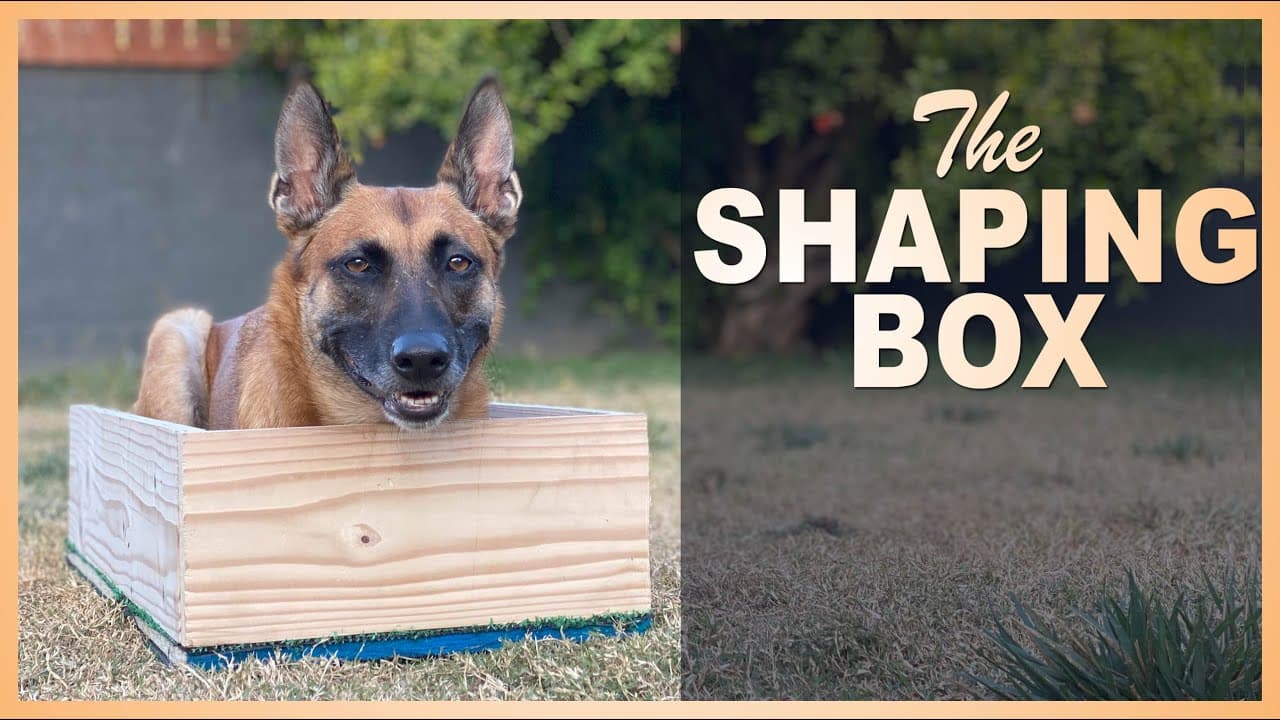
How to use the Shaping Box to Sharpen up your Sit, Down, Stand, Sit-front, and Heel Position.
TL;DR
Learn to use a shaping box for perfecting dog positions.
Transcript
hey everybody welcome back to another episode today we're going to be working with the shaping box now a shaping box is a tool that we can use to help fix our heel position our sit front position and it also helps with our stationary exercises such as sit down and stand and i'm going to show you how i like to use a shaping box when working with my ... Read More
Key Insights
- A shaping box is a versatile tool for improving a dog's heel, sit-front, and stationary positions like sit, down, and stand.
- Begin training with a shaping box by using physical cues and continual reinforcement to guide the dog into correct positions.
- The shaping box helps prevent common mistakes like shifting hips during a lazy down by promoting straight body alignment.
- Using a shaping box, dogs can learn to enter and maintain positions from various angles without relying on verbal commands initially.
- The shaping box can be flipped to serve as a climb platform, further aiding in teaching heel and sit-front positions.
- Consistency in marking and rewarding correct behavior is crucial, with a one-second window to reinforce actions effectively.
- Training with a shaping box can be gradually advanced by introducing commands once the dog is comfortable with the positions.
- The shaping box is a valuable tool for reinforcing stay commands, helping dogs maintain focus and resist the urge to break position.
Install to Summarize YouTube Videos and Get Transcripts
Explore YouTube Video Summarizer or Get YouTube Transcript Extractor
Questions & Answers
Q: How does a shaping box help with dog training?
A shaping box is an effective tool for improving a dog's heel, sit-front, and stationary positions such as sit, down, and stand. It guides the dog into correct alignment, preventing common mistakes like hip shifting during a lazy down. The box also helps dogs learn to enter and maintain positions from various angles.
Q: What is the initial step in training a dog with a shaping box?
Training with a shaping box begins by using physical cues and continual reinforcement to guide the dog into correct positions. This involves rewarding the dog every time it performs the desired behavior, helping the dog associate the shaping box with positive outcomes and correct positioning.
Q: How does the shaping box prevent common training errors?
The shaping box prevents common errors by promoting correct body alignment. For example, it helps prevent a lazy down by keeping the dog's body straight, rather than allowing the hips to shift. This ensures the dog maintains a proper posture, which is crucial for accurate training.
Q: Can the shaping box be used for commands other than sit, down, and stand?
Yes, the shaping box can be used to teach and reinforce other commands like heel and sit-front positions. It can be flipped to serve as a climb platform, which aids in teaching these positions from different angles, making it a versatile tool in a dog's training regimen.
Q: How important is timing in rewarding a dog during training?
Timing is crucial in dog training, especially when using a shaping box. Trainers have a one-second window to either provide a primary reinforcer like food or affection, or to use a conditioned reinforcer like a verbal cue, to effectively mark and reward the desired behavior.
Q: When should verbal commands be introduced in shaping box training?
Verbal commands should be introduced gradually once the dog is comfortable with the shaping box positions. Initially, the focus is on physical cues and reinforcement. Once the dog consistently performs the positions correctly, commands can be added to solidify the association between the verbal cue and the action.
Q: How does the shaping box assist with stay commands?
The shaping box reinforces stay commands by helping dogs maintain focus and resist the urge to break position. By rewarding the dog for maintaining the position, the shaping box helps build the dog's ability to hold a stay, even when distractions are present or when the trainer moves away.
Q: What is the role of a release word in shaping box training?
A release word, like 'break,' is used to signal to the dog that it can leave the current position. It is not a marker but simply a cue that the exercise is over. This helps the dog understand when it is allowed to move, preventing confusion and reinforcing the concept of holding positions until released.
Summary & Key Takeaways
-
The video demonstrates how to use a shaping box to train dogs in maintaining static positions such as sit, down, and stand. The shaping box aids in perfecting heel and sit-front positions by guiding the dog into accurate alignment, preventing common errors like hip shifting during a lazy down.
-
Training begins by guiding the dog into the shaping box using physical cues and continual reinforcement. The shaping box can also be flipped to serve as a climb platform, further assisting in teaching heel and sit-front positions from various angles without relying on verbal commands initially.
-
Consistency in marking and rewarding correct behavior within a one-second window is emphasized. The shaping box also reinforces stay commands, helping dogs maintain focus and resist breaking position. Commands can be introduced gradually once the dog is comfortable with the positions.
Read in Other Languages (beta)
Share This Summary 📚
Summarize YouTube Videos and Get Video Transcripts with 1-Click
Try YouTube Summary with ChatGPT & Claude or YouTube Transcript Generator
Explore More Summaries from Nate Schoemer 📚



Summarize YouTube Videos and Get Video Transcripts with 1-Click
Try YouTube Summary with ChatGPT & Claude or YouTube Transcript Generator