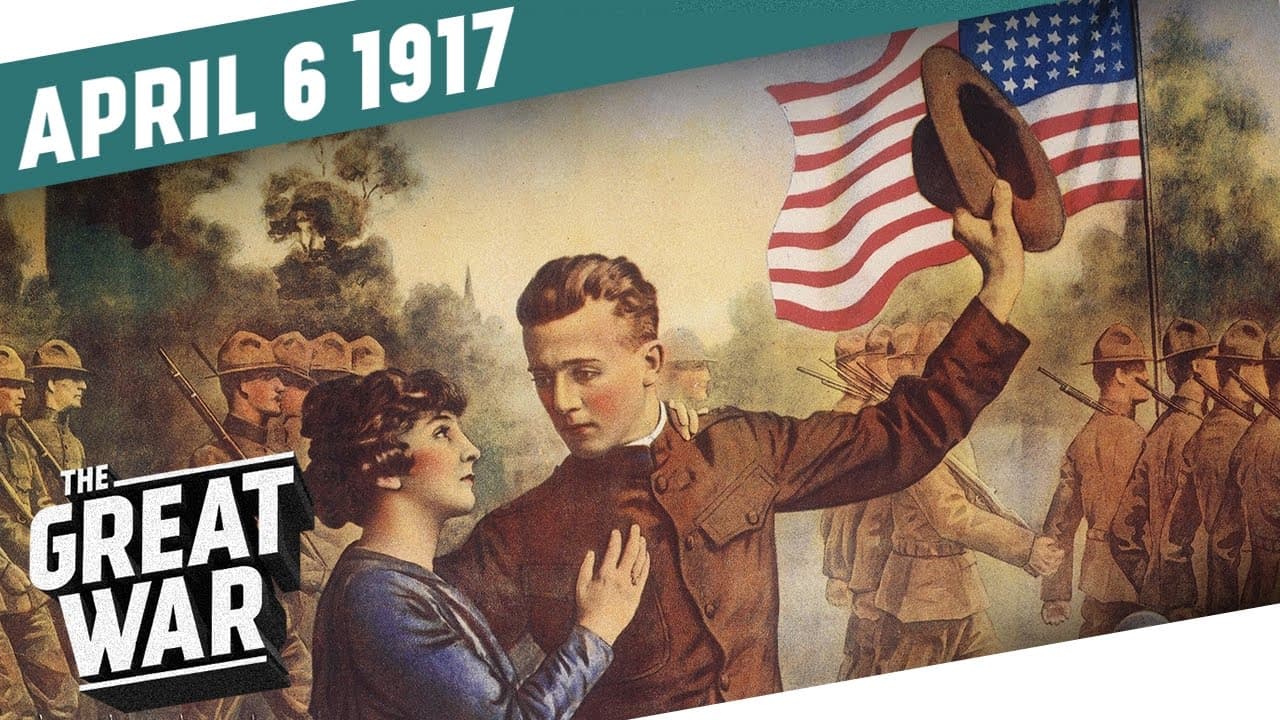
The United States Declares War on Germany I THE GREAT WAR Week 141
TL;DR
The US declares war on Germany, joining WWI.
Transcript
It seems as if it’s been coming for a while, but now it’s finally here. This week 100 years ago, the United States joins the war. I’m Indy Neidell; welcome to the Great War. Last week the Toplica Rebellion against Central Powers occupation was finally crushed in the Balkans. Russia is still in a state of uncertainty after the February Revolution an... Read More
Key Insights
- The United States declared war on Germany due to unrestricted submarine warfare and the Zimmermann telegram, marking a significant shift in World War I dynamics.
- On April 6, 1917, Congress voted overwhelmingly to join the war, with the Senate and House of Representatives supporting the declaration.
- The US mobilized its fleet and seized 91 German ships in American ports, signaling its active participation in the conflict.
- The French military faced internal debates about launching the Nivelle Offensive, with concerns over its potential failure despite the US joining the war.
- The Battle of Arras was planned to include a significant assault by the British and Canadian forces, aiming to break through German lines.
- The Canadian Corps played a crucial role in the planning and execution of the attack on Vimy Ridge, employing innovative tactics learned from previous battles.
- The German air force, led by the Red Baron, adopted a defensive strategy, focusing on maintaining local air superiority with the new Albatross fighters.
- The month of April 1917 became known as 'Bloody April' in Britain due to the intense aerial battles and significant losses experienced by the British forces.
Install to Summarize YouTube Videos and Get Transcripts
Explore YouTube Video Summarizer or Get YouTube Transcript Extractor
Questions & Answers
Q: Why did the United States declare war on Germany?
The United States declared war on Germany primarily due to the resumption of unrestricted submarine warfare by Germany, which threatened American shipping and lives. Additionally, the Zimmermann telegram, in which Germany proposed a military alliance with Mexico against the US, further inflamed public opinion and pushed the US towards entering the war.
Q: What was the significance of the Battle of Arras?
The Battle of Arras was significant as it was part of a coordinated Allied offensive aimed at breaking through German defenses on the Western Front. The battle involved a massive artillery barrage and an assault by British and Canadian forces, including the capture of Vimy Ridge. It was intended to divert German reserves and pave the way for the larger Nivelle Offensive.
Q: How did the US prepare for its involvement in World War I?
Upon declaring war, the United States began mobilizing its military forces, including the Navy and the Naval Reserve. Congress authorized an emergency war fund of 100 million dollars to support the war effort. The US also seized German ships in American ports and started planning for the transportation and deployment of troops and resources to Europe.
Q: What challenges did the French face with the Nivelle Offensive?
The French faced significant challenges with the Nivelle Offensive, including internal debates about its potential success. Concerns were raised about the strength of German defenses at the Chemin des Dames, logistical issues with French supply lines, and the uncertainty of Russian support. Despite these challenges, the offensive was given the green light, with hopes that US involvement would eventually bolster Allied efforts.
Q: What role did the Canadian Corps play in the Battle of Arras?
The Canadian Corps played a crucial role in the Battle of Arras, particularly in the assault on Vimy Ridge. Under the command of Julian Byng, the Canadians developed innovative tactics based on lessons from previous battles, such as trench raids and mining operations. Their efforts were instrumental in capturing Vimy Ridge, a key strategic position.
Q: How did air power influence the Battle of Arras?
Air power played a significant role in the Battle of Arras, with the British deploying nine squadrons for various tasks, including bombing, artillery spotting, and reconnaissance. Despite being outnumbered, the German air force, led by the Red Baron, adopted a defensive strategy, focusing on maintaining local air superiority with their Albatross fighters. This led to intense aerial battles, contributing to the month being known as 'Bloody April.'
Q: What was the strategic importance of Vimy Ridge?
Vimy Ridge was strategically important due to its elevated position, which provided commanding views of the surrounding area. Its capture by the Canadian Corps during the Battle of Arras was a significant achievement, as it allowed the Allies to gain a tactical advantage over the Germans and provided a morale boost to the Allied forces.
Q: What were the long-term implications of US involvement in World War I?
The long-term implications of US involvement in World War I included a shift in the balance of power on the Western Front, as American troops and resources bolstered the Allied forces. The US entry into the war also signaled a more active role in global affairs, setting the stage for its future involvement in international conflicts and shaping the post-war geopolitical landscape.
Summary & Key Takeaways
-
The United States officially joined World War I against Germany, prompted by German submarine warfare and diplomatic tensions. This decision marked a pivotal moment in the war, as the US began mobilizing its military resources and preparing to send troops to Europe.
-
The declaration of war by the US was met with overwhelming support in Congress, leading to the mobilization of the US fleet and the seizure of German ships. This move was expected to have a significant impact on the war's outcome, although it would take time to fully deploy American forces.
-
The French high command faced internal debates regarding the Nivelle Offensive, with concerns about its feasibility despite the US entering the war. The British and Canadian forces prepared for the Battle of Arras, aiming to break through German defenses with innovative tactics and a coordinated assault.
Read in Other Languages (beta)
Share This Summary 📚
Summarize YouTube Videos and Get Video Transcripts with 1-Click
Try YouTube Summary with ChatGPT & Claude or YouTube Transcript Generator
Explore More Summaries from The Great War 📚


Summarize YouTube Videos and Get Video Transcripts with 1-Click
Try YouTube Summary with ChatGPT & Claude or YouTube Transcript Generator