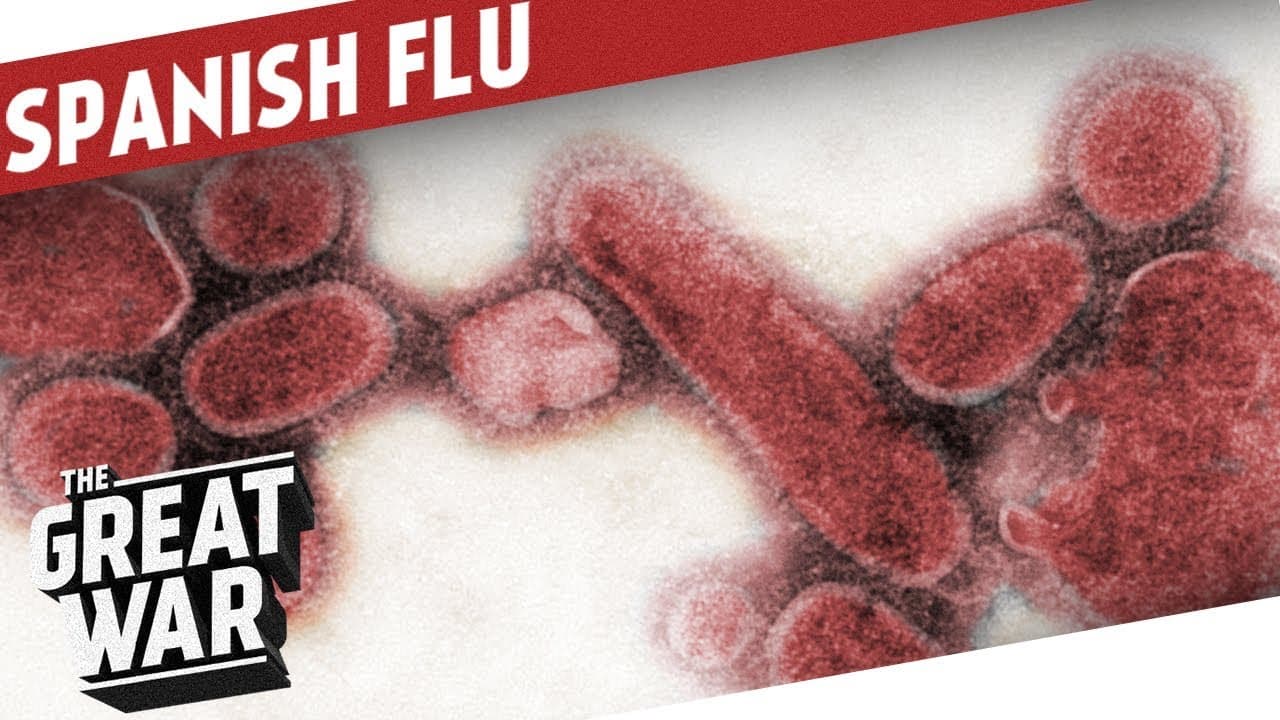
The Spanish Flu I THE GREAT WAR Epilogue 3
TL;DR
The Spanish Flu killed millions globally, surpassing wartime fatalities.
Transcript
As the nations that fought The Great War lay down their arms, there is something else going on that further colors a world that is unquestionably a world of absolute disaster. In the autumn of 1918, the Spanish Flu reaches its highest level of infection and mortality. I’m Indy Neidell; welcome to a Great War epilogue special about the Spanish Flu. ... Read More
Key Insights
- The Spanish Flu of 1918-1919 was one of the deadliest pandemics, killing between 40 to 100 million people worldwide in just 18 months.
- Unlike typical flu outbreaks, the Spanish Flu disproportionately affected healthy young adults due to a cytokine storm, an overreaction of their immune systems.
- The flu spread rapidly due to troop movements and modern transportation, affecting even remote areas like the Arctic and Pacific Islands.
- The pandemic's name, 'Spanish Flu,' is misleading; it originated from wartime censorship in other countries, while Spain's free press reported on it extensively.
- There are several theories about the origin of the flu, including outbreaks in Kansas, France, and China, but the exact origin remains uncertain.
- The flu significantly impacted the outcome of World War I, with higher mortality rates in Central Powers than in Allied nations.
- The pandemic left a profound impact on the world, contributing to the notion of the 'Lost Generation' due to the massive loss of young adults.
- Despite the devastation, the pandemic led to advancements in medical research and public health measures to prevent future outbreaks.
Install to Summarize YouTube Videos and Get Transcripts
Explore YouTube Video Summarizer or Get YouTube Transcript Extractor
Questions & Answers
Q: What made the Spanish Flu particularly deadly compared to other flu outbreaks?
The Spanish Flu was particularly deadly due to its high mortality rate and its impact on healthy young adults. Unlike typical flu outbreaks that primarily affect the very young, elderly, or sickly, the Spanish Flu triggered a cytokine storm in young adults. This overreaction of the immune system led to severe respiratory failure, making it more lethal for those with strong immune systems.
Q: Why is it called the 'Spanish Flu' if it didn't originate in Spain?
The name 'Spanish Flu' is a result of wartime censorship during World War I. While countries involved in the war suppressed news of the flu to maintain morale, Spain, being neutral, had a free press that reported extensively on the outbreak. Consequently, the flu was mistakenly associated with Spain, leading to the misnomer.
Q: What were some of the theories regarding the origin of the Spanish Flu?
Several theories exist about the origin of the Spanish Flu. One suggests it began at Fort Riley, Kansas, and was spread to Europe by American troops. Another theory from a British investigation points to Etaples, France, as the epicenter, while Dr. Claude Hannoun hypothesized it originated in China. However, the exact origin remains uncertain, with evidence supporting multiple possibilities.
Q: How did the Spanish Flu impact World War I?
The Spanish Flu significantly impacted World War I by affecting troop strength and morale. The Central Powers, particularly Germany and Austria, experienced higher mortality rates than the Allies, potentially influencing the war's outcome. The pandemic exacerbated the already dire conditions of the war, contributing to the overall devastation experienced by the warring nations.
Q: What were the global effects of the Spanish Flu pandemic?
Globally, the Spanish Flu pandemic resulted in the death of up to 100 million people, infecting about a quarter of the world's population. It reached even remote areas like the Arctic and Pacific Islands, illustrating its widespread impact. The pandemic exacerbated the post-war recovery challenges, leaving a significant mark on the social and economic landscape of the time.
Q: How did the Spanish Flu contribute to the concept of the 'Lost Generation'?
The Spanish Flu contributed to the concept of the 'Lost Generation' by decimating a significant portion of young adults, particularly those born between 1889 and 1900. This demographic was already heavily impacted by World War I. The combined loss from war and disease led to a generation perceived as lost or irretrievably damaged, influencing cultural and psychological perspectives in the post-war era.
Q: What advancements in medicine and public health were prompted by the Spanish Flu?
The Spanish Flu pandemic prompted significant advancements in medicine and public health. It highlighted the need for better disease surveillance, research into vaccines and antiviral drugs, and the development of public health infrastructure. The experience underscored the importance of international cooperation and preparedness in managing future pandemics, leading to improved health policies and practices.
Q: How did the Spanish Flu affect the demographics and societal structure post-pandemic?
The Spanish Flu drastically altered demographics by disproportionately affecting young adults, leading to a significant loss of a productive age group. This demographic shift impacted societal structures, with many families losing breadwinners and communities experiencing labor shortages. The pandemic also influenced cultural and social dynamics, as societies grappled with the collective trauma and sought ways to rebuild and recover.
Summary & Key Takeaways
-
The Spanish Flu pandemic of 1918-1919 resulted in unprecedented global mortality, claiming up to 100 million lives in 18 months. Its rapid spread was facilitated by modern transportation and troop movements during World War I. The pandemic disproportionately affected healthy young adults, contributing to the concept of the 'Lost Generation.'
-
The flu's name, 'Spanish Flu,' arose from wartime censorship, as Spain's neutral status allowed its press to report freely on the outbreak. The exact origin of the flu remains debated, with theories suggesting origins in Kansas, France, or China. However, the pandemic's impact was felt worldwide, reaching even remote regions.
-
The pandemic's aftermath saw a world already devastated by war struggling to rebuild amidst massive loss of life. Despite the challenges, the experience spurred advancements in medical research and public health, laying the groundwork for future disease prevention efforts. The Spanish Flu remains a stark reminder of nature's indifference to humanity.
Read in Other Languages (beta)
Share This Summary 📚
Summarize YouTube Videos and Get Video Transcripts with 1-Click
Try YouTube Summary with ChatGPT & Claude or YouTube Transcript Generator
Explore More Summaries from The Great War 📚
Summarize YouTube Videos and Get Video Transcripts with 1-Click
Try YouTube Summary with ChatGPT & Claude or YouTube Transcript Generator