Stories From The Palestine Front - More About WW1 Trucks I OUT OF THE ETHER
TL;DR
Exploration of WW1 trucks and the Palestine Front's strategic maneuvers.
Transcript
i'm indy neidell and this is out of the ether where I read your most interesting most controversial and most insightful comments and we can all learn a little bit something from the crowd Robbi Rockhead writes in reply to our coverage of the Palestine right now we met Robbie in in Gallipoli right he's really cool okay after the capture of Amman by ... Read More
Key Insights
- The capture of Amman by Anzac in 1918 led to a strategic retreat by a Turkish Corps, highlighting the complex dynamics of WW1 in the Middle East.
- A potential conflict between Turkish forces and Arab tribesmen was resolved through negotiation with Australian forces, showcasing wartime diplomacy.
- The Barada River ambush was a significant military event, resulting in heavy Ottoman and German casualties due to strategic positioning by Allied forces.
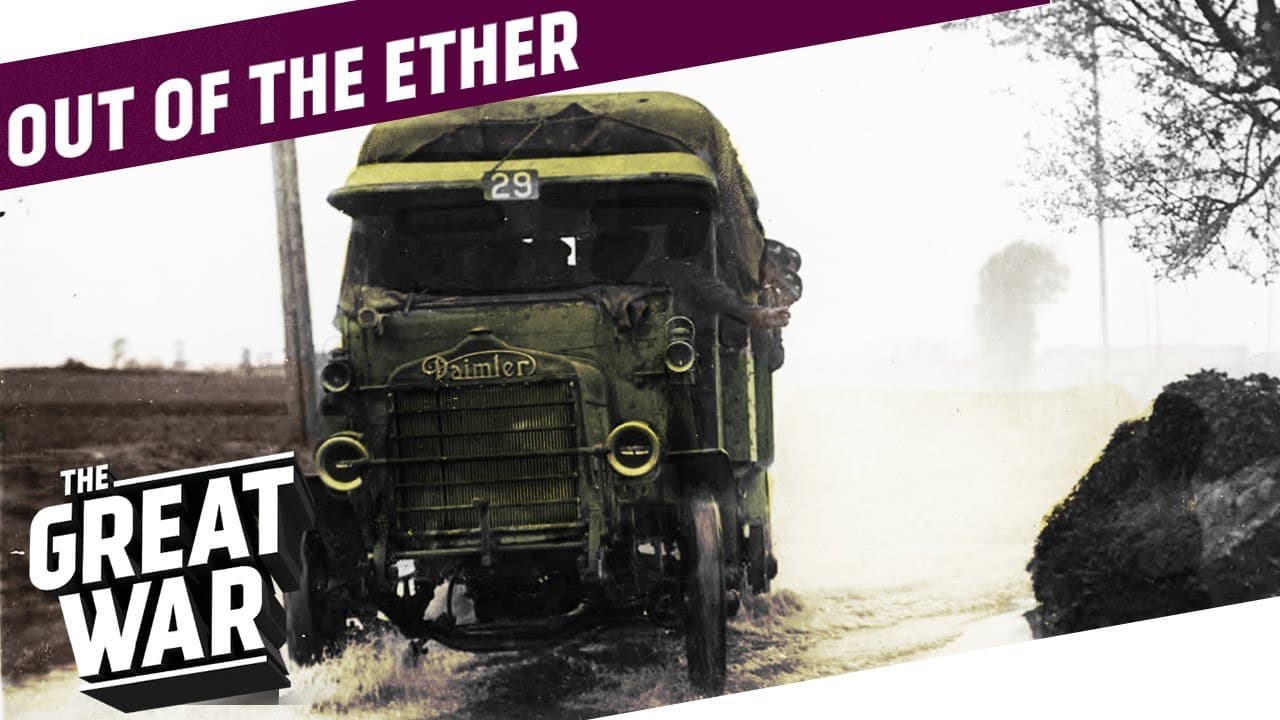
- WW1 trucks provided logistical advantages over horses, including ease of maintenance and transportation, which were crucial for military operations.
- The use of trucks allowed the American Expeditionary Force to support a significantly larger army than would have been possible with horses alone.
- Early 20th-century truck technology, though limited, played a pivotal role in the war effort, with trucks handling challenging terrains better than horse teams.
- The episode highlights the camaraderie and complex relationships between opposing forces during the war, as seen in the interactions between Australians and Ottomans.
- The historical insights provided by comments and personal stories enrich the understanding of WW1's logistical and strategic challenges.
Install to Summarize YouTube Videos and Get Transcripts
Explore YouTube Video Summarizer or Get YouTube Transcript Extractor
Questions & Answers
Q: What was the significance of the Turkish Corps' retreat after the capture of Amman?
The retreat of the Turkish Corps after the capture of Amman by Anzac forces in 1918 was significant as it demonstrated the shifting dynamics in the Middle East during WW1. The retreat was cut short by Australian forces, highlighting the strategic maneuvers employed by the Allies to isolate and defeat Ottoman forces.
Q: How did the Australians manage to negotiate with the Ottoman forces?
The Australians managed to negotiate with the Ottoman forces by addressing the Turks' fear of an attack by Arab tribesmen. The Australians agreed to protect the Ottomans from the Arabs, which facilitated the Ottomans' surrender. This negotiation highlights the complex diplomatic interactions that occurred even amidst warfare.
Q: What was the impact of the Barada River ambush?
The Barada River ambush had a significant impact as it resulted in a large number of Ottoman and German casualties. Allied forces, using strategic positioning and superior firepower, decimated the retreating enemy troops. This ambush was one of the largest on the Palestine Front and demonstrated the effectiveness of coordinated military tactics.
Q: Why were trucks preferred over horses for military logistics during WW1?
Trucks were preferred over horses for military logistics during WW1 due to several advantages, including lower maintenance needs, easier transportation over oceans, and the ability to carry heavier loads over longer distances. Trucks did not require constant feeding like horses and could be repaired more efficiently, making them indispensable for large-scale military operations.
Q: How did the use of trucks influence the size of the American Expeditionary Force?
The use of trucks significantly influenced the size of the American Expeditionary Force by enabling it to support a force of two million men, compared to only 400,000 if reliant on horses. Trucks facilitated the efficient transportation of supplies and troops, which was essential for sustaining large-scale military engagements in Europe.
Q: What were the limitations of early 20th-century truck technology?
Early 20th-century truck technology was limited by factors such as solid rubber tires, which restricted speed and could blow out under high pressure. The manual transmissions and basic braking systems required careful handling, and the trucks were often unsprung, leading to harsh rides. Despite these limitations, trucks played a crucial role in WW1 logistics.
Q: How did the episode highlight the camaraderie between opposing forces?
The episode highlighted camaraderie between opposing forces through stories of Australian and Ottoman soldiers sharing food and making chapatis together. Such interactions demonstrate the human side of war, where soldiers could find common ground and mutual respect despite being on opposing sides of the conflict.
Q: What role did personal stories and comments play in the episode?
Personal stories and comments played a significant role in the episode by providing unique insights and enriching the historical narrative. They offered perspectives on the logistical and strategic challenges of WW1, as well as the human experiences of those involved, adding depth to the understanding of the war's complexities.
Summary & Key Takeaways
-
The episode discusses significant historical events on the Palestine Front during WW1, including the capture of Amman and subsequent strategic maneuvers by Turkish and Allied forces.
-
It explores the logistical advantages of WW1 trucks over horse teams, emphasizing their role in supporting large military operations and overcoming challenging terrains.
-
Personal stories and comments provide a deeper understanding of the war's complexities, highlighting both military strategies and human interactions on the battlefield.
Read in Other Languages (beta)
Share This Summary 📚
Summarize YouTube Videos and Get Video Transcripts with 1-Click
Try YouTube Summary with ChatGPT & Claude or YouTube Transcript Generator
Explore More Summaries from The Great War 📚

Summarize YouTube Videos and Get Video Transcripts with 1-Click
Try YouTube Summary with ChatGPT & Claude or YouTube Transcript Generator