How AI Is Revolutionizing Science | AI IRL
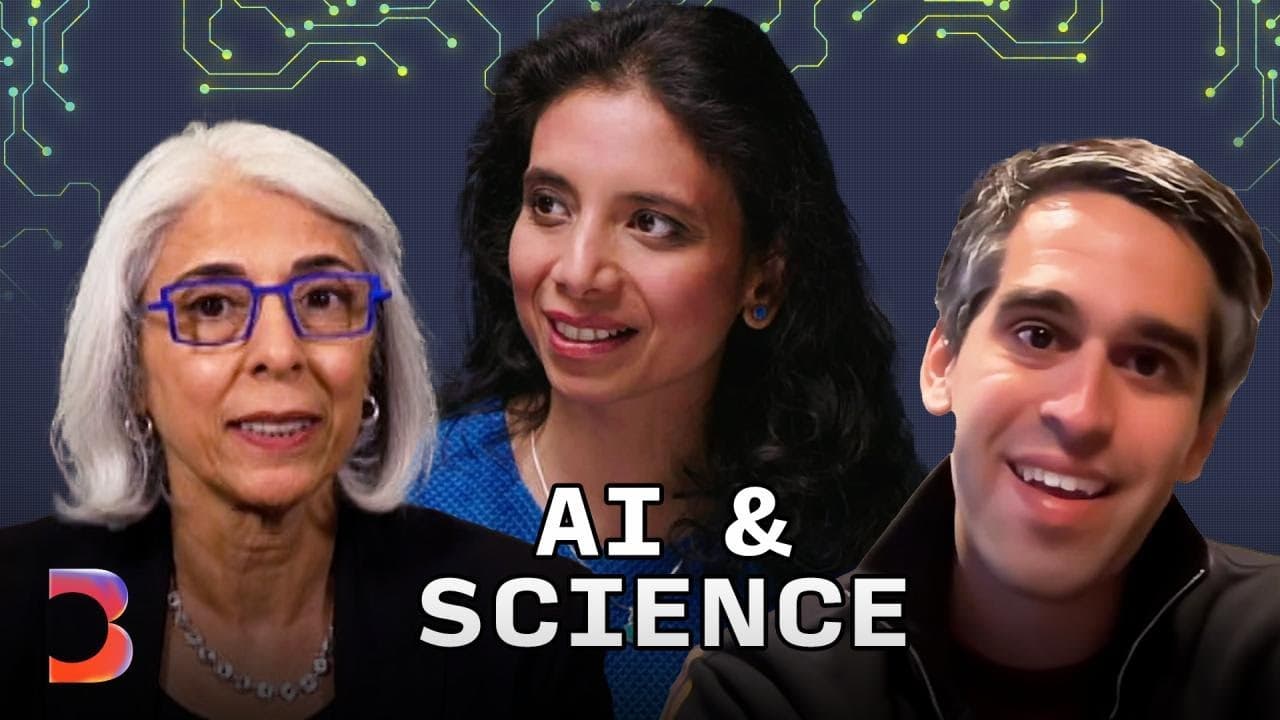
TL;DR
AI is revolutionizing science by enhancing research speed and accuracy.
Transcript
Ready. Artificial intelligence is ushering in a new era of scientific research. From biology to physics, AI-driven tools and techniques are poised to expand our understanding of the world. Forms of artificial intelligence have been used in science for years, but the rise of generative AI is unlocking greater speed and accuracy. AI-driven simulation... Read More
Key Insights
- AI is transforming scientific research by enhancing speed and accuracy, enabling breakthroughs in various fields such as biology, physics, and genomics.
- Generative AI is especially pivotal in drug discovery, allowing for faster simulations and identification of potential new drugs.
- AI assists scientists in hypothesis generation and literature review, streamlining the research process significantly.
- Future House, a nonprofit organization, aims to develop AI scientists to accelerate research and make scientific expertise globally accessible.
- AI's role in science is to assist and enhance human capabilities, with humans directing AI in research and decision-making processes.
- Concerns about AI misuse in science, such as in bio-weapons, are mitigated by the current complexity of human physiology and the safeguards being developed.
- The US government is actively engaging with AI developments, focusing on managing risks and leveraging opportunities in health and climate change.
- AI is expected to democratize and make scientific research more efficient, potentially leading to faster drug discoveries and improved medical care.
Install to Summarize YouTube Videos and Get Transcripts
Explore YouTube Video Summarizer or Get YouTube Transcript Extractor
Questions & Answers
Q: How is AI transforming the field of drug discovery?
AI is transforming drug discovery by enabling faster simulations and identification of potential new drugs. It allows researchers to sift through vast amounts of data to identify patterns and disease markers, streamlining the process significantly compared to traditional methods.
Q: What is the role of Future House in AI-driven scientific research?
Future House is a nonprofit organization focused on developing AI scientists to accelerate research and make cutting-edge scientific expertise available worldwide. It aims to enhance the pace of discovery across various scientific fields, including biology, physics, and chemistry.
Q: What are some concerns regarding the misuse of AI in science?
Concerns about AI misuse in science include the potential development of bio-weapons. However, the current complexity of human physiology makes it difficult to create such weapons. Safeguards and partnerships are being developed to prevent nefarious use of AI tools.
Q: How is the US government engaging with AI developments?
The US government is actively engaging with AI developments by focusing on managing risks and leveraging opportunities, particularly in health and climate change. Initiatives like the cancer moonshot aim to utilize AI to improve health outcomes and accelerate scientific research.
Q: What is the potential impact of AI on medical care?
AI has the potential to greatly improve medical care by accelerating research, leading to faster drug discoveries and the development of personalized medicine. It is expected to democratize access to medical treatments, making them more efficient and cost-effective.
Q: How does AI assist scientists in their research process?
AI assists scientists by generating hypotheses, reviewing literature, and analyzing data. It enables researchers to process vast amounts of information quickly, allowing them to focus on directing research and making critical decisions, thus enhancing the overall research process.
Q: What are the future prospects of AI in scientific research?
The future prospects of AI in scientific research include democratizing access to scientific expertise, accelerating the pace of discovery, and improving the efficiency and accuracy of research processes. It holds the potential to revolutionize various fields, leading to groundbreaking discoveries.
Q: How is AI expected to impact climate change research?
AI is expected to impact climate change research by providing more accurate models and simulations of weather and climate patterns. It enables better risk assessments and preparedness for extreme weather events, contributing to more effective climate change mitigation strategies.
Summary & Key Takeaways
-
Artificial intelligence is revolutionizing scientific research by enhancing speed and accuracy, particularly in fields like biology, physics, and genomics. Generative AI is crucial in drug discovery, allowing for faster simulations and identification of potential new drugs.
-
Future House, a nonprofit organization, aims to develop AI scientists to accelerate research and make scientific expertise globally accessible. AI assists scientists in hypothesis generation and literature review, streamlining the research process significantly.
-
The US government is actively engaging with AI developments, focusing on managing risks and leveraging opportunities in health and climate change. AI is expected to democratize and make scientific research more efficient, potentially leading to faster drug discoveries and improved medical care.
Read in Other Languages (beta)
Share This Summary 📚
Summarize YouTube Videos and Get Video Transcripts with 1-Click
Try YouTube Summary with ChatGPT & Claude or YouTube Transcript Generator
Explore More Summaries from Bloomberg Originals 📚






Summarize YouTube Videos and Get Video Transcripts with 1-Click
Try YouTube Summary with ChatGPT & Claude or YouTube Transcript Generator